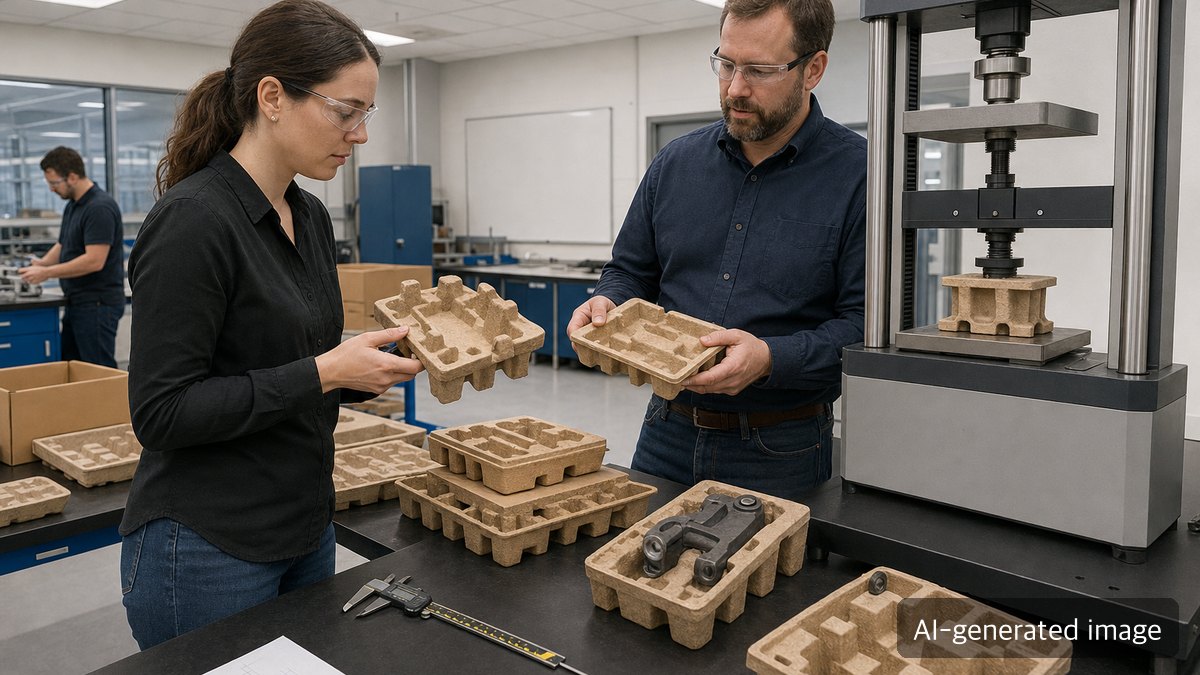
Molded fiber, also called molded pulp, is increasingly reviewed as an alternative to plastic foam cushioning. It can be used in electronics, cosmetics, consumer goods, food trays, and industrial component packaging.
But molded fiber should not be approved on the word “sustainable” alone. In mass production, tooling cost, strength, moisture behavior, surface quality, lead time, line compatibility, and cost structure must all work together.
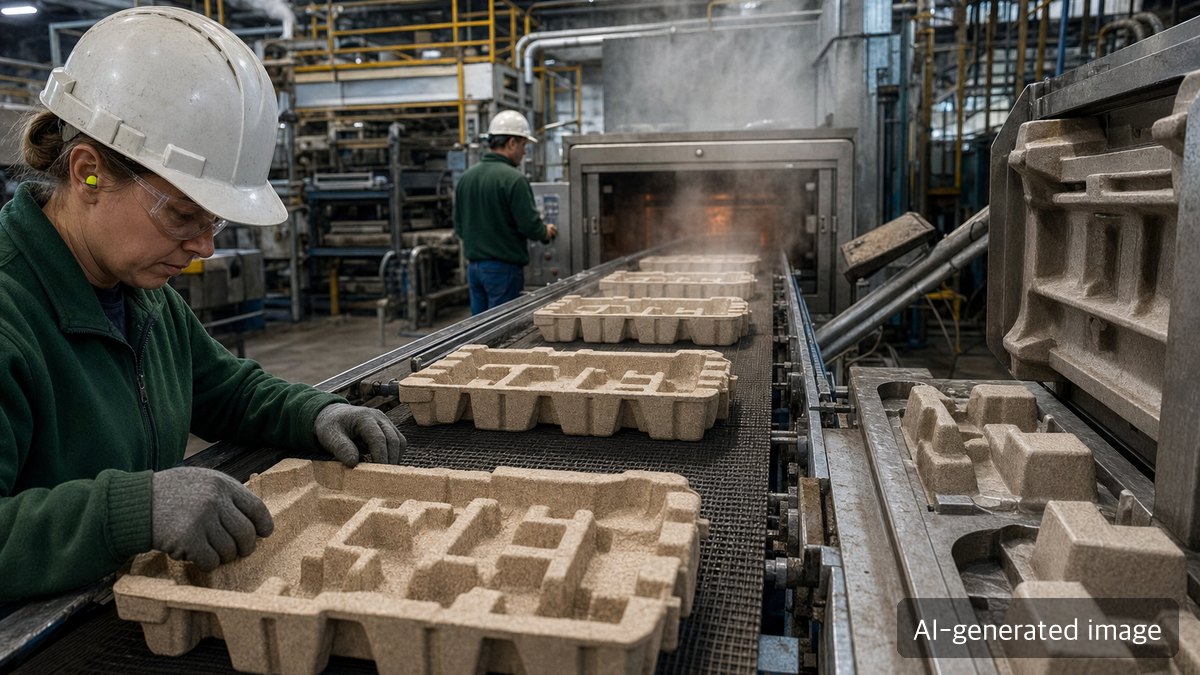
Why molded fiber competition is increasing
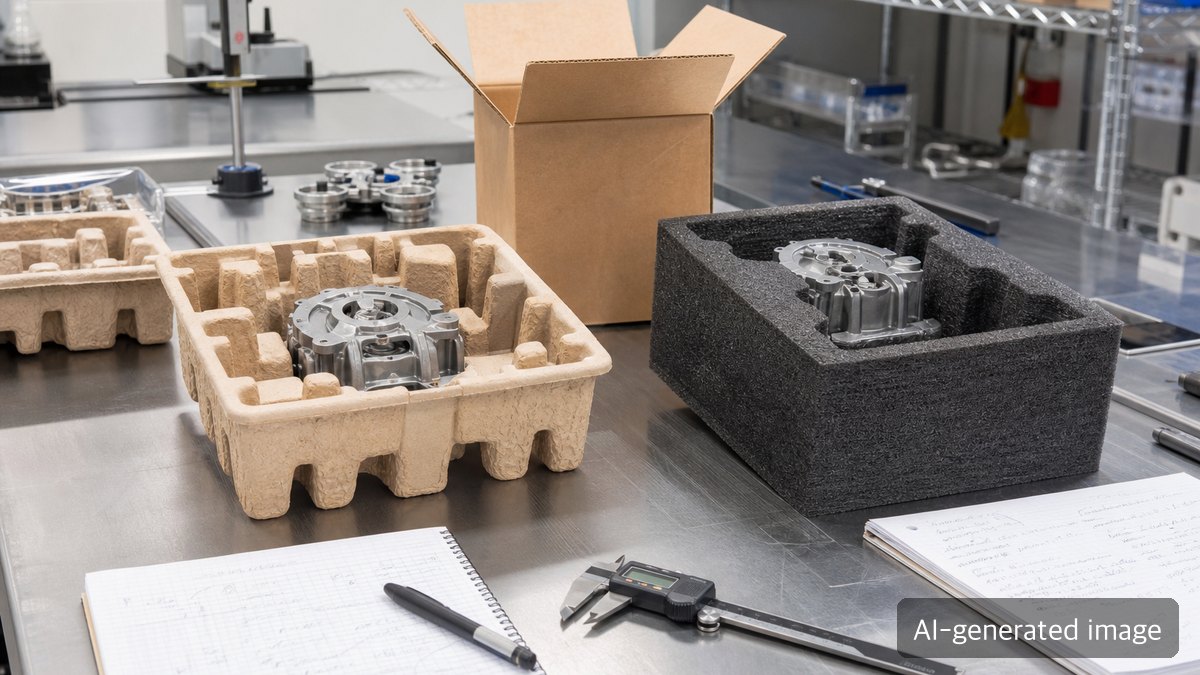
Plastic foam cushioning has been used for a long time because it is light and protects products well. However, recyclability, volume, disposal, customer perception, and export-market expectations are making it harder to use in some applications.
Molded fiber innovation is no longer only about changing the material. It includes mold design, surface quality, water and oil resistance, drying energy, automation, and short-run production capability.
1. Check tooling cost and development lead time first
Molded fiber’s advantage is that it can be shaped around the product. The tradeoff is tooling and development time. If the cushion must hold the product accurately, teams may need several rounds of prototype, revision, and drop testing.
Before procurement approval, check:
- Tooling cost and mold revision cost
- Prototype lead time and sample schedule
- Minimum order quantity and repeat-order terms
- Whether the mold can be reused if the product changes
- Whether multiple SKUs can share one cushioning structure
Molded fiber can be strong for high-volume repeat products, but it may be costly for products with frequent design changes or small quantities.
2. Evaluate strength under drop, compression, and vibration
The purpose of cushioning is to protect the product, not to look sustainable. Molded fiber can perform well in shape holding and surface cushioning, but design must match product weight and impact direction.
The test plan should include:
- Product damage after drop testing
- Compression or cracking at corners and point-load areas
- Deformation under stacking pressure
- Abrasion during long-distance vibration
- Reuse potential during returns or repacking
For electronics, glass, and cosmetic containers, teams should also check scratches and dust, not only shock absorption.
3. Moisture and storage conditions change performance
Paper-based cushioning is sensitive to moisture. Warehouse humidity, ocean shipping, rainy-season storage, and cold-to-ambient transitions can affect strength and dimensions.
A dry-condition sample is not enough. Teams should review compression strength under humidity, dimensional change, odor, mold risk, and any water-resistant treatment.
If water or oil resistance is added, recyclability and regulatory documentation should be reviewed at the same time. A coating that improves performance may also affect repulpability or disposal instructions.
4. Line compatibility can decide the real cost
The real cost of molded fiber is often determined on the packaging line. Feeding problems, jams, dimensional variation, dust, and bulky storage can reduce packing speed and increase manual intervention.
A line trial should confirm:
- Whether parts separate one by one in automatic feeding
- Whether product insertion and fixing time decreases
- Whether the product stays stable inside the box
- Whether parts warp or break during storage
- Whether there are worker-handling, dust, or odor issues
A sustainable packaging change must not slow the packaging line so much that the operation becomes unstable.
5. Total cost includes foam reduction and damage reduction
Molded fiber unit price may look higher than plastic foam. But total cost should be calculated differently. If molded fiber reduces foam, film, tape, or separate inserts, the total packaging bill may decrease. If damage rates fall, return and reshipment costs also improve.
On the other hand, tooling cost, storage volume, lead time, humidity control, and equipment adjustment can increase cost. A practical comparison should include:
| Area | Items to check |
|---|---|
| Development | Tooling, sample revision, testing cost |
| Material | Unit price, MOQ, scrap rate |
| Logistics | Storage volume, loading efficiency, deformation in transit |
| Quality | Damage, scratches, dust, odor |
| Line | Packing speed, automatic feeding, labor cost |
| Environment | Recyclability, coating information, buyer documentation |
Bottom line: molded fiber is a design material
Molded fiber cushioning can be a strong alternative to plastic foam. But success depends on product-specific design, tooling, testing, line compatibility, and documentation.
Procurement teams should not stop at “switch to paper cushioning.” They need a checklist covering product protection, automation conditions, recyclability evidence, and total cost. That is how sustainable packaging becomes stable mass production.
About the Author
PackingMaster: Editor of Paper Pack Log. We collect and organize market trends, product information, and technical insights for the paper packaging industry.