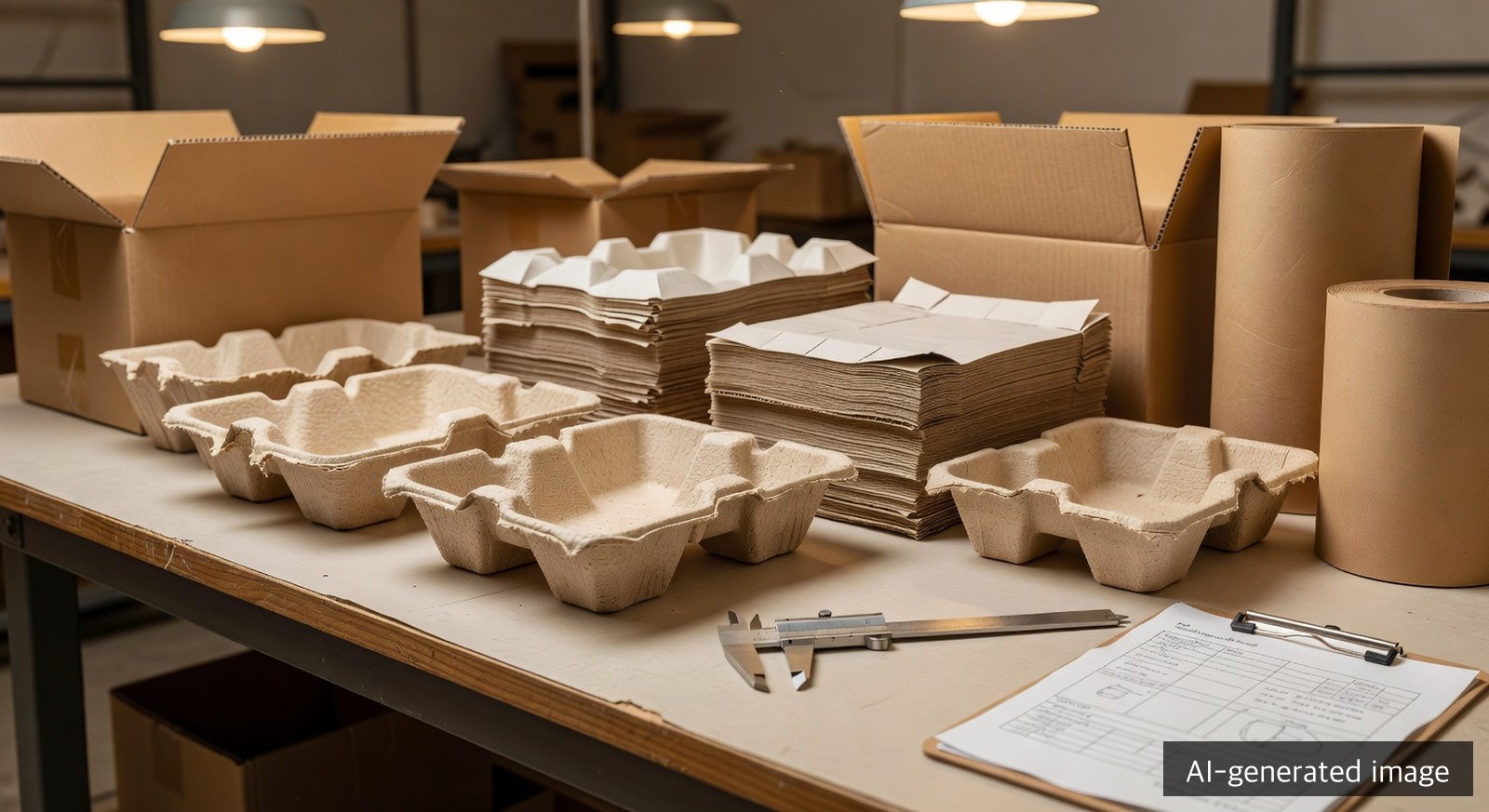
One of the first alternatives companies consider when reducing foam or plastic cushioning is molded pulp packaging. It is made by forming paper fibers in a mold and drying them into a shape that can hold and protect a product.
But molded pulp is not a universal replacement simply because it is paper-based. Product geometry, drop risk, order volume, moisture exposure, and surface quality requirements all affect whether it is the right choice.
Where Molded Pulp Works Well
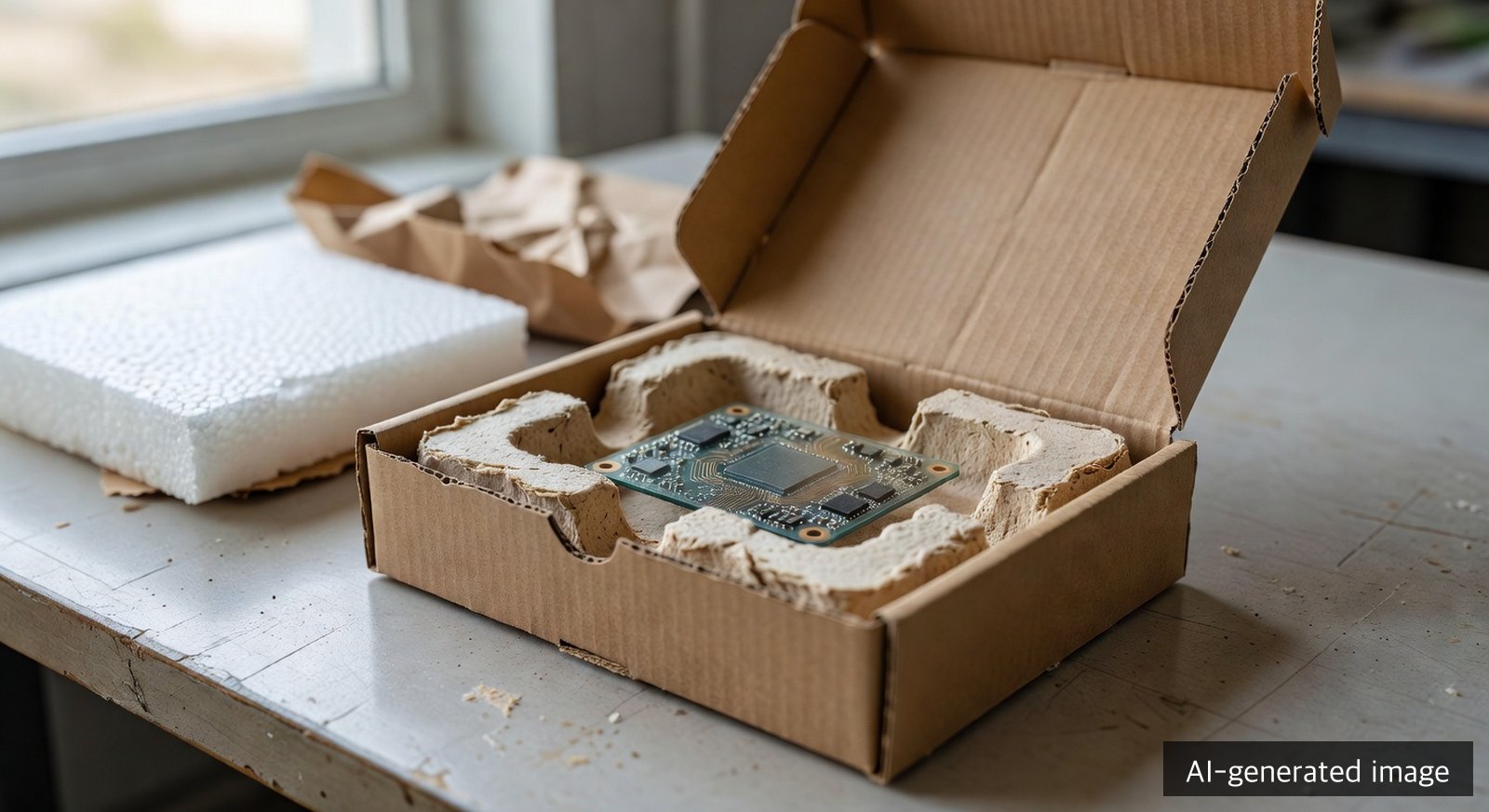
Molded pulp works best when the product needs to be held in a fixed position, the production volume is repeatable, and the packaging itself supports a sustainability message.
Common applications include:
- Small electronics, adapters, sensors, and accessories
- Cosmetic bottles, glass containers, and lifestyle product sets
- Food and beverage gift-set trays
- Industrial components that need edge protection and positioning
- Consumer packaging where plastic blister trays or EPS inserts need to be reduced
The key advantage is shape control. Molded pulp can create pockets, ribs, and support points tailored to the product. When paired with a corrugated box, the overall package can often be explained as a mostly paper-based system.
Where It Is Not the Best Fit
Molded pulp is less suitable in several situations.
1. Very low production volume Molded pulp requires tooling. For samples, short runs, or many product variations, tooling cost and development time can become a burden. Paper void fill, corrugated partitions, honeycomb pads, or flat paperboard structures may be more practical.
2. Moisture-sensitive logistics Pulp-based materials can be affected by humidity. Cold-chain logistics, long storage periods, or humid container transport require additional checks. Moisture protection, coating, or an inner bag may be needed.
3. Products with sensitive surfaces Molded pulp can be rougher than plastic trays. Glossy painted products, premium cosmetic containers, lenses, or coated components may need nonwoven wraps, paper sleeves, or protective film.
4. Heavy or high-impact products For heavy industrial parts or high drop energy, molded pulp alone may not be enough. Corrugated structures, honeycomb board, paper blocks, or hybrid cushioning design may be required.
Comparing It with EPS and Plastic Cushioning
When evaluating molded pulp, do not compare only the sustainability message. Compare four practical factors:
- Cushioning performance: Test actual drop directions, product weight, and weak points.
- Tooling and minimum quantity: It can be efficient for repeat production but expensive for low volume.
- Logistics environment: Consider humidity, storage period, container transport, and stacking compression.
- Customer requirements: Recycling expectations, plastic reduction goals, brand image, and unboxing experience all matter.
Export packaging is typically harsher than domestic parcel delivery. Container humidity, long-distance vibration, multi-layer stacking, and warehouse storage should be considered before switching materials.
Combining Molded Pulp with Other Paper Materials
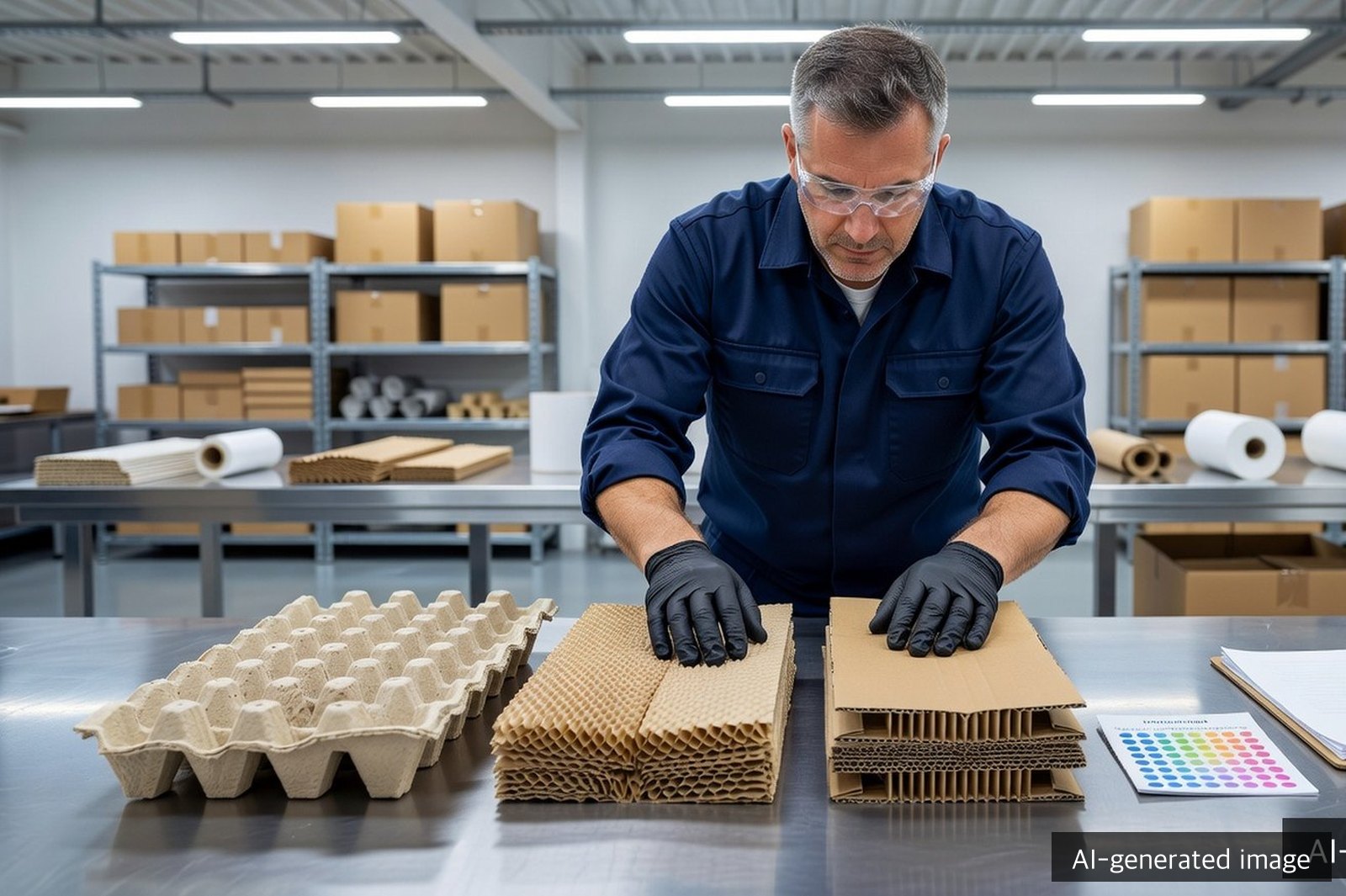
Molded pulp does not have to replace every cushioning component. It often works better as part of a paper-based system.
- Molded pulp + corrugated box: Separates product positioning from outer compression protection.
- Molded pulp + honeycomb board: Useful for heavier products or distributed surface load.
- Molded pulp + paper sleeve: Helps protect premium surfaces from abrasion.
- Molded pulp + paper void fill: Fills small gaps when the molded insert does not occupy all space.
- Replacing corrugated partitions: Worth considering for repeated product sets or retail kits.
The important point is role separation. Molded pulp is strong at positioning. Corrugated board, honeycomb board, and paperboard structures are strong at compression and load distribution.
Practical Checklist Before Applying It
Before choosing molded pulp, ask:
- Is the production volume high enough to justify tooling?
- Are the fragile directions and weak points of the product clearly known?
- Are there humidity, cold-chain, or long-storage conditions?
- Is additional surface protection needed?
- Will the package become bulkier or heavier than the current foam or plastic design?
- Does the customer require drop, vibration, or compression testing?
- How will recycling and disposal instructions be explained after use?
Answering these questions helps determine whether molded pulp is the best option or whether another paper structure is more practical.
Conclusion
Molded pulp cushioning is a strong option for companies trying to reduce foam and plastic protective packaging. It is especially useful when product positioning, repeat production, and sustainability messaging matter.
However, for low-volume products, moisture-sensitive goods, premium surfaces, or heavy export packaging, it should often be combined with other paper-based structures. A good packaging transition is not just a material swap. It is a balance of product protection, logistics risk, production volume, and customer expectations.
About the Author
PackingMaster: Editor of PaperPackLog. Covering market trends, product insights, and technical developments in the paper packaging industry.
References
- Background — U.S. EPA, Containers and Packaging: Product-Specific Data, https://www.epa.gov/facts-and-figures-about-materials-waste-and-recycling/containers-and-packaging-product-specific-data
- Background — ASTM D4169-23, Standard Practice for Performance Testing of Shipping Containers and Systems, https://www.astm.org/d4169-23.html