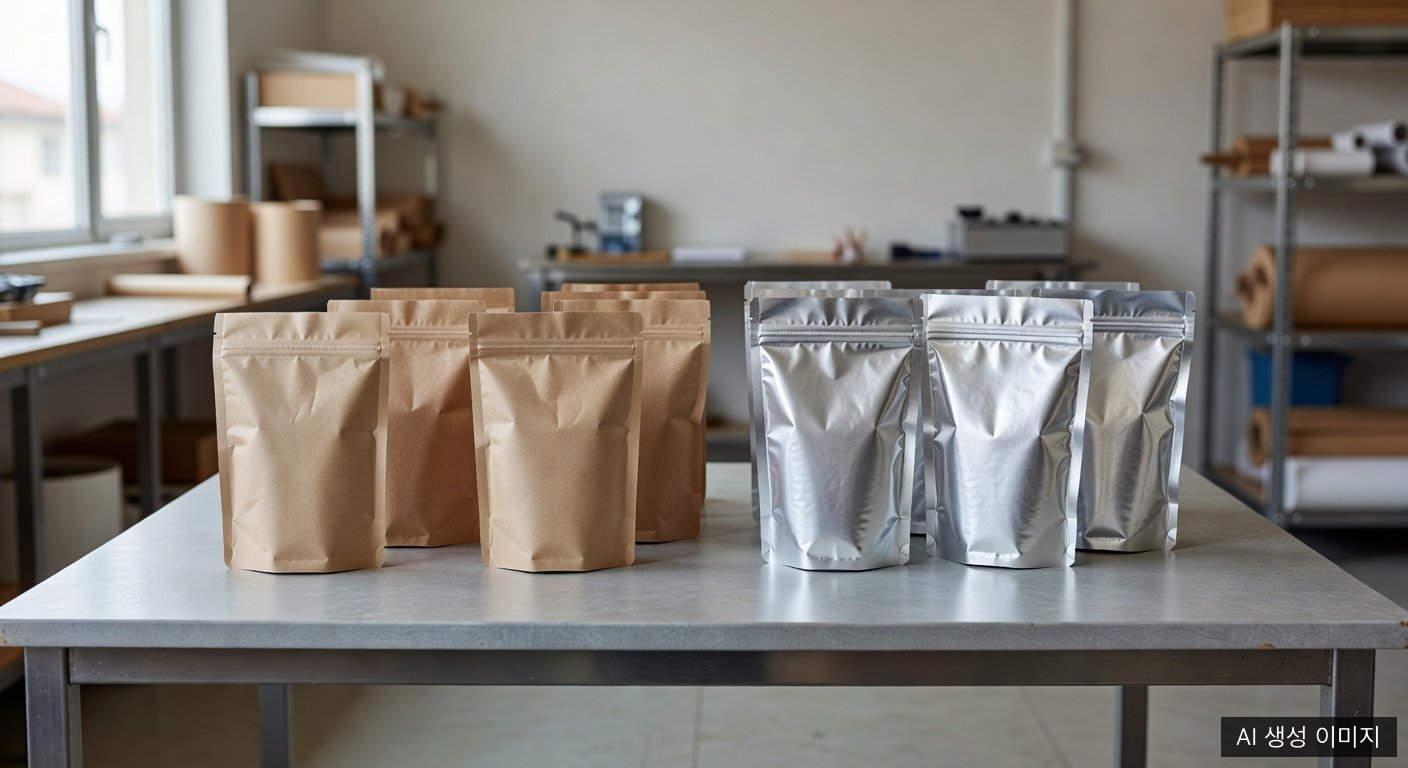
“Paper-based high-barrier material” is showing up in more and more brand procurement specs for food and household products. The intent is to replace aluminum laminates or multilayer plastic films with paper while preserving the oxygen and moisture barrier the category needs.
Mondi sits at the center of this shift. A 2025 expansion at its Polish mill increased FunctionalBarrier Paper Ultimate output, and through 2026 the Avara and HiProtex Paper lines have been featured at Interpack and Packaging Innovations & Empack via OEM collaborations. According to Mondi’s own announcements, these materials are over 80 percent paper, aluminum-foil-free, heat-sealable, and positioned as direct replacements for incumbent laminates in spices, coffee, tea, and dry-food categories.
For brand buyers, that shift lands on the purchase order. The problem is that a single line reading “paper-based” doesn’t tell procurement which specs actually need to be verified. This post breaks the verification work into four areas a brand buyer should walk through with the supplier before signing off.
Why Re-Open the Question Now
Paper barrier materials are not a new concept. But three signals have arrived together in 2025–2026:
- Mondi has scaled up FunctionalBarrier Paper Ultimate to volumes that support large commercial orders, not just sampling.
- Interpack 2026 saw multiple OEMs live-demonstrating paper-barrier lines, moving the message from “sample stage” to “in commercial production.”
- EU PPWR and similar rules increasingly require multilayer laminates to be assessed for recyclability after 2026, pushing brands to name candidate replacement materials on their POs now.
Under those conditions, “paper barrier” on a PO can translate into very different physical materials. The same line item can yield different proposed products from different suppliers. That is why the verification questions matter at the review stage.
Area 1: Barrier Grade
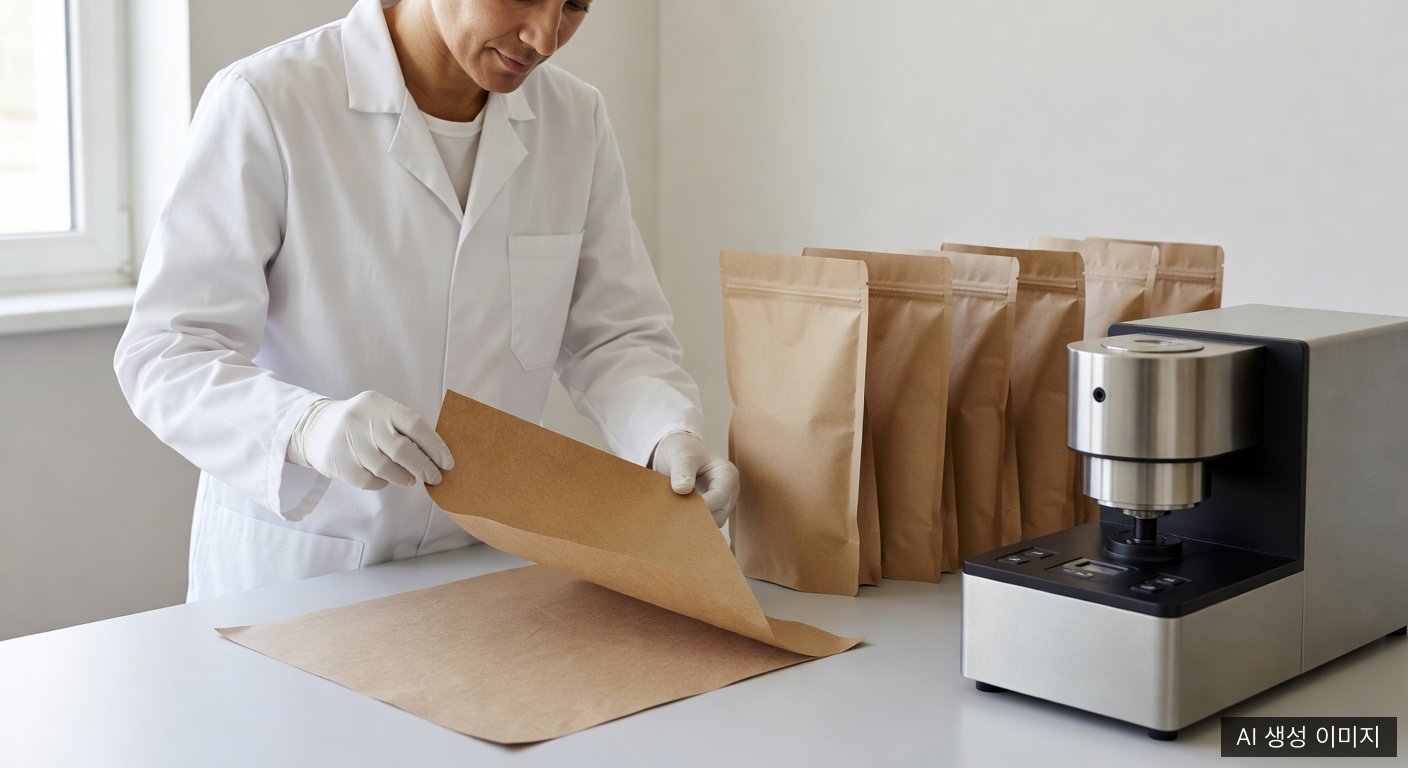
The first check is barrier performance. Even for a paper-based barrier, oxygen transmission rate (OTR), water vapor transmission rate (WVTR), grease resistance, aroma retention, and whitening need to be expressed in units comparable to the incumbent multilayer laminate.
Questions to put to the supplier:
- At what temperature and humidity conditions were OTR and WVTR measured?
- How do those values compare to the aluminum/PET laminate currently in use?
- Is there aroma-loss data for high-aroma products such as spices, coffee, and tea?
- Is there grease-barrier data (KIT rating or equivalent) for fat- or oil-rich products?
- Is there an external testing lab certificate to verify the results?
“Paper-based high-barrier” is not itself a grade. The numbers the supplier provides have to be comparable to the incumbent in the same units and conditions.
Area 2: Food Contact Compliance
A paper barrier in food packaging is not just a sustainability material; it is a food-contact packaging material. The surface coating, adhesives, inks, and additives all have to clear food-contact rules in every target market.
Examples of documentation the PO should require:
- Food-contact compliance documents: EU 1935/2004, US FDA, Korea MFDS, etc., matching the target markets.
- Migration test results: migration into food simulants.
- Coating type and thickness: aqueous, polymer, or functional layers, and the compliance status of each.
- Food-contact treatment of seals and adhesives.
- Indirect food-contact compliance for printing inks and varnishes.
When the OEM or factory exports to multiple markets, the documents must state which market’s standards they were prepared against. A single line that reads “EU compliant” does not automatically clear US, Korea, Japan, or Southeast Asia.
Area 3: OPRL and Recyclability Labeling
Recyclability is the headline marketing point for paper-barrier materials, but the marketing message and the actual recycling-system assessment can diverge. UK OPRL (On-Pack Recycling Label), Germany’s Der Grüne Punkt assessment, France’s Triman/Info-Tri, EU PPWR criteria, and Korea’s separate-collection labeling all use different rules.
Questions to ask:
- Does OPRL classify the material as “Recycle” or “Don’t Recycle”?
- What are the EPR assessment results in other EU member states beyond the UK?
- Is there repulpability test data, and at which lab was the testing done?
- Are coatings or functional layers flagged as residual contamination in paper-recovery streams?
- Under Korea’s separate-collection labels (paper carton / paper / other), which category applies?
- Is there a US GreenBlue How2Recycle assessment?
Without this paperwork, the brand cannot legitimately put sustainability claims on the PO, the label, or its advertising. FTC Green Guides, the EU Green Claims Directive, and Korea’s Ministry of Environment environmental claim rules all require documented evidence before a claim can be made.
Area 4: Line Compatibility and OEM Collaboration
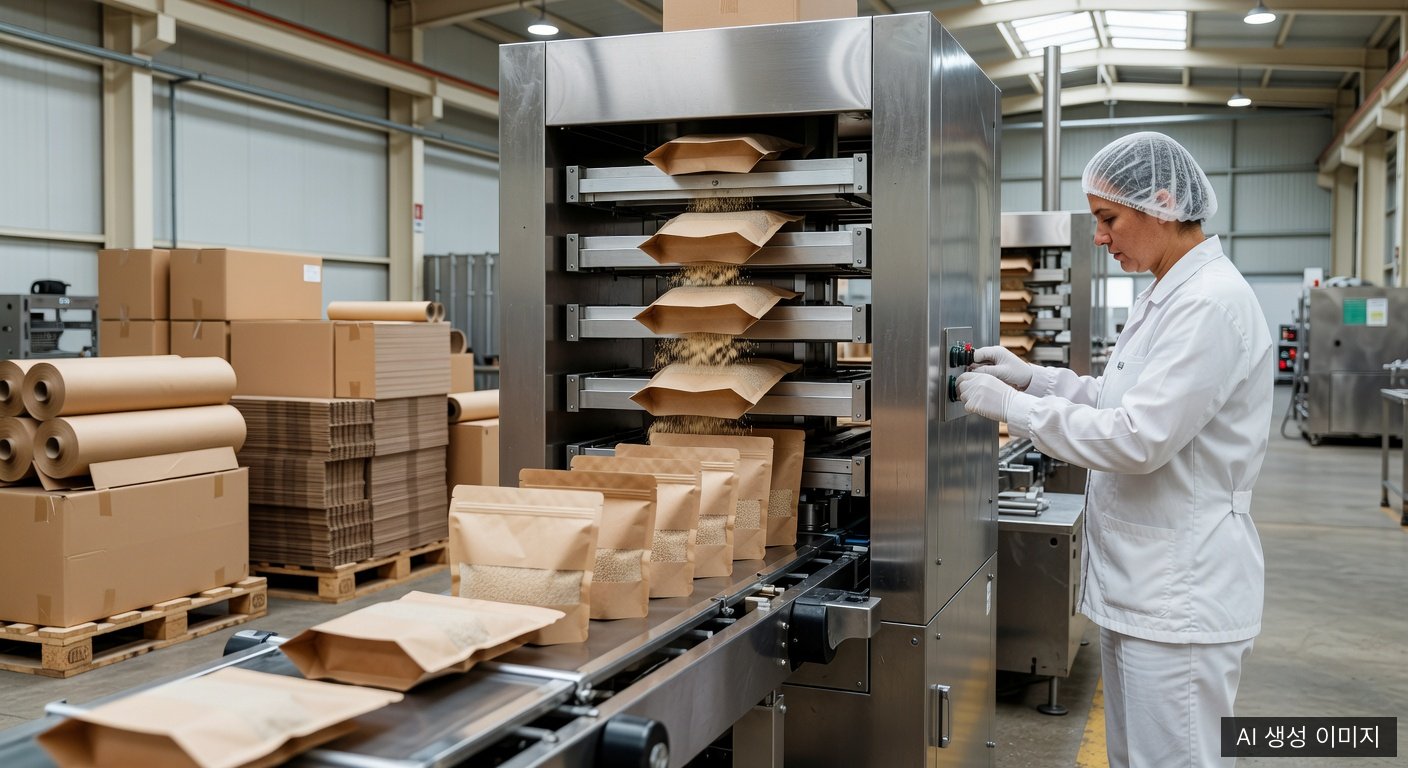
Two paper-barrier materials of the same thickness and composition can still behave very differently on filling, sealing, and cutting lines. That is the reason Mondi’s Interpack 2026 messaging emphasized OEM collaboration. Moving to a paper-based material can require resetting seal temperature, pressure, tension, and line speed on equipment that was set up for multilayer laminates.
Line-compatibility questions for the supplier:
- Which pack formats are supported (pouches, spouted pouches, flowpacks, carton liners, etc.) and at what line specifications?
- What are the recommended seal temperature, pressure, and dwell-time ranges?
- What defect rates (seal leakage, pinholes, wrinkling, dusting) are documented at given line speeds?
- How does the material behave under humidity and temperature swings — curl, edge waviness, static charge?
- What OEM collaboration case studies exist (brand, market, line speed, seal conditions)?
- If the buyer keeps the existing laminate line, which accessory changes are required?
This part cannot be closed with supplier data alone. It is safer to require joint-test results with the actual OEM that will run the format.
Implications for Korean Packaging Suppliers
Paper-barrier innovation is a major-mill story globally, but the same trend lands on Korean converters through their brand customers. As soon as a food, beauty, or household-products brand starts considering a switch from global laminates to paper barriers, that conversation flows down to the converter quote.
Documents Korean converters should have ready in advance:
- OTR, WVTR, and KIT certificates for their own paper-barrier lineups.
- Food-contact compliance documents by market (EU, US, Korea, Japan).
- Recyclability assessments under both domestic and overseas rules.
- Pack format and line-speed data.
- Comparative spec sheets benchmarking barrier performance, price, and line compatibility against global materials (Mondi Avara, FunctionalBarrier Paper Ultimate, HiProtex, etc.).
- Recyclability labeling guides per export market.
When the brand buyer asks “do you have something equivalent to Mondi Avara?”, the answer that gets you to a quote is not yes or no — it is “we have this grade with this test data.”
Conclusion: Have the Answer Before the PO Asks
Paper-barrier materials are no longer a “new products at the trade show” category. Mondi’s lineup expansion and the Interpack 2026 messaging show the materials are now landing inside POs and supplier quotes.
At that stage, the question for the supplier is not “is this a sustainable material?” — it is documentation for the four areas: barrier grade, food contact, recyclability, and line compatibility. Suppliers with the documents already organized clear the PO review quickly; suppliers without the documents end up with strong marketing copy and no quote. The paper-barrier transition is ultimately a documentation race.
Frequently Asked Questions
Q: Are Mondi Avara, FunctionalBarrier Paper Ultimate, and HiProtex Paper the same product?
They are distinct lineups but all sit within Mondi’s family of paper-based high-barrier packaging materials. Common traits are 80%+ paper content, aluminum-foil-free construction, and heat-sealability. The lines differ in target categories and barrier grade.
Q: What is the minimum documentation needed to put a paper-barrier material on a PO?
Barrier test certificates, food-contact compliance documents, recyclability assessments, and line-speed/seal-condition data. Missing any of these four sets typically triggers another round of requests during quoting.
Q: Can Korean converters compete with global paper-barrier materials?
Korean converters can be competitive on price, line speed, and domestic food-contact documentation. The weaker areas tend to be overseas recyclability assessments and OEM collaboration case studies. Preparing those two in tandem during the export review makes the comparative quote much more survivable.
About the Author
PackingMaster: Editor of PaperPackLog. Curates and organizes market trends, product information, and technical insights for the paper-packaging industry.
References
- Mondi, “Mondi brings sustainable packaging innovation to Interpack 2026 through multiple OEM collaborations”
- Mondi, “Mondi ramps up FunctionalBarrier Paper Ultimate to meet growing demand for sustainable high-barrier paper-based packaging”
- Packaging Europe, “Mondi upgrades spice packaging with recyclable high-barrier paper”
- Background: ResourceWise, “Fiber forward: Sustainability highlights from the paper packaging industry”