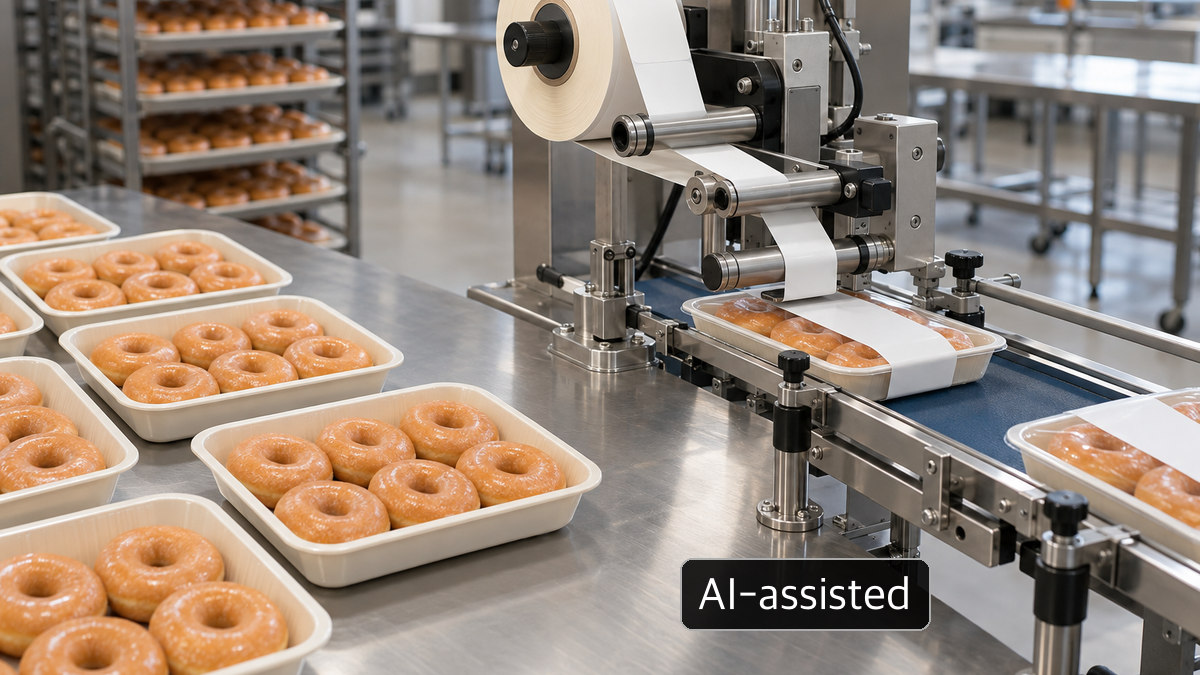
A two-doughnut tray and a six-doughnut tray present different registration and handling questions even if the line uses the same label system. In an October 14, 2026 company case, Ravenwood Packaging says a Nobac 5000 Twin Head linerless applicator applies D-Wrap labels to two-, four- and six-pack formats at Mr Whippy’s Sheffield doughnut facility. This is a supplier-described installation for one operation, not an independent measurement of uptime, throughput or material savings.
Fix the case boundary before extracting a line specification
Ravenwood describes baking, cooling and decorating the doughnuts, placing them in trays, then applying labels at the packaging end of the process. It names ProPrint Group as the printer of the D-Wrap linerless labels. According to the company, the Twin Head configuration lets operators load two label rolls and may reduce intervention at roll changes. Loading two rolls is a hardware/configuration description, not evidence of zero-stop changeovers or a measured uptime increase.
| Public statement | Supported interpretation | Still needed for a purchasing decision |
|---|---|---|
| Sheffield installation | Named facility and equipment, as described by Ravenwood | Site-acceptance and steady-state operating records |
| Two-, four- and six-pack trays | Formats the company says the line labels | Actual tray dimensions, placement tolerances and changeover time |
| ProPrint D-Wrap print | Named printing partner in the case | Print substrate, adhesive, ink, release treatment and traceable lots |
| Approximately 1.5 million doughnuts per week | Target level that the company says production is set to reach | Actual output, good labelled trays per hour, reject and downtime data |
The weekly doughnut figure is expressly framed by Ravenwood as a ramp-up ambition, not a measured current run rate. Neither the company’s stated plant investment nor its facility area can be turned into a verified applicator speed. A promised fuller case study towards year-end is not a report already available for inspection.
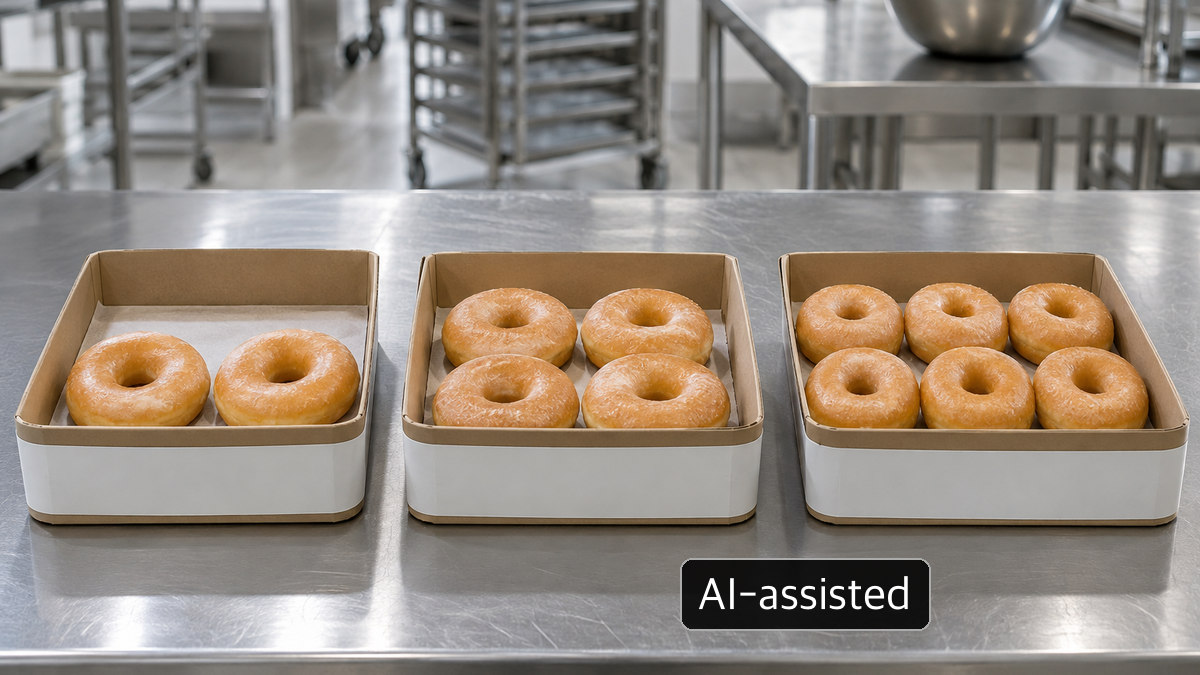
What does ’linerless’ remove from this pack?
A conventional pressure-sensitive label roll is carried on a release backing that becomes a separate waste stream after dispensing. Ravenwood’s general linerless explanation describes release zones on the label face and adhesive zones on its reverse to permit a self-wound roll without that separate liner. This supports a no-separate-backing description. It does not say that the label itself has no substrate, adhesive, release treatment or ink. The general page even discusses paper or film substrates; it is not a bill of materials for the particular Mr Whippy label.
Ravenwood quotes Mr Whippy’s management saying removal of the traditional backing paper helps reduce material use. The reviewed case gives no comparator pack, tray specification or mass, label composition and coat weights, label usage by format, scrap rate, quantified waste reduction or lifecycle assessment. A liner removed from the roll and an entire package proved lower-impact or recyclable are separate propositions. The case does not establish acceptance of the assembled pack by UK or Korean collection systems.
A buyer’s trial should join components, format changeovers and good-pack output
The following is an editorial qualification checklist, not Ravenwood’s published acceptance test or a result from the Sheffield line.
- Actual construction: Identify each tray, lid or other closure if present, label substrate, adhesive, release treatment, ink and any laminate. Trace the printed label and tray to production lots. Does any printed or adhesive surface contact the food?
- Format changeover: Across two-, four- and six-pack trays, define acceptable label position, wrap adhesion, readability and closure function. Measure changeover time and rejects for each real tray geometry and fill height.
- Running stability: Observe roll transitions, web tension, registration loss, detachment and rework. Record good trays per hour and stopped minutes, not doughnuts baked or machine nameplate speed alone.
- Food and distribution: Validate possible contact, exposed adhesive, odour transfer, grease, moisture, temperature and label lift against the intended food, holding time and route.
- Environmental accounting: Compare packs that perform the same job; weigh liner, tray, label and process scrap. Check collection acceptance for the finished package in the destination market instead of extrapolating from a linerless label alone.
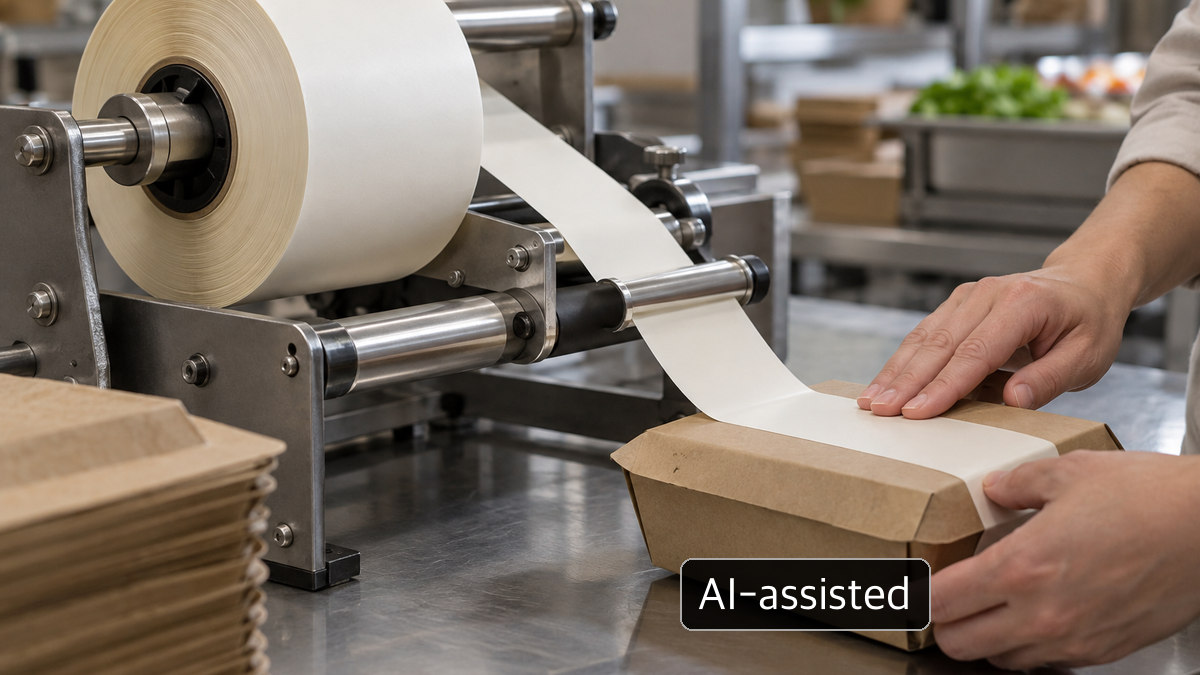
This is an informative example of a supplier-described automated labelling arrangement. It is not evidence that a throughput target has been reached or that every component can enter a given recycling stream. Before copying the design, ask for the exact component specification, a production-condition trial and a destination-specific end-of-life assessment.
About the Author
PackingMaster: Editor of PaperPackLog, covering paper-packaging industry developments, products and technical decisions.