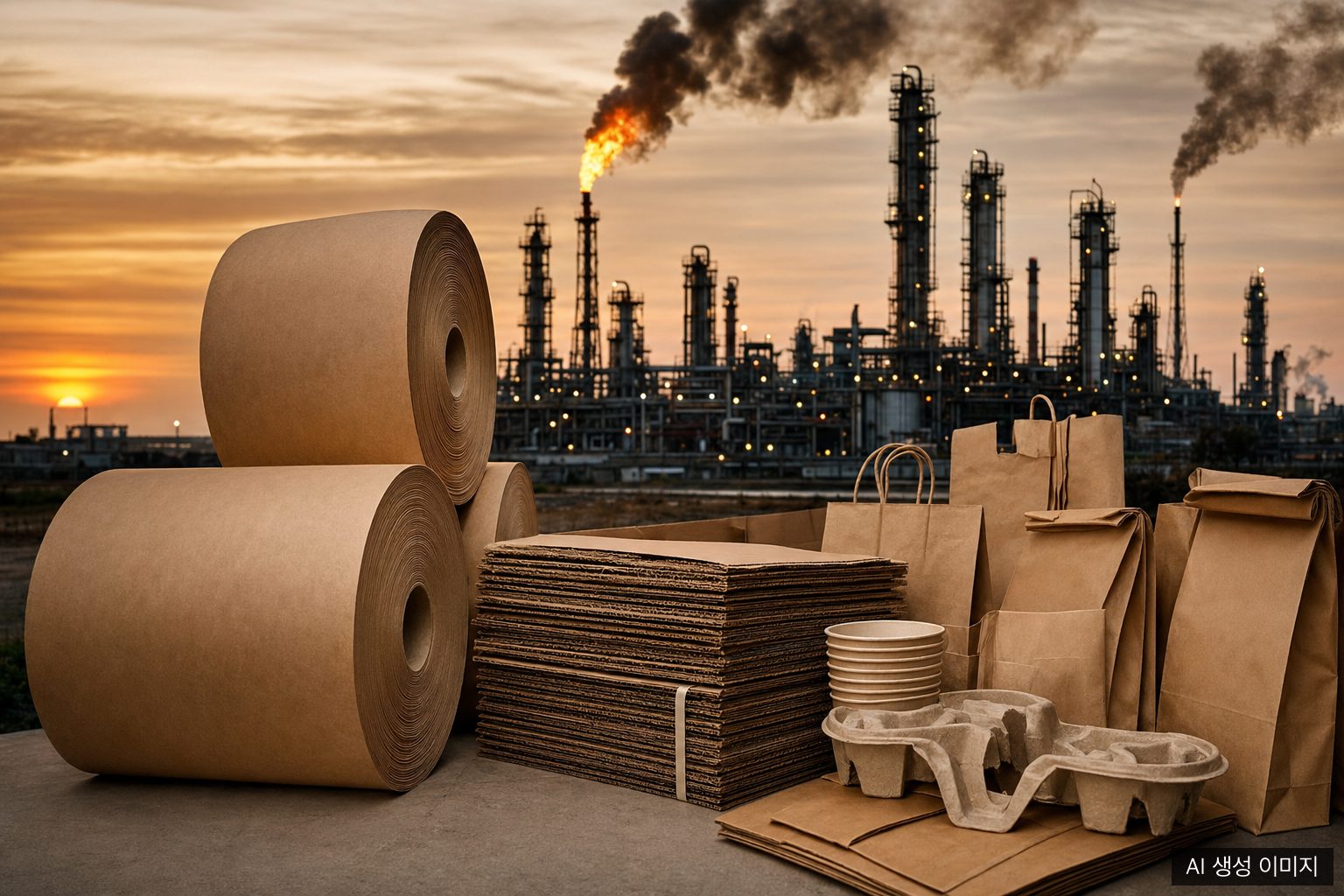
The Naphtha Shock Shakes the Plastic Film Packaging Industry
As the Middle East war dragged on in early 2026, the price of naphtha, a key feedstock for the petrochemical industry, recorded an unprecedented surge. International naphtha prices, which were around $595 per ton in January 2026, jumped vertically to $1,141 by the end of March, soaring 91.7% in just two months. In some periods, prices reached as high as $1,220 per ton.
The reasons behind the spike are complex. The war created a blockade risk in the Strait of Hormuz, a critical logistics route through which more than half of Korea’s imported naphtha passes. At the same time, global refiners shifted attention to mandatory production of sustainable aviation fuel, or SAF, adding a second shock by structurally reducing naphtha supply itself.
The naphtha price surge immediately passed through to the packaging market because naphtha is a key raw material for plastic containers and plastic film. According to a small business association, packaging material prices rose by more than 40% on average, while the price of disposable container boxes used by delivery restaurants jumped 33% in a week, from KRW 36,000 to KRW 48,000. Some voices in the food industry expressed concern: “We have packaging inventory secured until June, but we do not know what happens after that.”
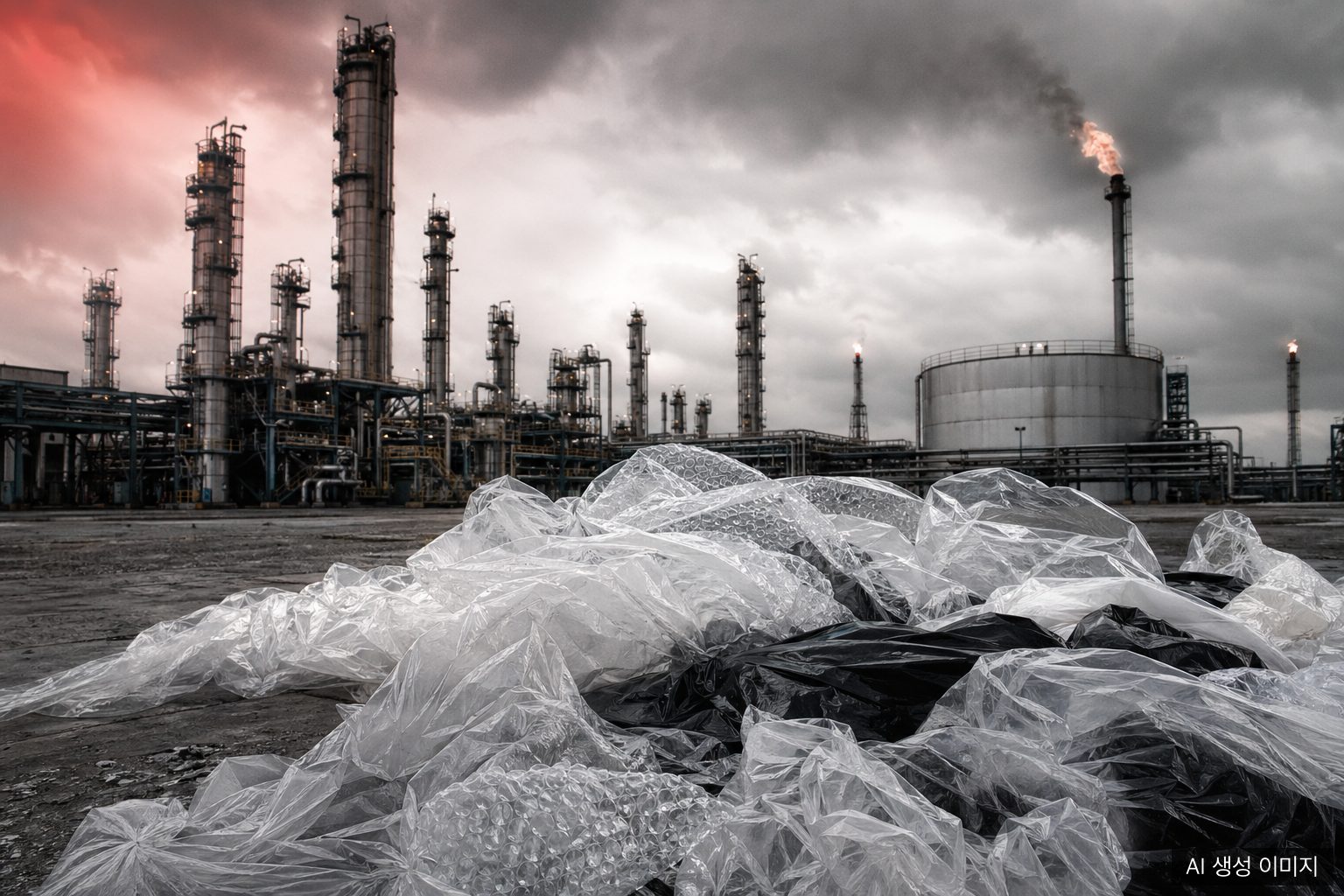
Paper Companies See an Opportunity: The Countermove by Hansol Paper and Moorim Paper
The naphtha crisis has paradoxically created an opportunity for paper companies. While the cost of plastic film packaging surged, paper packaging regained relative cost competitiveness. Paper companies are moving quickly to launch paper-based alternatives and capture the market.
Hansol Paper: Targeting the Secondary Packaging Market with the Protego HS Series
In April 2026, Hansol Paper launched Protego HS, a heat-sealable paper-based secondary packaging series that can replace existing flexible plastic packaging. The series consists of five product groups and can be used as secondary packaging for various foods such as chocolate, candy, powdered sauces, seaweed, and coffee.
Protego HS’s biggest strength is that existing equipment can be used without major changes. The company has completed pre-testing for major packaging processes such as printing, converting, and filling, minimizing customers’ burden of equipment modification. The product is also designed to meet Grade A, the highest recyclability level under the European Union Packaging and Packaging Waste Regulation, or PPWR, targeting demand from global exporters.
It also has cost advantages. Hansol Paper emphasizes that paper packaging is exempt from contributions under the Extended Producer Responsibility, or EPR, system. If EPR contributions imposed on plastic film and plastic packaging disappear, customers can gain additional operating cost savings.
Moorim Paper: Innovating HMR Packaging with Ourhome
Moorim Paper is expanding the application range of its representative eco-friendly paper material, Neofor FLEX, to home meal replacement packaging. Developed in collaboration with Ourhome, this paper packaging material is drawing attention because it can reduce plastic use by 40% compared with existing plastic film packaging.
Moorim Paper also has extensive experience working with major Korean logistics companies. It has previously co-developed paper cushioning materials to replace plastic air caps, and similar collaboration demand is increasing again because of the 2026 naphtha crisis.
A Distribution Shift: Moving Away from Plastic Film
Alongside increased supply from paper companies, large retail and logistics companies are also moving quickly. They face both cost pressure from surging naphtha prices and added regulatory risk.
Coupang is reportedly pursuing a plan to replace plastic film packaging used for early-morning delivery and other services with paper bags. This move is also a strategy to respond proactively to amendments to the Resource Recycling Act, which took effect on April 30. Under the amended rules, when paper bags or paper cushioning materials are used, the packaging empty-space ratio standard is relaxed from the previous 50% to 70%. This is a choice that can achieve both cost savings and regulatory compliance.
After Coupang’s decision became public, paper-related shares surged together in the stock market, showing how quickly the market responded.
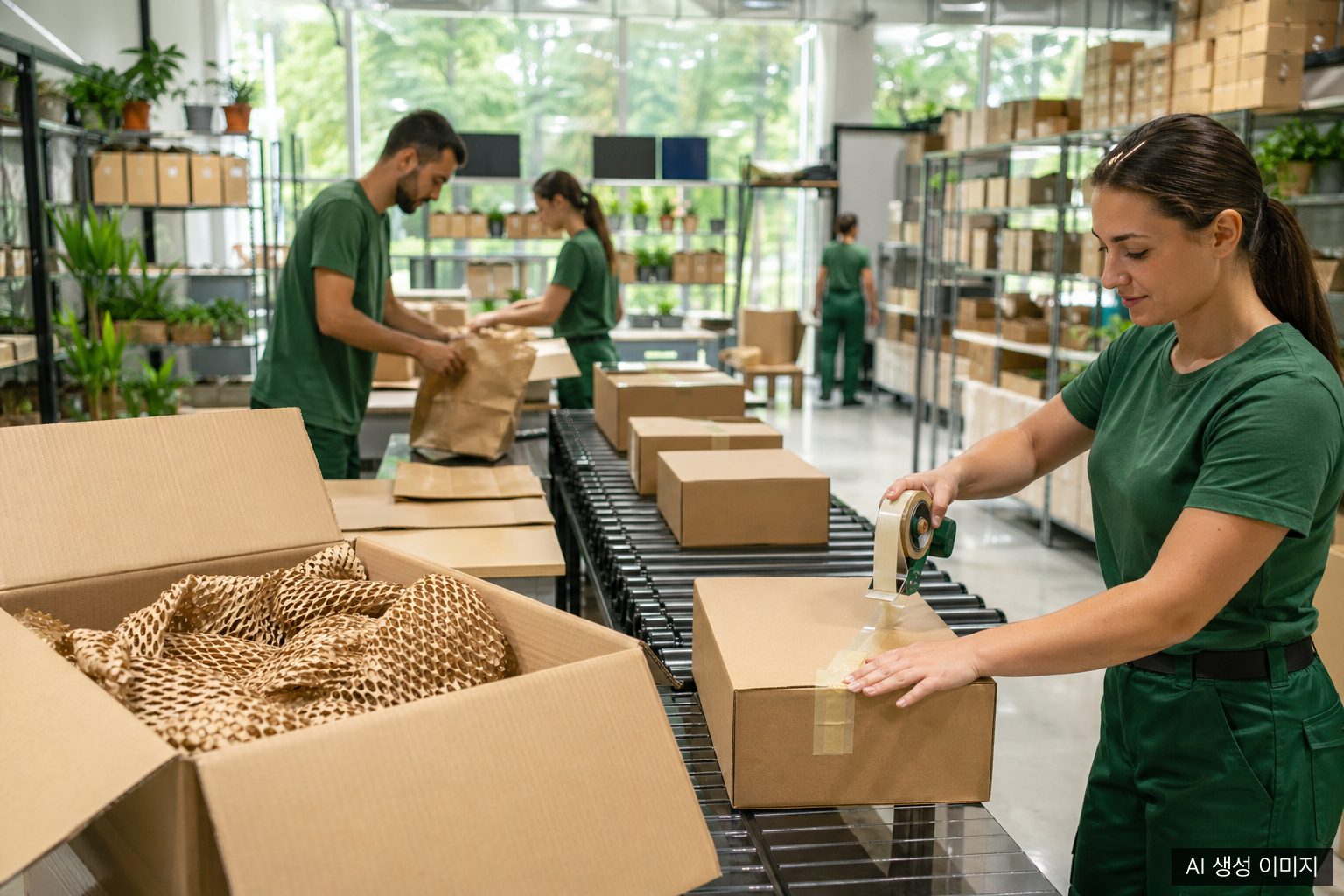
Where Policy and Market Meet
Regulatory change is also behind this trend. From 2026, the government has strengthened excessive-packaging regulations while offering incentives for the use of paper packaging. For paper packaging companies, this has opened a phase in which two favorable factors are working at once: demand stimulation and improved cost competitiveness.
The global market points in the same direction. Korea’s paper packaging market was worth about $8.2 billion in 2024 and is expected to grow to about $11.4 billion by 2032, representing a compound annual growth rate of 4.2%. The Asia-Pacific region has emerged as the largest paper packaging market, accounting for 38.43% of the global total.
Outlook: The Beginning of a Structural Shift?
It remains unclear when naphtha prices will stabilize. Unless geopolitical risk in the Middle East is resolved, price volatility is likely to continue. Industry experts believe this shock may not be a temporary event but rather a catalyst that accelerates a structural shift across the petrochemical-based packaging industry.
Paper companies are using this opportunity to expand their position in the packaging market by emphasizing both the justification of environmental regulatory compliance and the practical benefit of cost competitiveness. Now that the boundary between plastic film and paper is beginning to break down, attention is turning to which material will take the lead in the packaging market.
FAQ
Q. Why did naphtha prices suddenly rise?
A. The 2026 Middle East war increased the risk of transit through the Strait of Hormuz, shaking the supply chain for Korea’s imported naphtha. At the same time, global refiners increased production of sustainable aviation fuel, or SAF, structurally reducing naphtha supply and creating a second shock.
Q. Is paper packaging actually cheaper than plastic film?
A. The price difference depends on material and application. However, as naphtha prices surged, plastic film costs rose by more than 40%, while paper packaging gained relative competitiveness on a total-cost basis thanks to EPR contribution exemptions.
Q. Can paper packaging completely replace plastic film?
A. Packaging for frozen foods or liquids, where moisture and water resistance are critical, still has technical limits. However, many applications, including secondary packaging for dry foods, cushioning materials, and parcel bags, can already be replaced with current technology.
Q. What is Hansol Paper’s Protego HS?
A. It is a paper-based secondary packaging series launched by Hansol Paper in April 2026. It can be used for secondary packaging of dry foods such as chocolate, coffee, and seaweed, and it has a low adoption barrier because existing plastic packaging equipment can be used.
Q. When will Coupang introduce paper bags?
A. Coupang is pursuing phased introduction in line with the amended Resource Recycling Act, which took effect on April 30, 2026. A specific date for full conversion has not yet been officially announced.
About the Author
PackingMaster: Editor of Paper Pack Log. We collect and organize market trends, product information, and technical insights for the paper packaging industry.
References
- Background: Naphtha jumps 2.3 times after the war; supply disruptions possible (Energy Economy, 2026-03-18)
- Naphtha fear arrives: Japanese price doubles, plant utilization down, product prices rising (Daum, 2026-04-29)
- Packaging material prices surge amid naphtha crisis (Sports Kyunghyang, 2026-03-31)
- Small business association says packaging prices rose 40%; calls for financial support amid naphtha surge (EBN, 2026)
- Hansol Paper launches Protego HS, paper-based secondary packaging that replaces plastic (MTN News, 2026-04-02)
- Hansol Paper launches paper packaging amid naphtha crisis (Nate News, 2026-04-02)
- “40% less plastic”: Moorim Paper and Ourhome develop eco-friendly paper packaging for home meal replacements (Seoul Economic Daily)
- Naphtha instability and paper packaging incentives create benefits for paper companies (Herald Economy, 2026-04-13)
- [Exclusive] Coupang starts moving away from plastic film, to use paper bags for early-morning delivery (Seoul Economic Daily, 2026-04-10)
- Paper stocks surge on Coupang paper-bag possibility; will paper companies breathe easier? (Herald Economy, 2026)
- Naphtha instability and paper packaging incentives create benefits for paper companies (Herald Economy, 2026-04-13)
- Background: Korea paper packaging market size and growth outlook (Verified Market Research)