
In May 2026, six major North American producers announced a second wave of containerboard increases ranging from $50 to $70 per ton. Most announcements specified June 1, while Pratt Industries specified June 8. These were announced effective dates; whether the full amounts became realized transaction prices still required confirmation from subsequent market data.
This post organizes how Korean export packaging companies should simulate import prices and quote policy from June through September after the second-wave announcements. For a general review of the Korean corrugated and box price domino itself, also see “2026 Korea Corrugated Price Domino Recap”.
Structure of the June Second-Wave Announcements
The key numbers for this second wave are as follows.
- Smurfit Westrock: $50 per ton increase, effective 2026-06-01
- International Paper (IP): $70 per ton increase, effective 2026-06-01
- Cascades: $60 per ton increase, effective 2026-06-01
- Packaging Corporation of America (PCA): $50 per ton increase, effective 2026-06-01
- Georgia-Pacific (GP): $50 per ton increase, effective 2026-06-01
- Pratt Industries: $50 per ton increase, effective 2026-06-08
The announcements were clustered in early May, with five producers specifying June 1 and Pratt specifying June 8. Because announced effective dates do not prove full market realization, buyers should separate the notice amount from the transaction-price increase confirmed later by market assessments.
The drivers are not a single factor. (1) On the demand side, e-commerce, food, and industrial box demand have moved into a recovery zone. (2) On the supply side, capacity-reduction signals such as the SSK Birmingham mill review have appeared. (3) On the input side, OCC (recovered fiber) prices have climbed alongside labor and logistics costs. When all three move at once, hike announcements convert into realized prices faster.

Three Scenarios Korean Export Packaging Companies May Face in July-September
How the second wave flows through to Korean import prices for containerboard and boxes is not a single outcome. Here are the three scenarios most likely to land on Korean export packaging companies during June-September.
Scenario A: Full Pass-Through (Probability: Medium-High)
If the six announced increases are substantially realized, Korean import quotes could carry an additional $40 to $60 per ton notice from late June through early July. This is a scenario, not a confirmed pass-through.
- Late June to early July: Distributors send revised quotes (existing contracts usually stand)
- Mid-July: Hike applied from July shipments onward
- August-September: Spreads widen by containerboard grade (linerboard, fluting, KraftLiner)
Scenario B: Partial Pass-Through (Probability: Medium)
If one or two of the five negotiate a smaller hike on selected categories, Korean import prices may absorb only 60 to 80 percent of the announced increase. In that case, the price gap with Southeast Asian and European containerboard narrows, and sourcing diversification becomes a real option.
- Checkpoint: Timing of official US transaction-price releases through mid-July
- Alternative review: Compare with Indonesian, Thai, and Finnish KraftLiner offers
Scenario C: Delayed Effect or Re-Announce (Probability: Low)
If demand softens again or OCC prices fall back, the announced increase could be only partly realized or delayed. Some Korean importers may temporarily hold June-July quotes in that case.
- Signal: June-July US transaction-price indicators (e.g., Pulp & Paper Week, RISI) absorb only part of the hike
- Response: Roll quote expirations every two weeks; treat long-term contracts cautiously
What Korean Export Packaging Companies Should Actually Do in June-September
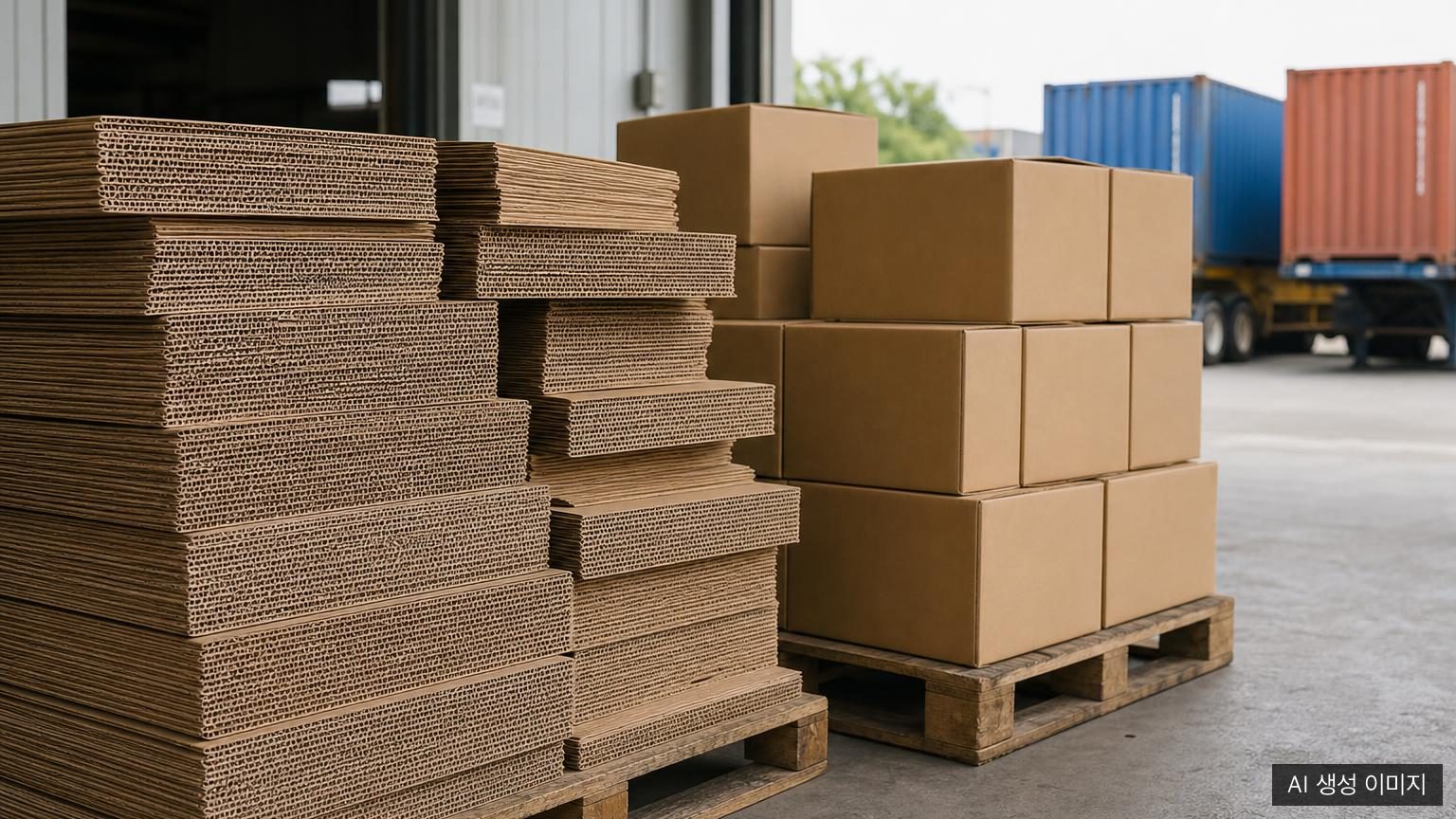
For Korean export packaging companies, this second wave is not about following prices passively. It is the moment to review the three-month simulation sheet and the quote policy together.
1. Three-Month Containerboard Import-Price Simulation Sheet
Build a June / July / August / September x KraftLiner / TestLiner / Fluting / White-Top matrix and write three lines in each cell.
- Current quote price (USD/ton)
- Post-hike price under Scenario A
- KRW per ton under FX assumptions (USD/KRW at 1,360 / 1,380 / 1,400)
This sheet is what sales, procurement, and production should all look at when making quote, delivery, and inventory decisions. No single department should be reading it alone.
2. Separate Policy for August Quotes and September Deliveries
The impact of this wave will land hardest on August quotes for September delivery. Sales teams should split the response into two tracks.
- August quotes: Reflect the hike with a short 14-21 day validity window
- September deliveries: Hold current pricing only on POs placed by end of July (with available volume explicitly capped)
Even this single separation reduces buyer pushback like “why did the quote on the same SKU change?”
3. Catalog Substitute Grades and Origins in Advance
Among SKUs that mainly use US KraftLiner, identify the items that can shift to Southeast Asian KraftLiner or domestic Korean TestLiner. The longer the hike pass-through takes, the more valuable that alternative list becomes. Fill in the following table ahead of time.
- Own SKU code / box grade (SW/DW)
- Current US grade in use / basis weight
- Possible substitutes (Southeast Asian KraftLiner, Korean TestLiner, Finnish KraftLiner, etc.)
- Whether ECT/BCT testing is required after substitution (see “ECT/BCT/McKee Recap”)
4. Standardized Talk-Tracks for Buyers
When a US buyer asks what the June announcements mean for the next PO, the sales team needs a one-line answer that distinguishes the announced amount from the confirmed pass-through.
- Korea HQ line: “Six producers announced $50-$70 increases for June 1 or June 8; we will confirm realized market pricing before applying any pass-through.”
- Korea HQ line: “We are reviewing alternative origins for selected KraftLiner grades and will present options starting with the August quote.”
Versus the First Wave: What Has Changed
Compared with the first wave in the second half of 2025, the June 2026 announcement cycle differs in four ways.
- Lead time: The announced effective dates followed the May notices by roughly one month.
- Synchronization: Six major producers announced increases in the same window, although Pratt’s stated date was one week later.
- Supply signal: First wave had almost no capacity signal. This time it comes with capacity-reduction signals such as the SSK Birmingham review (see “Smurfit Westrock LSE Delisting and UK Mill Closure”).
- OCC trend: Recovered-fiber prices turned firmer again in late May.
Adding those four together, the more sensible read is that this second wave is a moment to rewrite quote policy by watching capacity, OCC, and FX together through June-September, not just to track the headline price.
Conclusion
The June 2026 North American containerboard announcements are not proof that every dollar was realized in transaction prices. They are an early procurement signal that should be checked against subsequent market assessments, OCC trends, and actual import offers before July-September quotes are changed.
What needs to happen now is to (1) build the three-month containerboard import-price simulation sheet, (2) separate the August quotes from September deliveries and standardize the sales talk-tracks, and (3) catalog substitute grades and origins. The next review should be updated at the late-July release of US transaction-price indicators.
About the Author
PackingMaster: Editor of PaperPackLog. Curates and organizes market trends, product information, and technical insights for the paper-packaging industry.