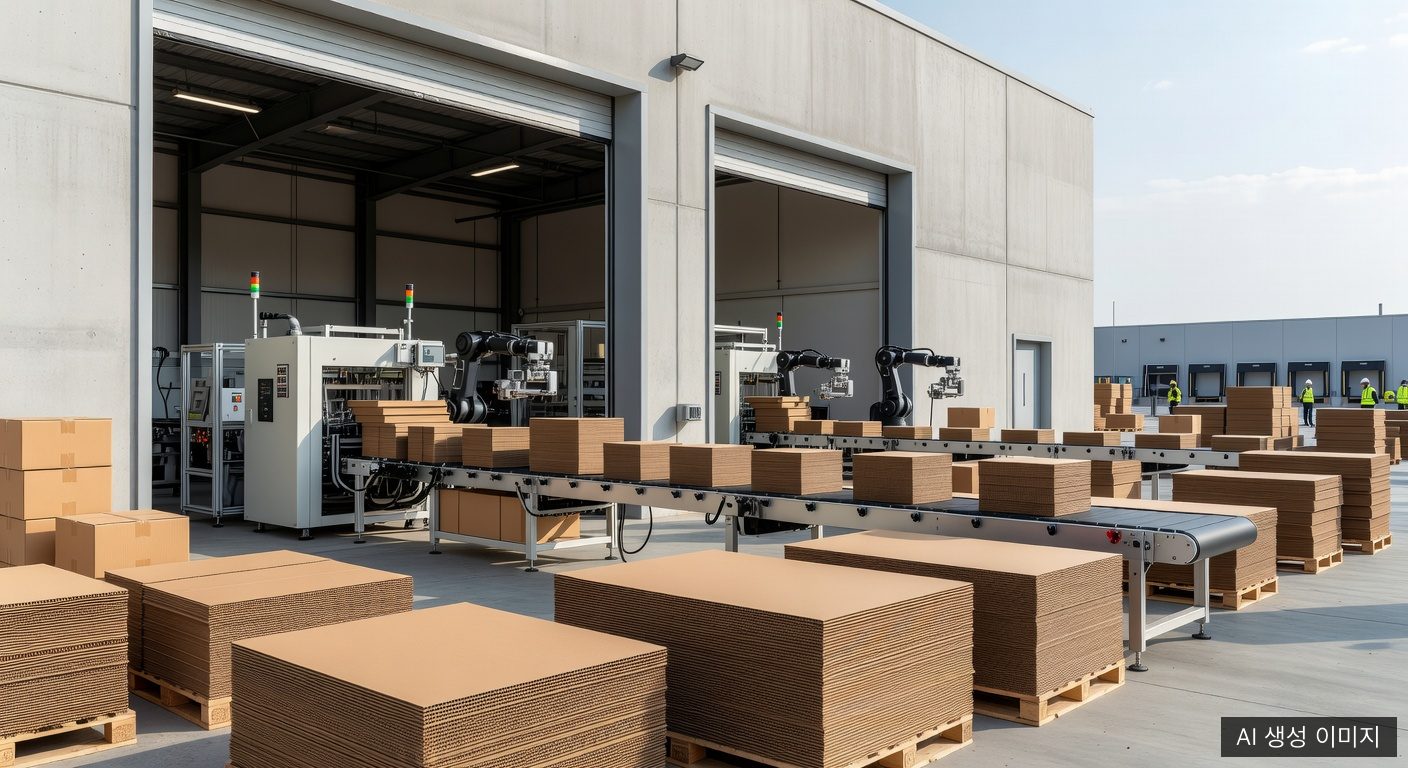
It is easy to miss the underlying direction of the North American corrugated market if you only read the headline “a new plant is opening.” In May 2026, International Paper announced groundbreaking on a new corrugated packaging facility in Brandon, Rankin County, Mississippi. The investment is reported at USD 225 million, the facility footprint at 468,000 square feet, and the site at roughly 80 acres.
What matters about this news is not the additional capacity itself but the direction of travel. North American corrugated producers are not simply piling on equipment. They are reshaping existing footprints to add automation, improve regional response, and lift operational efficiency. At the same time, Packaging Dive reported a second wave of North American containerboard price increases targeted for June 2026. Production investment and price increases are showing up side by side.
For Korean exporters and packaging buyers, this is not just overseas news. It is a prompt to check what should now be added to quotations and specification sheets going to North American customers.
What the new plant signals: operational efficiency, not just volume
According to International Paper’s announcement, the Brandon facility is a greenfield project intended to strengthen the company’s Mid-South manufacturing and service capability. The new site sits within roughly ten miles of the existing Richland box plant. This is not a blind expansion into a new region. It is a modernization move close to an existing network, designed to upgrade the operating model rather than simply add machines.
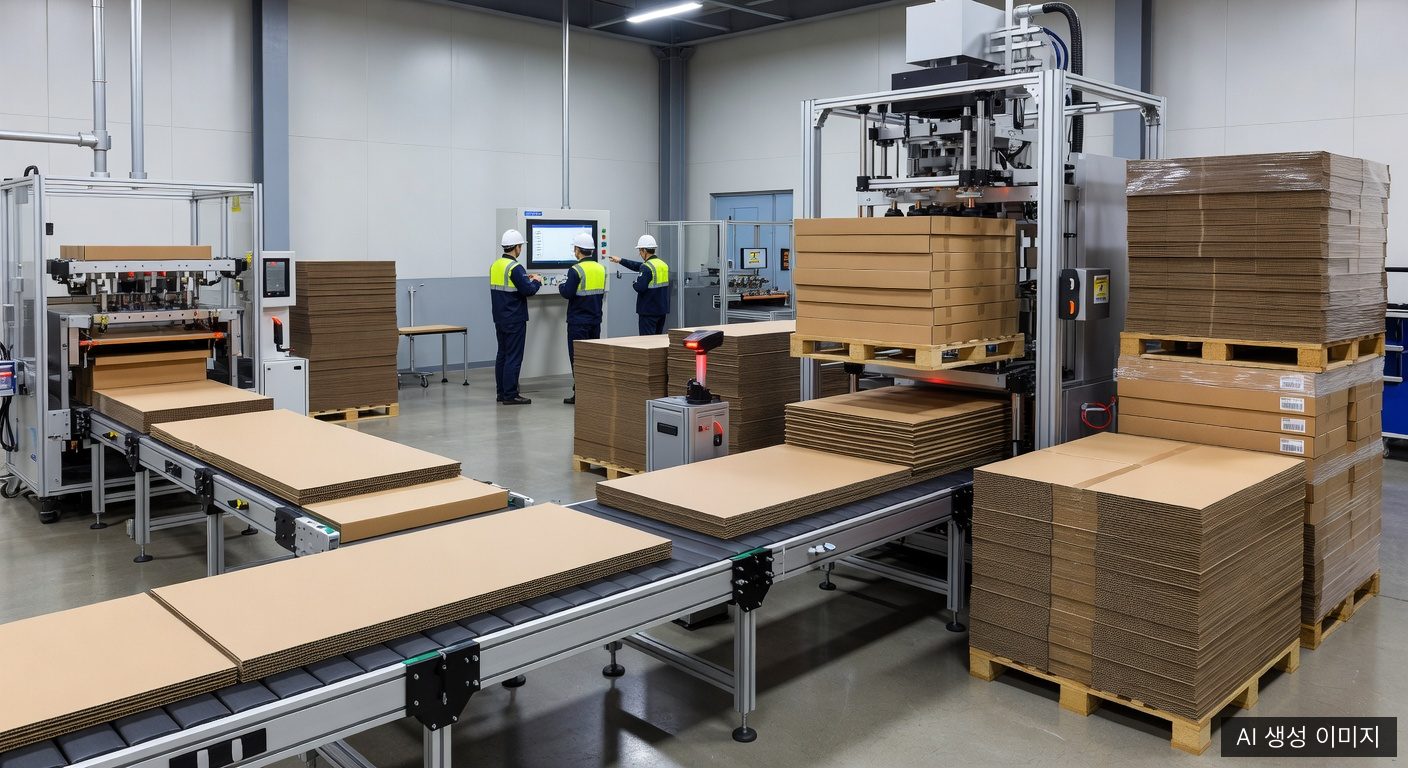
Automation matters at a corrugated plant for a clear reason. Corrugated boxes are bulky, and specifications vary widely by customer. The same board, when cut, printed, creased, glued, and stacked differently, produces very different productivity outcomes. Packaging for e-commerce, food, household goods, and industrial products tends to involve many SKUs and short lead times, which raises the value of automated converting, palletizing, and inspection lines.
Why investment and price increases are appearing together
A new plant announcement usually suggests added supply and softer prices ahead. The real market is not that simple. Packaging Dive reported that several North American containerboard producers pushed price increases targeted at June 2026, citing rising freight, chemical, and wood costs, signs of demand improvement, and a tightening supply position.
In other words, the market cannot be explained by “shortage drives new plants” alone. Producers are modernizing aging assets, shortening regional logistics, raising customer responsiveness, and passing input cost increases through prices, all at the same time. Even when large North American packaging companies invest, short-term quotations still respond to containerboard prices, energy, labor, and freight.
For Korean suppliers, the takeaway is to avoid assuming that local North American box prices will stabilize. Containerboard and converting costs can move independently, and that should be reflected in how quotations are structured.
What automated plants demand from packaging specifications
Automated corrugated plants and automated packing lines push specifications to be tighter. The flexibility of a human operator adjusting folds and corrections by hand gives way to a machine running at a steady cadence. Boxes have to be built to feed that cadence.
Items worth checking include:
- Whether box dimensional tolerances and crease positions are compatible with automatic case erectors
- Whether board warp, twist, or moisture variation could disrupt automated feeding
- Whether print, barcode, and handling marks are positioned for automated vision inspection
- Whether taping, gluing, and wrapping conditions match the equipment used at the destination distribution center
- Whether pallet stacking patterns work for both container loading and warehouse automation in market
These items are not just a packaging supplier problem. They are specifications that an exporter’s product development, quality, logistics, and sales teams need to align on. If a North American customer specifies packaging based on its own automated plant or 3PL site, the existing domestic box drawing is no longer enough to answer every question.
What should go into the quotation questionnaire
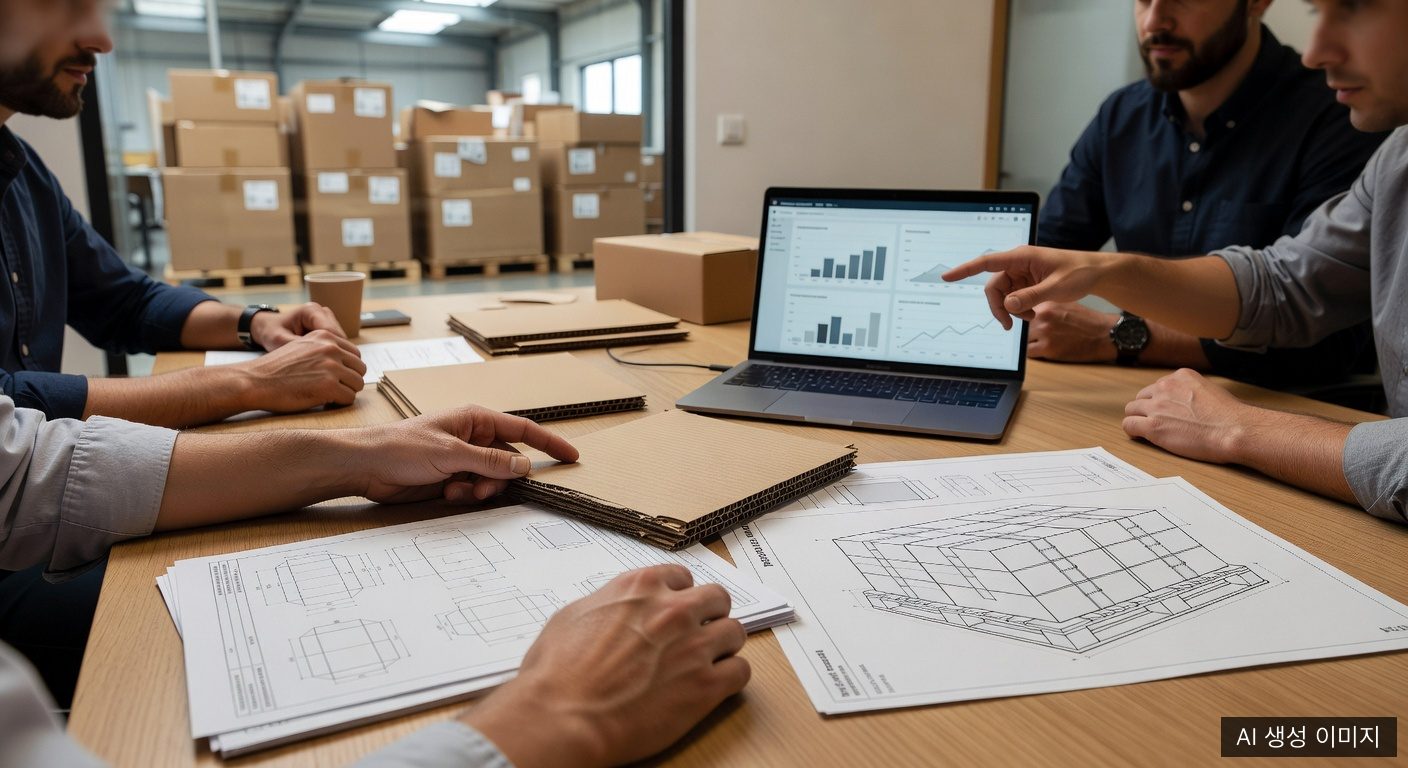
Changes in the North American market will not flip into a different domestic price overnight. The questionnaire used in customer conversations should change, though. For products shipping to North America or built to a local customer specification, the following items belong in the pre-quotation checklist.
- What is the final destination region within North America
- Will there be repackaging or label changes at the destination
- Does the customer’s distribution center use automated case erectors, sorters, or vision inspection
- Are barcode and handling mark positions on the outer box specified
- Are box weight, stack height, and compression strength criteria documented
- Is there an alternative drawing prepared for possible local converter production
- Can the contract include a clause for unit price adjustment if containerboard prices move
Working through these questions upfront makes unit price negotiation cleaner. The conversation shifts from comparing one box price against another to comparing automation compatibility, lead time stability, damage rate, and local responsiveness together.
How Korean packaging suppliers can respond
Korean packaging suppliers do not need to match the capital investment of large North American producers. The document quality and specification review process that customers expect, however, is likely to follow the same direction. For export packaging in particular, three areas are worth preparing.
First, separate production drawings from customer-facing drawings. The customer-facing version should make it easy to confirm outer dimensions, inner dimensions, material, basis weight, print position, barcode position, stacking method, and compression strength criteria.
Second, explain containerboard and converting risk separately. A jump in containerboard price and a slip in converting lead time have different root causes. Quotations are more persuasive when raw material, converting, logistics, exchange rate, and special print conditions are broken out as discrete items.
Third, treat automation compatibility as a quality item. It is no longer enough to confirm that the box is strong. It also has to flow through case erection, taping, wrapping, and palletizing without jamming. This item is likely to appear more often in North American customer audits and supplier assessments.
Closing thoughts
The new International Paper corrugated facility in Mississippi shows that the North American market is not simply running a capacity race. Large producers are placing modernized sites closer to customers and using automation and operational efficiency to manage both lead time and cost. With the June 2026 containerboard price wave layered on top, packaging quotations can no longer be explained by containerboard price alone.
Korean exporters and packaging suppliers do not need to treat this as distant overseas news. The more automated customer plants become, the more specific packaging specifications must be, and the more clearly quotations must separate cost variability from equipment fit. Competitiveness is likely to come from the ability to consistently propose boxes that match a customer’s automated logistics and export schedule, rather than simply offering a lower box price.
Frequently asked questions
Q: Will the new International Paper facility in Mississippi affect Korean corrugated prices directly?
The direct impact is limited. However, footprint changes and price increases from large North American producers can indirectly influence global containerboard market sentiment, export packaging specification requirements, and local converting conditions.
Q: How does an automated corrugated plant differ from a conventional one?
Automated plants have tightly integrated equipment across board handling, cutting, printing, gluing, palletizing, and inspection. That makes specification control around box dimensions, crease positions, print placement, and board flatness more important.
Q: What should be checked first in a quotation for North American export packaging?
Final destination, whether the customer’s distribution center uses automated equipment, box weight, stack height, barcode position, and compression strength criteria are good starting points.
About the Author
PackingMaster writes practical B2B content on paper packaging, corrugated boxes, export packaging, and sustainable packaging regulations. The focus is on checklists and decision criteria that procurement, quality, and logistics teams can use together.
References
- International Paper, “International Paper Breaks Ground on New Sustainable Packaging Facility in Rankin County, Mississippi” (2026.05.26)
- Packaging Dive, “Producers launch second wave of containerboard price increases in 2026” (2026.05.04, updated 2026.05.08)
- Sustainable Packaging Middle East & Africa, “International Paper breaks ground on US$225M corrugated packaging plant in Brandon, Mississippi” (2026.05.28)