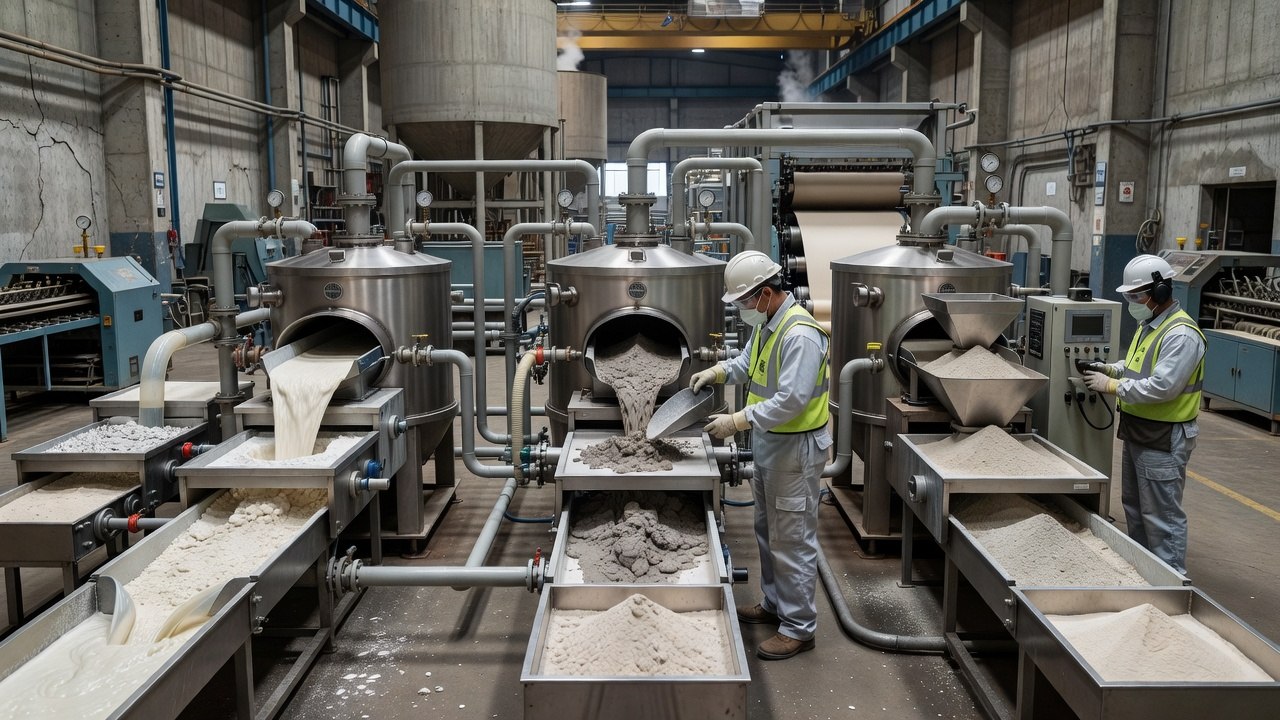
Omya’s ATMIRE is a technology platform intended to convert mineral-rich paper-mill side streams into recycled calcium carbonate grades and other value-added materials on site. The official page lists lime mud, grits, deinking sludge, wastewater sludge and fly ash and says the platform can integrate with an existing Omya on-site plant or operate as a standalone greenfield or retrofit unit. A secondary report relays Omya’s statement that operating installations and additional projects exist, but it does not disclose sites, capacity, yield, product specifications, cost or measured reduction.
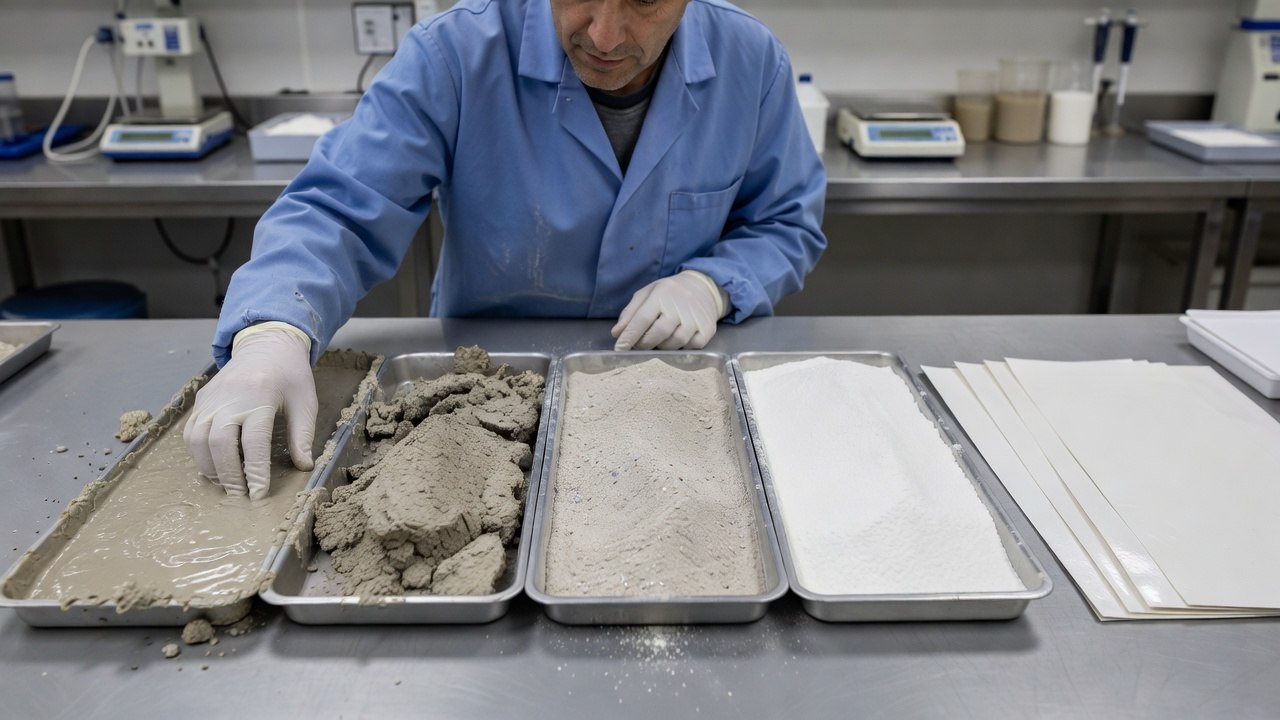
What White, Blue and Orange Separate
ATMIRE starts from the fact that composition, purity and target use differ among side streams.
| Route | Example feed | Reported direction | Key question before adoption |
|---|---|---|---|
| White | Calcium-carbonate-rich lime mud | Recovery toward recycled calcium carbonate and related products | CaCO₃, alkali, metal, organic content, brightness and particle size |
| Blue | Blended waste such as deinking sludge | Recovery or valorization of mixed minerals | Fiber, ink, stickies and ash variation; washing and separation yield |
| Orange | Processed waste such as fly ash | Route toward other value-added materials | Salts, metals, unburned carbon, dust and leaching |
The colors are platform pathways, not quality grades. White does not automatically mean equivalence to virgin GCC or PCC, and Blue and Orange outputs are not necessarily returned to paper as fillers.
Why On-Site Recovery Matters
Mineral-rich residues are often wet and high-volume, making long-distance transport potentially expensive and carbon intensive. On-site treatment can reduce transport and disposal dependence, but only when utilities, space and material flow fit the existing mill. A stable destination for the recovered product is also essential; otherwise a waste stream can become product inventory without a market.
Omya says ATMIRE can integrate with its existing on-site plants or operate as a standalone unit, with recovered-product properties tailored to customer needs and target uses. This describes design flexibility, not equal process performance or economics at every mill.
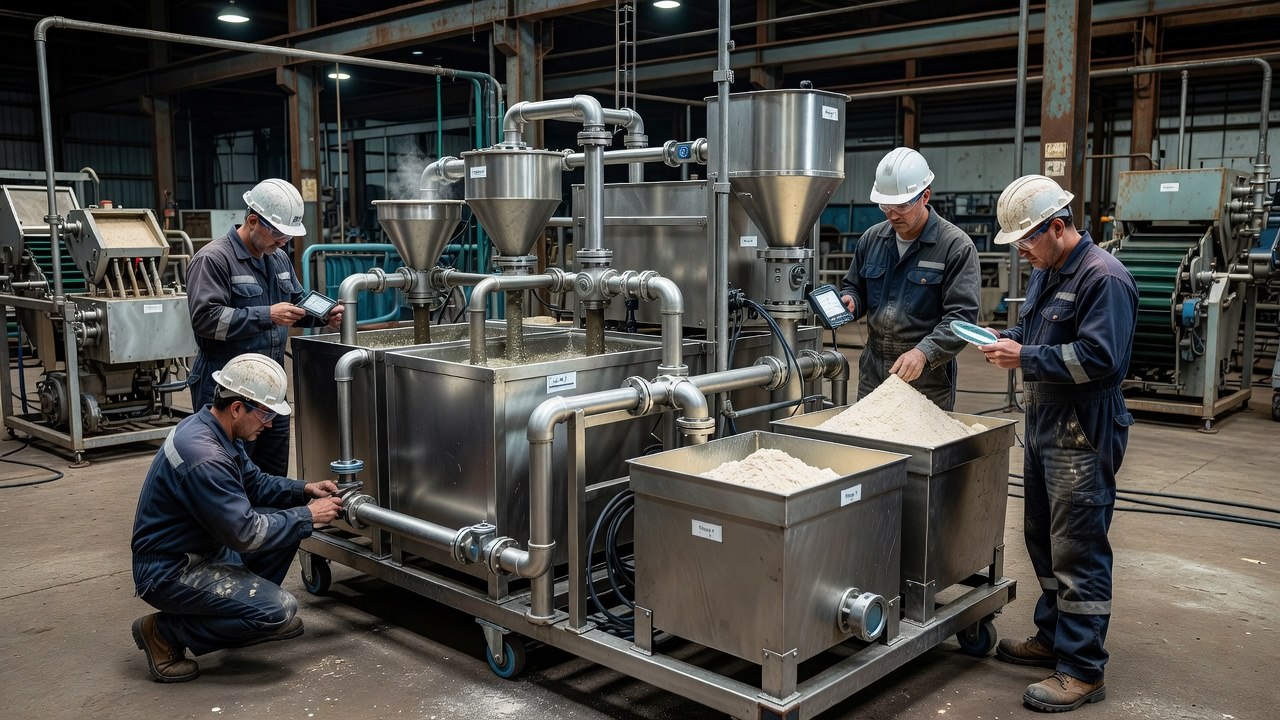
Five Validation Gates
1. Side-Stream Characterization
Analyze process source, flow, solids, moisture, CaCO₃ and ash, fiber and organics, ink and stickies, metals and salts, pH and particle size by time and product grade. Include normal range and upset conditions, not a single average sample.
2. Mass Balance and Recovery Yield
Close the mass from wet input through recovered product, filtrate, concentrate, screen reject and air emissions. A landfill-diversion figure must include actual avoided disposal and newly generated reject.
3. Recovered-Product Specification and Use
Compare brightness, particle-size distribution, surface area, moisture, pH, abrasiveness, metals, organics and lot variation against the target application. Paper filling or coating, cement and construction each require different performance and regulatory evidence. Customer qualification and the COA matter more than the generic product name.
4. Mill-Site Integration
Review footprint, storage and transfer, water, steam, power, compressed air, wastewater, dust and odor, cleaning and maintenance, and the required production outage. A retrofit needs interfaces and bypass logic; a standalone unit needs intermediate logistics and operating staff.
5. Environment, Safety and Economics
Confirm leaching, dust, worker exposure, wastewater and end-product requirements. Subtract equipment, chemicals, energy, labor, maintenance and reject disposal from avoided landfill and transport cost plus product value, then compare with a stable baseline.
Copy-Ready ATMIRE Screening Table
| Area | Input data | Evidence required | Hold condition |
|---|---|---|---|
| Feed | Stream, hourly flow, solids and composition | Representative sampling and variation | Design based on one average sample |
| Process | Pretreatment, separation, washing and drying | Pilot run, mass/water/energy balance | Reject or wastewater route undefined |
| Product | Target use, specification and lot tolerance | COA, customer test and storage stability | Only the name “calcium carbonate” matches |
| Integration | Space, utilities, interfaces and outage | Layout, HAZOP, commissioning and acceptance | Existing papermaking risk increases |
| Environment and cost | Disposal baseline, emissions, exposure and product value | Permit review, LCA, cost and sensitivity | Platform-level benefit treated as mill result |
Boundary of the Public Evidence
- The secondary report of operating installations is based on Omya’s statement; locations and count are not public.
- “Recycled calcium carbonate grades and other value-added materials” does not mean every output is paper-grade CaCO₃.
- Lower disposal cost and stronger circularity are platform objectives, not published mill-level savings or reduction figures.
- Greenfield, retrofit and standalone options do not guarantee installation without process interruption.
- White, Blue and Orange are feed pathways, not safety or product certifications.
ATMIRE’s useful idea is to avoid treating every mineral-rich residue as the same generic “recycling” problem. Commercial performance exists only when variation-aware mass balance, repeatable recovered-product specifications, safe integration and a qualified end market align at the same mill.
About the Author
PackingMaster: Editor of Paper Pack Log. We collect and organize market trends, product information, and technical insights for the paper packaging industry.