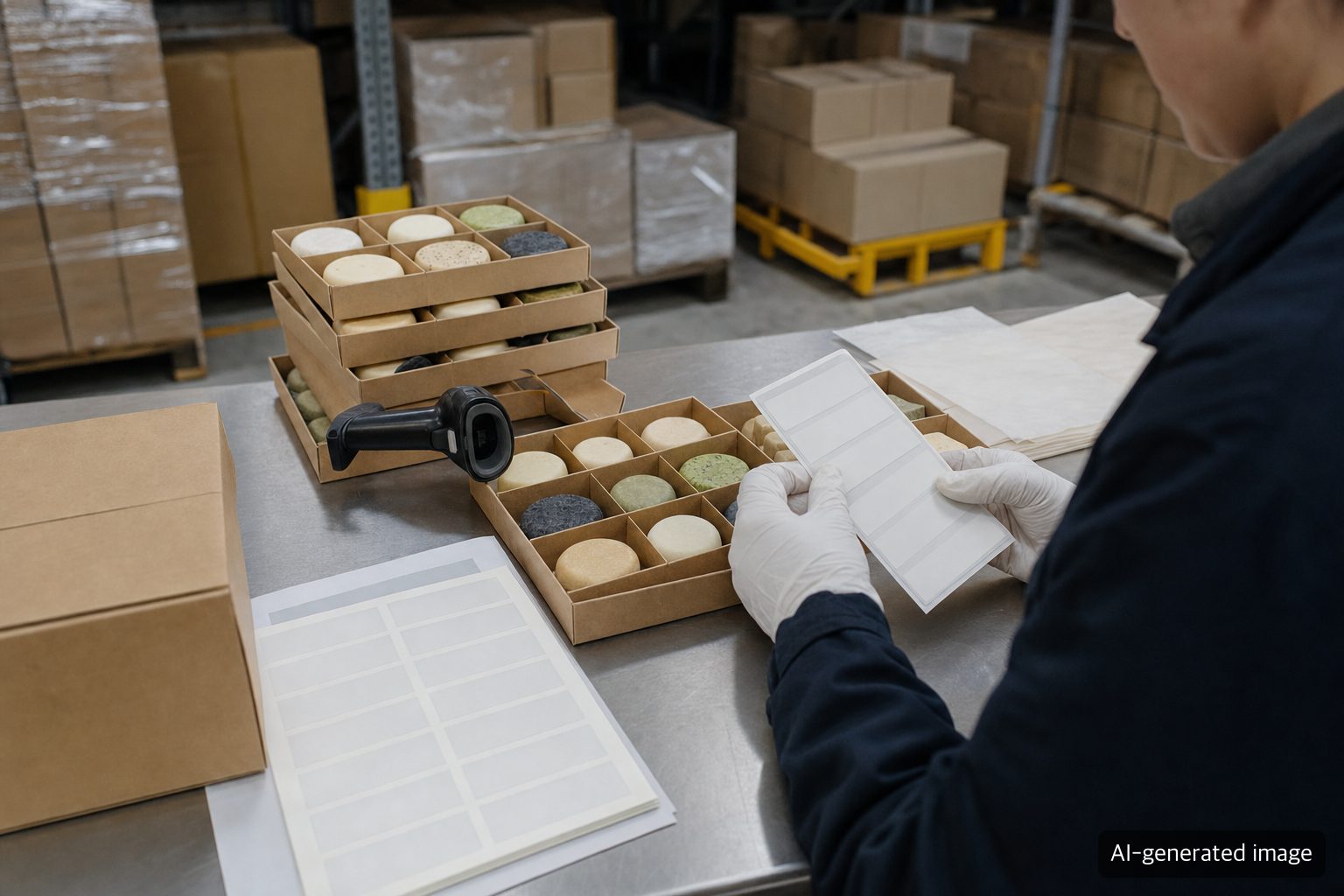
A packaging-free shampoo bar shipped through an open marketplace arrived with a chipped corner after knocking against other units inside the courier box, and the batch sticker had come loose inside the box, leaving the returns team unable to identify which batch it belonged to. This matrix exists so export, quality, packaging, and logistics staff at K-beauty brands can see exactly what has to be redesigned when primary packaging is removed. It maps, by sales country and sales channel, where labeling, hygiene, picking, transport, and returns functions need to move, in a table built to be copied directly into a field checklist.
The Ground-Level Problem
Removing the container simplifies the marketing line, but the four functions that container was quietly performing do not disappear.
- Information transfer: the space that carried ingredient lists, usage instructions, responsible-person information, quantity, and shelf-life or period-after-opening markings
- Contamination control: the sealed structure that limited individual contact, moisture, and foreign-matter intrusion
- Unit identification: the labels and barcodes that distinguished SKUs and batches for picking, inspection, and traceability
- Transport protection: the cushioning structure that guarded against friction, impact, and breakage
Going packaging-free does not eliminate these four functions; it relocates each one to a different medium and control point depending on the channel. Direct-to-consumer shipping, offline store sales, retail supply, travel and single-item sample sales, and returns reprocessing each carry different contact frequency, transit distance, and country-specific labeling requirements, so the same fix cannot simply be copied across channels. Without mapping this relocation in advance, the failure surfaces first in the fulfillment center and the returns warehouse, not on the shelf.
Evidence to Verify
This matrix draws on exactly three public sources. No pass criteria or legal scope beyond what these sources state has been invented.
- Lush official press release (weare.lush.com): announces an expanded solid and packaging-free product lineup, including five new shower gummies and four solid shower gel bars (UK and Ireland only). It also states that in 2025 the company sold 37 million packaging-free products, that these made up 58% of individually sold products and 45% of the permanent range, and that 15,000 tonnes of plastic have been avoided since 2005. These figures are company-reported claims, not third-party verified results, and this article does not extend them into a general safety or market-average claim.
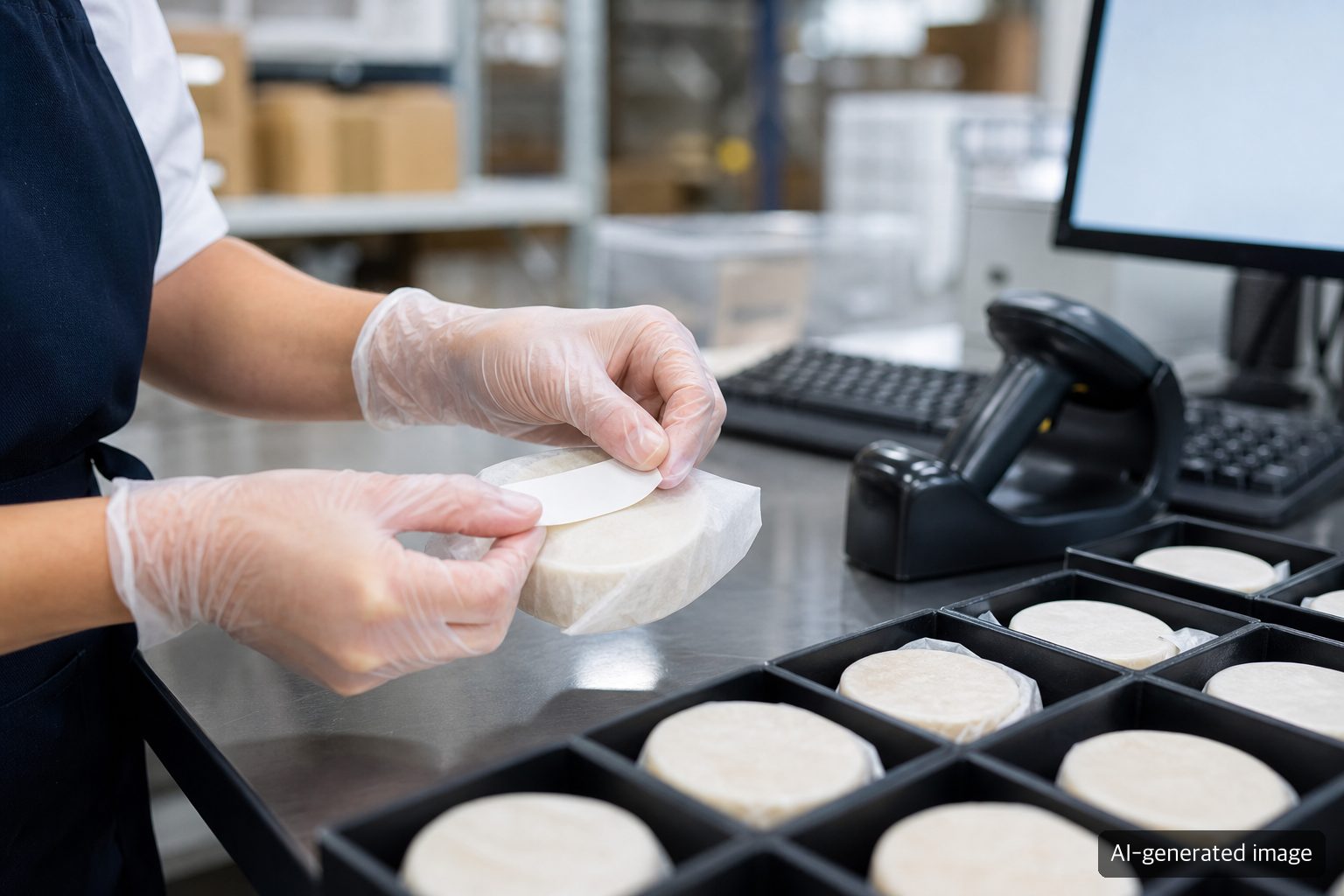
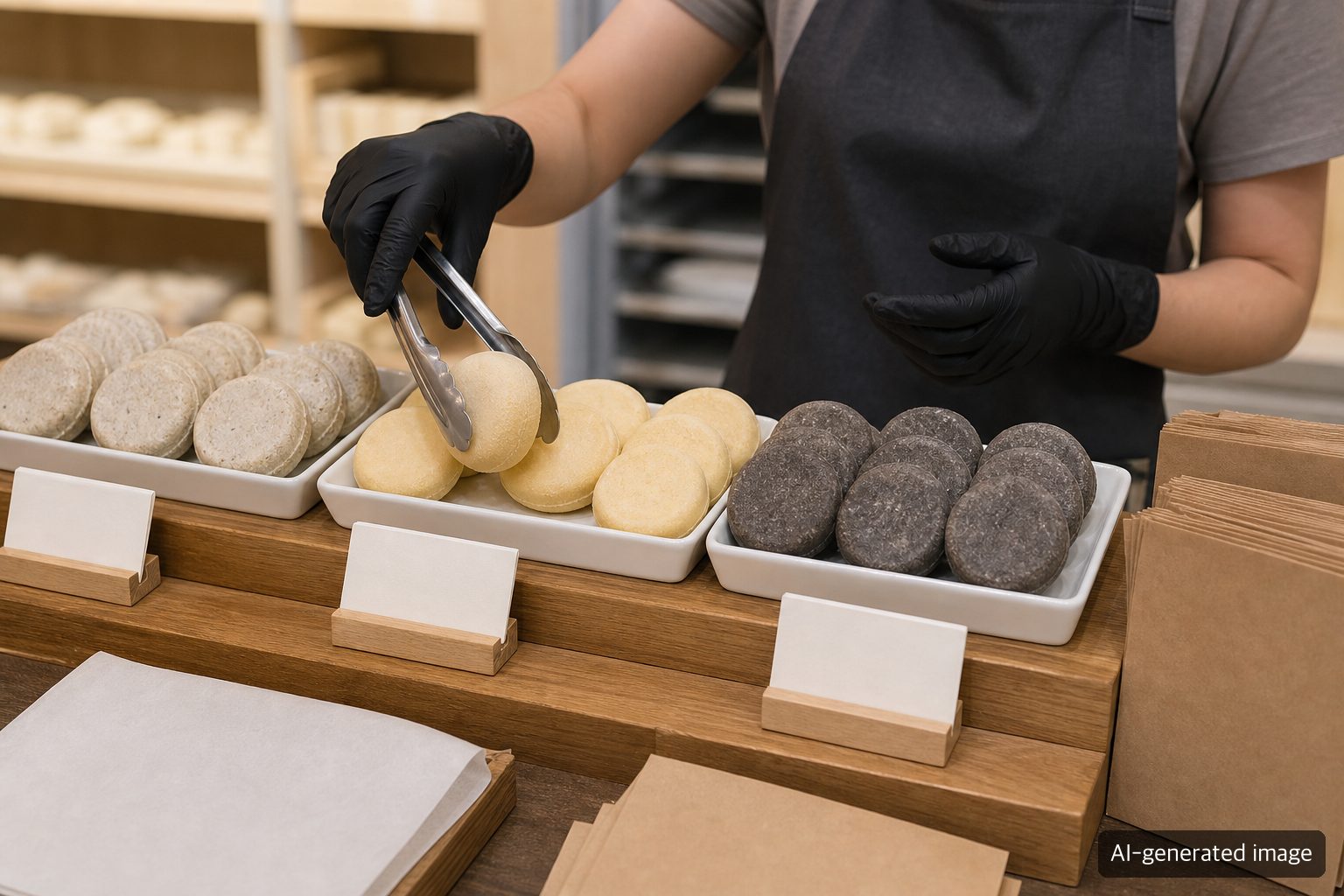
- Packaging Europe article (2026-07-28, packagingeurope.com): covers the packaging-free shampoo bars, solid shower gel, and shower gummies, and describes how in-store signage provides accessible information that would otherwise be printed on packaging, with weigh-in label stickers applied to recycled paper bags or greaseproof paper for customers to take home. This case is used only as a concrete example of relocating the labeling function to store signage and stickers within the retail-store channel; it is not applied to online or retail-supply channels.
- EU Cosmetics Regulation (EC) No 1223/2009, Article 19 (eur-lex.europa.eu): requires that cosmetic products bear, in indelible, easily legible, and visible lettering on the container and packaging, the responsible person’s information, country of origin for imports, nominal content, minimum durability date or period-after-opening, precautions for use, batch identification, the product’s function, and the ingredient list. The placement and any exemptions depend on product form, packaging format, and country-specific application conditions and require checking the original text case by case, so going packaging-free does not by itself remove the information-labeling obligation.
Each source operates at a different layer. The Lush press release sets the boundary of the company’s own claims, the Packaging Europe article shows a concrete relocation method inside the store channel, and Article 19 confirms that the labeling obligation itself exists regardless of packaging format. This matrix does not blend the three layers into a single conclusion.
Practical Deliverable
The table below maps, by channel and sales country, which medium and control now carries the function that primary packaging used to perform, and whether that has been verified yet. Rows marked “needs verification” or “on hold” connect directly to the hold conditions in the next section.
| Channel/Sales Country | Function Formerly Held by Primary Packaging | Replacement Medium/Control | Field Check Value | Basis Source | Status | Owner/Action/Trigger |
|---|---|---|---|---|---|---|
| D2C own site/marketplace | Labeling (ingredients, usage, responsible-person info, quantity) | Product detail page + individual label and enclosed information sheet | Whether required labeling items and language for each sales country are covered across the detail page, label, and enclosed information sheet | Cosmetics Regulation Article 19 (non-EU countries require separate check) | On hold | RA: issue a finalized required-labeling list per sales country. Trigger: adding a new sales country |
| D2C own site/marketplace | Contamination control (individual contact, moisture) | Individual seal bag or moisture-barrier liner | Whether stability test results exist for contact, moisture, and friction conditions | Internal quality test standard (no public standard, requires internal verification) | On hold | Quality: run humidity/friction simulation testing. Trigger: before launching a new SKU |
| D2C own site/marketplace | Unit identification (SKU/batch traceability) | Batch sticker + dual-mapped WMS barcode | Whether the batch can be recovered if the sticker detaches | Internal logistics SOP | Partially met | Packaging/logistics: test sticker adhesion and apply dual barcode redundancy. Trigger: on return intake |
| D2C own site/marketplace | Transport protection (friction, impact) | Packaging-free-specific cushioned tray or individual mailer | Measured breakage rate on the shipping route | Internal breakage-rate tracking (no public standard) | In progress | Packaging/logistics: aggregate breakage data monthly and improve cushioning |
| Local retail store | Labeling (ingredients, usage, responsible-person info) | In-store signage + label sticker issued at weigh-in | Whether signage copy covers every required labeling item for that sales country | Packaging Europe (2026-07-28), Cosmetics Regulation Article 19 | Needs verification | RA/sales: finalize store signage copy after legal review per sales country |
| Local retail store | Contamination control (individual contact) | Paper bag or greaseproof paper provided, staff use utensils | Whether a store hygiene procedure document exists | Sales-country store hygiene rules (requires country-by-country check) | On hold | Quality/sales: draft a store hygiene SOP and train staff |
| Local retail store | Unit identification (weighing/picking) | Label sticker issued at the point of weighing | Weighing tolerance and mislabel-prevention procedure | Internal weighing SOP | Needs verification | Sales: confirm scale calibration schedule per store |
| Retail supply | Labeling (individual unit vs. carton) | Carton-level labeling per retailer requirement, or individual unit labels | Whether the retailer requires individual unit labeling or accepts carton-level labeling | Individual retailer listing rules (no public standard, requires buyer confirmation) | On hold | Sales/channel: confirm labeling placement requirements with the buyer in writing |
| Retail supply | Contamination control/transport protection (shelf exposure) | Carton dividers + individual protective liner | Shelf temperature/humidity conditions and display duration | Retailer merchandising guide (requires individual confirmation) | On hold | Packaging/logistics: review liner material against display conditions |
| Travel/sample and single-item sales | Labeling (small-size/sample exemption applicability) | Minimal labeling + QR code linking to full information | Whether a small-size or sample labeling exemption applies in the sales country | Cosmetics Regulation Article 19 exemption clauses (requires original-text check), country-by-country for non-EU | On hold | RA: verify small-size labeling exemptions against the original text per country |
| Travel/sample and single-item sales | Contamination control/transport protection (individual carrying) | Individual mini pouch or small case | Vibration/temperature-change testing under carrying conditions | Internal quality test standard (no public standard) | Needs verification | Quality: run carrying-condition simulation testing |
| Returns/reprocessing | Contamination control (resale eligibility determination) | Opened/unopened inspection sorting followed by defined repackaging criteria | Whether a criterion exists for judging contact/contamination on returned units | Internal returns SOP (no public standard) | Undetermined | Quality/packaging-logistics: establish resale eligibility criteria for returns. Trigger: a spike in return rate |
| Returns/reprocessing | Unit identification (original batch recovery) | Batch re-verification sticker applied at return intake | Whether the original batch can be recovered for units with a history of sticker detachment | Internal batch-tracking system | On hold | Packaging/logistics: confirm integration between the batch-tracking and returns systems |
Do Not Blend Labeling, Hygiene, and Transport
Reading the table only by channel makes it easy to lump labeling and hygiene measures together. In practice they are separate controls with distinct failure points.
- Labeling: information printed on store signage, weigh-in label stickers, and paper bags or greaseproof paper. The failure point is missing signage copy and sticker printing errors.
- Hygiene: preventing individual contact, moisture, and foreign-matter intrusion. The failure point is the store shelf where packaging-free product is touched by many customers, and the warehouse where it sits for extended periods without moisture protection.
- Unit identification and picking: the labels and barcodes that distinguish SKUs and batches. The failure point is mispicking and misshipment caused by a detached sticker.
- Transport protection: preventing friction, impact, and breakage. The failure point is packaging-free units knocking against each other inside a courier box with no cushioning.
- Returns handling: determining whether a returned packaging-free unit is resalable. The failure point is having no criterion to distinguish opened from unopened or contaminated from uncontaminated, which pushes handling to one of two extremes: discarding everything or reselling everything.
Actions by Role
- Regulatory/RA: compile, from the original legal text, the required labeling items, placement, language, and small-size/sample exemptions for each sales country, and update the list whenever a new sales country or channel is added.
- Quality: run channel-specific simulation testing for contact, moisture, and friction conditions in the packaging-free state, and do not infer preservation performance or microbial safety from the product’s solid form alone.
- Packaging/logistics: back up SKU and batch traceability with dual barcode redundancy rather than relying on a single sticker point, and track breakage and return rates by channel on a regular cadence.
- Sales/channel: confirm retail buyers’ labeling requirements in writing, and prevent store staff from altering signage copy on the floor without legal review.
Conditions for Holding Application
Hold the packaging-free conversion for a given channel if any of the following remain unresolved.
- Required labeling placement and language for the sales country have not been finalized
- Stability testing under contact and moisture conditions has not been completed
- No traceability system exists to recover the original batch if a batch sticker detaches
- The channel’s returns handling method, including resale eligibility criteria, has not been finalized
- The retailer has not confirmed individual-unit labeling requirements in writing for retail supply
Documents, Samples, and Tests to Check Today
- The original text of Cosmetics Regulation (EC) No 1223/2009 Article 19, and the original cosmetics labeling law for each non-EU country in scope
- Test plans and draft test reports for contact, moisture, and friction conditions on the SKUs targeted for packaging-free conversion
- Current returns-handling SOP documents for each channel (own site, offline store, retail, travel/sample, returns)
- Draft in-store signage and weigh-in label stickers, cross-checked against the required labeling items per sales country
- Logistics staff interviews or system logs confirming whether the batch-tracking system and the returns system are integrated
About the Author
PackingMaster: Editor of Paper Pack Log. We collect and organize market trends, product information, and technical insights for the paper packaging industry.
References
- Lush, “No bottles, less baggage: Lush has a packaging-free cosmetic for every summer plan” (2026-07-08)
- Packaging Europe, “Lush sells solid shower products and removes unnecessary packaging” (2026-07-28)
- European Union, “Regulation (EC) No 1223/2009 on cosmetic products” (consolidated text as of 2026-05-01)