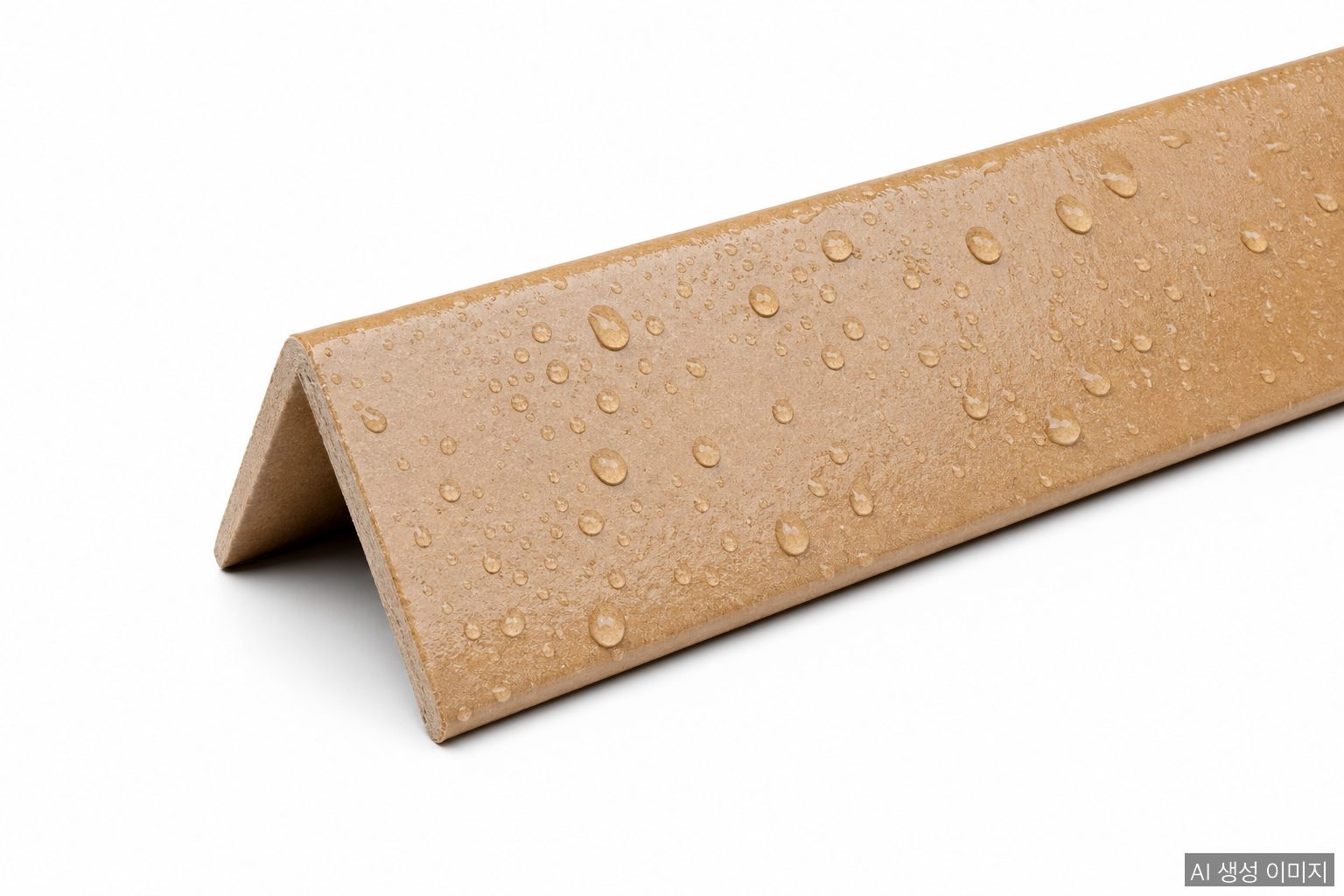
A waterproof paper angle board is a paper angle board with a moisture barrier coating applied to its surface, allowing it to maintain strength and form in humid environments. Where standard angle boards rely on a V-shaped laminated structure for compressive strength, the waterproof version adds a coating layer that addresses paper’s core weakness: water, humidity, and condensation.
Why Waterproofing Matters
Paper angle boards are fundamentally laminated multi-ply kraft paper. The structure is strong, but exposure to moisture creates predictable problems:
- Delamination: adhesives between plies weaken, the V-profile loses its integrity
- Compressive strength loss: wet paper retains only 50–70% of dry-state strength
- Mold and bacteria growth: a hygiene issue for food and beverage packaging
- Stains and surface damage: visible on premium appliance and furniture packaging
Standard angle boards reach their limits in the following environments:
| Environment | Risk Factor |
|---|---|
| Cold-chain warehouses | Surface condensation |
| Ocean export containers | Internal humidity, condensation in transit |
| Food and beverage pallets | Liquid leaks, washdown water |
| Produce and floral logistics | High humidity, direct moisture contact |
| Southeast Asia / Latin America export | Monsoon-season port storage |
Three Coating Types: How They Work
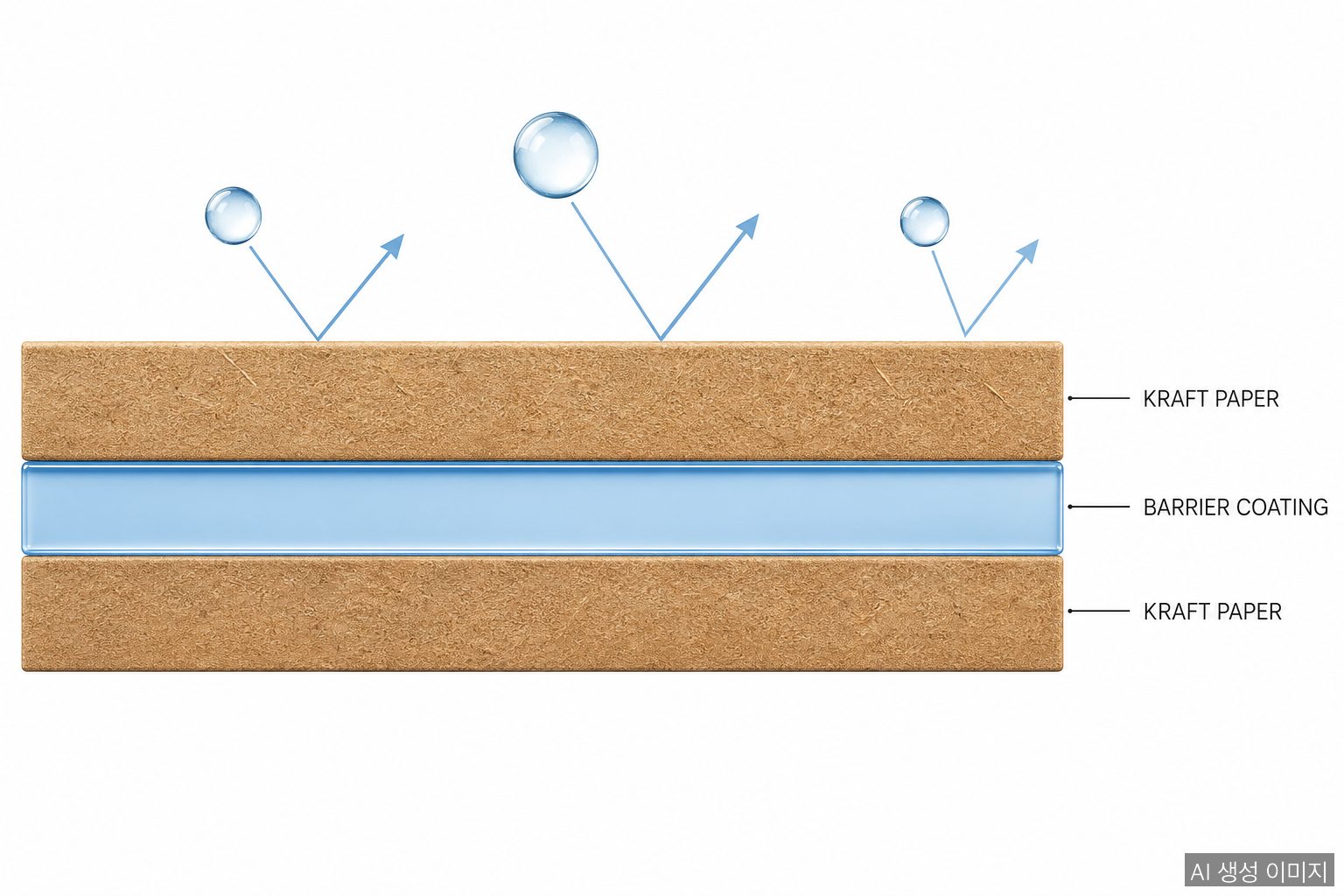
1. Polyethylene (PE) Coating
The most common and least expensive method. A thin polyethylene film is laminated onto the paper surface, blocking moisture penetration.
- Features: low cost, strong waterproofing, stable supply
- Thickness: 10–30 μm
- Drawback: paper and plastic are bonded, making recycling difficult. Special separation processing is required, or the material is sent to disposal.
2. Wax Coating
Paraffin wax or beeswax is applied via heat to penetrate between paper fibers.
- Features: 10–25% coating weight ratio, 5–10 μm thickness
- Barrier performance: beeswax improves water vapor barrier by approximately 77%
- Pros: food-grade options available, relatively eco-friendly depending on formulation
- Cons: wax can melt at high temperatures; standard recycling lines require pre-treatment
3. Eco-Friendly Barrier Coatings (New Generation)
Driven by the environmental burden of traditional PE and wax, water-based barrier coatings have emerged as the new generation.
- Examples: Cartaseal VWAF, EcoShield, TopScreen
- Features: water-based, fluorine-free, some derived from vegetable oils
- Pros: repulpable → recyclable through standard channels, free of MOSH/MOAH and other harmful compounds
- Cons: higher cost than PE/wax; limited supplier base
What Is “Complete Waterproof”?: Superhydrophobicity and Academic Research
The phrase “complete waterproof” gets used loosely in industry, but academic and industrial standards define it precisely. Two measurement methods are standard.
Method 1: Water Contact Angle (WCA)
Measure the angle a water droplet forms on the surface.
| Classification | Contact Angle | Behavior |
|---|---|---|
| Hydrophilic | < 90° | Water absorbs quickly |
| Hydrophobic | 90° – 150° | Water beads up, absorbs slowly |
| Superhydrophobic | > 150° | Droplets roll off (self-cleaning) |
Standard PE-coated paper angle boards reach approximately 90–110°: within the “hydrophobic” range. True “complete waterproof”: superhydrophobicity: starts above 150°, which conventional coatings rarely achieve.
Method 2: Cobb Test (ISO 535)
A standardized test that measures the amount of water absorbed (in g/m²) over a fixed area in a fixed time (typically 60 seconds). Lower is better.
| Classification | Cobb60 Value |
|---|---|
| Standard paper | 25–30 g/m² |
| Standard waterproof (PE/wax) angle board | 5–15 g/m² |
| Superhydrophobic coated paper (academic) | < 10 g/m² |
Academic Research: Nanocellulose and Self-Healing
Recent academic work has focused on nanocellulose-based superhydrophobic coatings:
- Scientific Reports (2025): Nanocellulose + quaternary ammonium silane + PCC achieved WCA > 150° and Cobb60 of 24.45 g/m², with antimicrobial properties as a bonus
- Nano-silica + microfibrillated cellulose (PubMed, 2022): Multi-layer paper combining high strength and superhydrophobicity
- Self-healing cellulose paper (ScienceDirect, 2025): WCA of 156° with surface that self-repairs after damage, suitable for high-humidity packaging
- SF6 plasma coating (PMC): Treats kraft paper with fluorine plasma, achieving hydrophobicity without coating additives
- PVA + nanocellulose + AKD composite coating (Scientific Reports): Simultaneously blocks water, oil, and grease (suitable for food packaging)
The Gap Between Lab and Production
Academic studies routinely demonstrate WCA above 150°, but bringing superhydrophobicity to industrial paper angle board production faces real obstacles:
- Cost: Nanocellulose and plasma treatment cost 5–10× standard production
- Durability: Friction or stretching strips coatings, eliminating the effect immediately
- Recyclability: Some superhydrophobic coatings (fluorine-based) are difficult to repulp
- Certification: Food-contact use requires additional safety certification
In the current market, “complete waterproof paper angle board” typically refers to PE or multi-layer barrier coating with sufficient thickness. True superhydrophobic paper angle boards are expected to reach commercial maturity within the next 5–10 years.
How Much Waterproofing Is Actually Needed?
Most industrial applications are well-served by WCA around 110° and Cobb60 ≤ 10 g/m². True superhydrophobicity is only required in extreme environments:
- Direct water contact, frequent: produce and seafood packaging
- Risk of submersion at sea: hold-deck cargo on ocean voyages
- Frequent outdoor temporary storage: construction materials
- Reusable packaging where coating must survive repeated cycles
Industry Application Guide
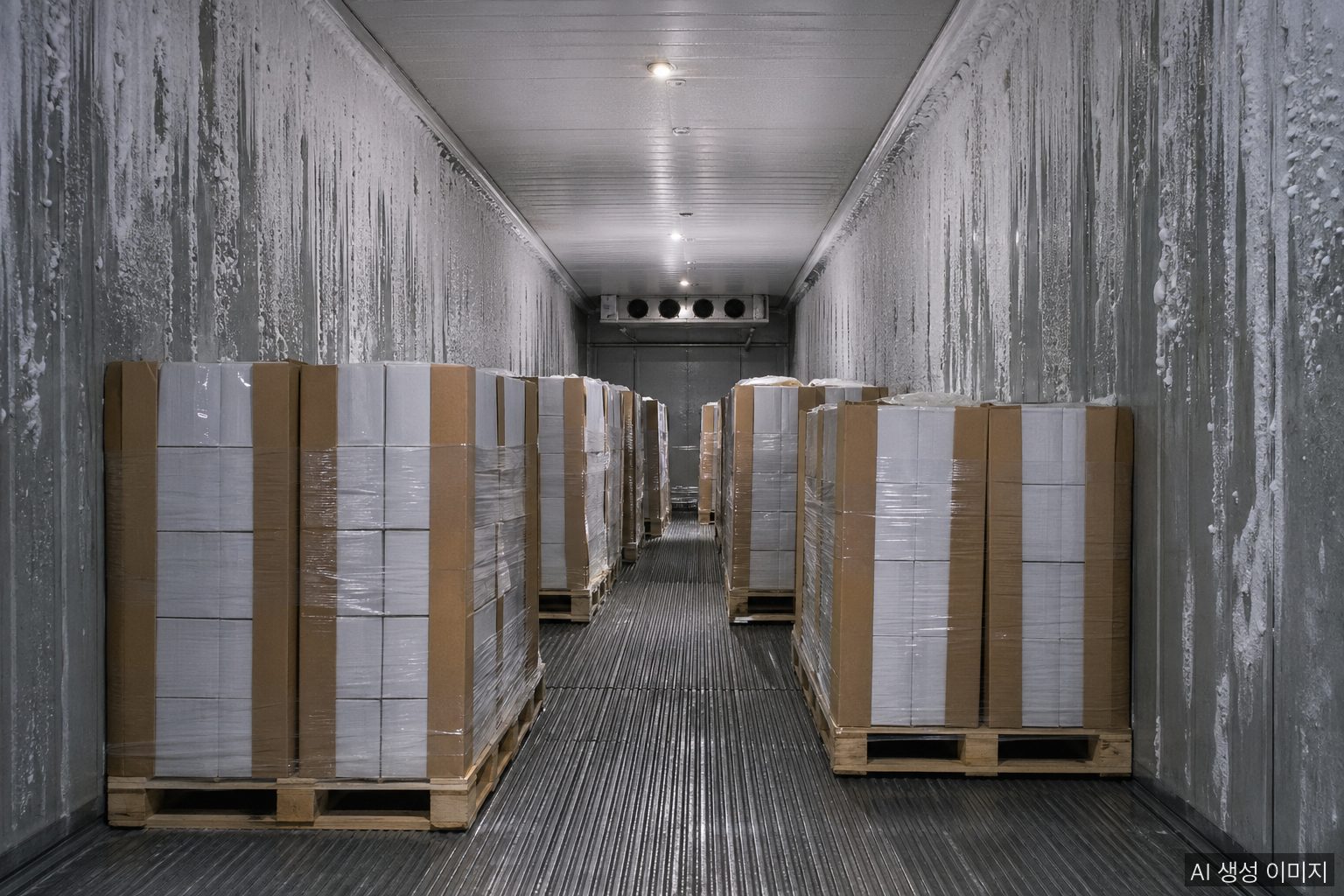
Cold-Chain Logistics Dairy, meat, and ice cream pallets generate heavy condensation, making waterproof coating effectively mandatory. PE coating is most common, though brands emphasizing food safety prefer wax or eco-friendly coatings.
Ocean Export Containers crossing oceans face severe condensation due to temperature differences between origin and destination. PE or wax-coated angle boards are standard for shipments to Southeast Asia, India, and Latin America.
Produce and Floral Direct moisture contact is frequent and hygiene standards are strict. Eco-friendly barrier coatings are increasingly becoming the standard.
Large Appliance Export Used for corner reinforcement inside TV, refrigerator, and washing machine packaging. Waterproof grades are selected to prevent box damage from container condensation during export.
Steel and Coil Edge Protection High-value finished products (galvanized steel, stainless, aluminum) can incur claims from a single rust spot. Waterproof angle boards protect coil edges in storage and transit.
The Eco Transition
With EU PPWR enforcement starting August 2026 and Korea tightening single-use plastic restrictions, traditional PE-coated paper angle boards are gradually being replaced by eco-friendly barrier coatings. While repulpable coatings still cost more, two market dynamics are accelerating the shift:
- Global brand ESG requirements in supply chains: Major food and cosmetic companies mandating recyclability grades for their packaging push tier-1 and tier-2 suppliers to adopt the same standards.
- EU PPWR export gating: Non-recyclable PE coatings receive penalty points under PPWR recyclability grading and complicate Declaration of Conformity (DoC) preparation.
Selection Guide
| Priority | Recommended Coating |
|---|---|
| Cost-first | PE coating |
| Direct food contact | Wax or eco-friendly coating |
| EU export | Eco-friendly barrier coating (repulpable) |
| Recyclability / ESG focus | Eco-friendly barrier coating |
| Single-use container loading | PE coating (cost-performance) |
FAQ
Q: How much stronger is a waterproof angle board than a standard one?
In dry conditions they are nearly identical. The difference appears in humid environments: standard boards lose 30–50% of compressive strength, while waterproof boards retain near-dry-state strength thanks to the coating.
Q: Can PE-coated boards be recycled?
Traditional PE coating is difficult to separate on standard paper recycling lines. It requires facilities with dedicated separation processes; otherwise the material goes to disposal. For full recyclability, choose water-based eco-friendly barrier coatings.
Q: Is wax coating safe for food packaging?
Products using food-grade paraffin or natural beeswax are safe for direct food contact. Always confirm “Food Grade” or “FDA Compliant” labeling on the product specification before specifying for food contact applications.
About the Author
PackingMaster: Editor of PaperPackLog. Covers market trends, product insights, and technology in the paper packaging industry.
References
- Background: Ysung Co., Ltd., Paper Angle Board Product Lineup
- Background: Greif, “Edge and Angle Board Product Guide”
- Background: Solenis, “Eco-Friendly Barrier Coatings for Paper Packaging”
- Cortec Packaging, “EcoShield Barrier Coating for Paper and Corrugated”
- Background: Scientific Reports (Nature), “Surface-coated paper packaging with nanocellulose modified with quaternary ammonium organosilane and precipitated calcium carbonate” (2025)
- Background: PubMed, “High-strength and super-hydrophobic multilayered paper based on nano-silica coating and micro-fibrillated cellulose” (2022)
- Background: PMC, “Effect of Water-Resistant Properties of Kraft Paper Using SF6 Plasma Coating”
- Measurlabs, “Cobb Water Absorption Test (ISO 535)”