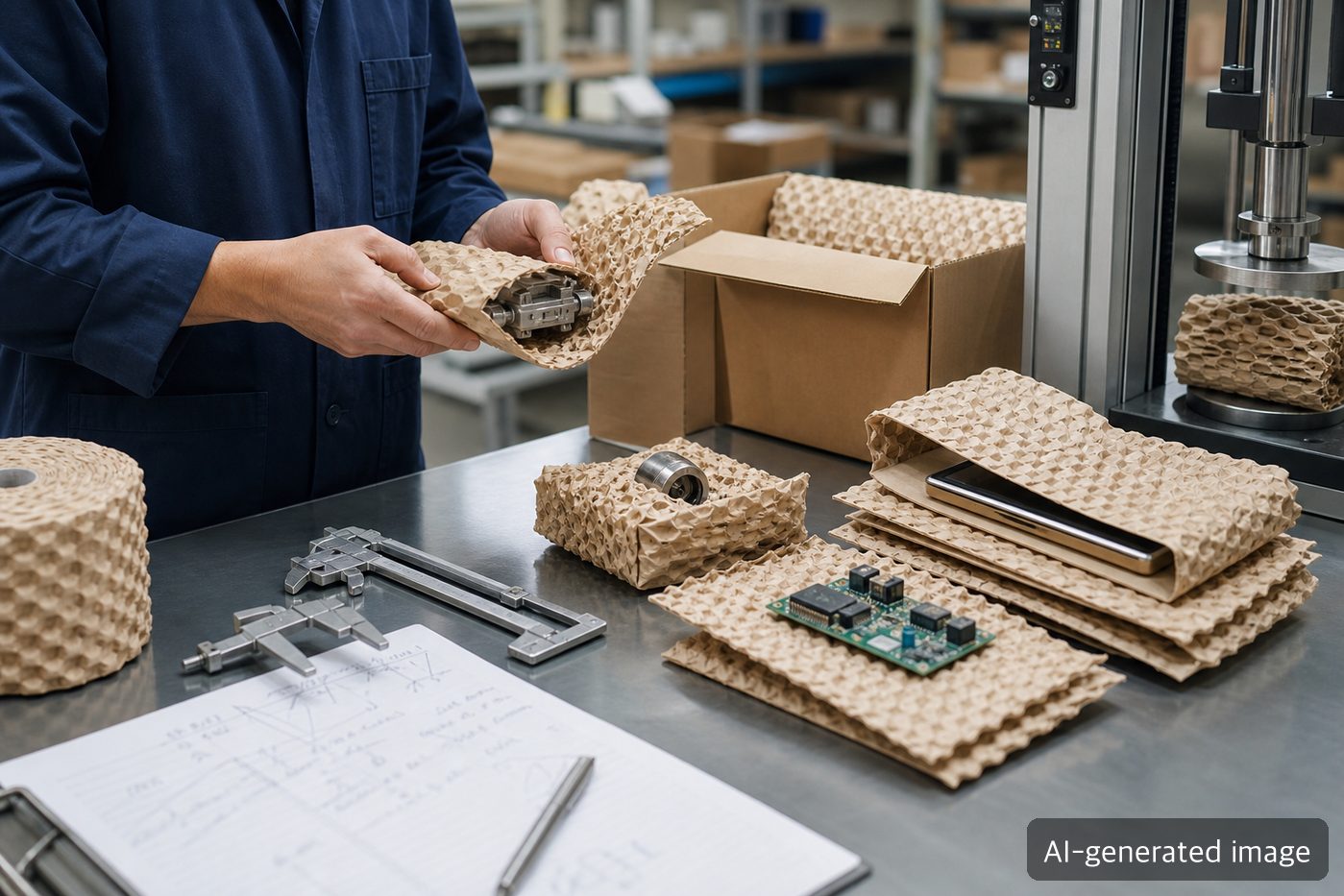
Interest in replacing plastic bubble wrap with paper-based cushioning continues to grow. The BIOWRAP project, supported in Europe, has been introduced as an effort to scale industrial paper-based bubble wrap. For packaging buyers, the important point is not simply that the material is paper. The real question is whether it can become a reliable procurement specification.
Cushioning is often invisible to the end customer, but it directly affects breakage rates, labor time, return cost, and shipping efficiency. A paper bubble wrap alternative therefore has to prove compression strength, moisture behavior, packing speed, automation fit, and disposal guidance before it can replace plastic cushioning at scale.

Why the Conversion Is Not Simple
Plastic bubble wrap is light, familiar, moisture resistant, and relatively predictable. Paper-based cushioning has a stronger sustainability story, but its performance can vary by product, humidity, folding method, and packaging line. E-commerce goods, industrial parts, cosmetics sets, glassware, and mechanical components all require different cushioning behavior.
A paper bubble structure also needs evidence on recyclability, coating or adhesive content, and strength after humidity exposure. If the conversion increases breakage, the environmental benefit can be offset by returns, replacement shipments, and extra packaging.
What Buyers Should Put in the Specification
A supplier brochure is not enough. Buyers should request a practical evidence set and translate it into an internal specification.
| Checkpoint | Practical Question |
|---|---|
| Compression strength | Does the bubble structure hold under product load? |
| Repeated impact | Does cushioning remain after drop and vibration exposure? |
| Moisture behavior | Does performance change in humid storage or cold-chain handling? |
| Manual workability | Can operators cut, wrap, tape, and pack at the same speed? |
| Automation fit | Does it run through wrapping or void-fill equipment without tearing? |
| Disposal guidance | Can the material be described clearly for paper recycling or disposal? |
| Total cost | Are breakage rate, labor time, storage volume, and unit cost included? |
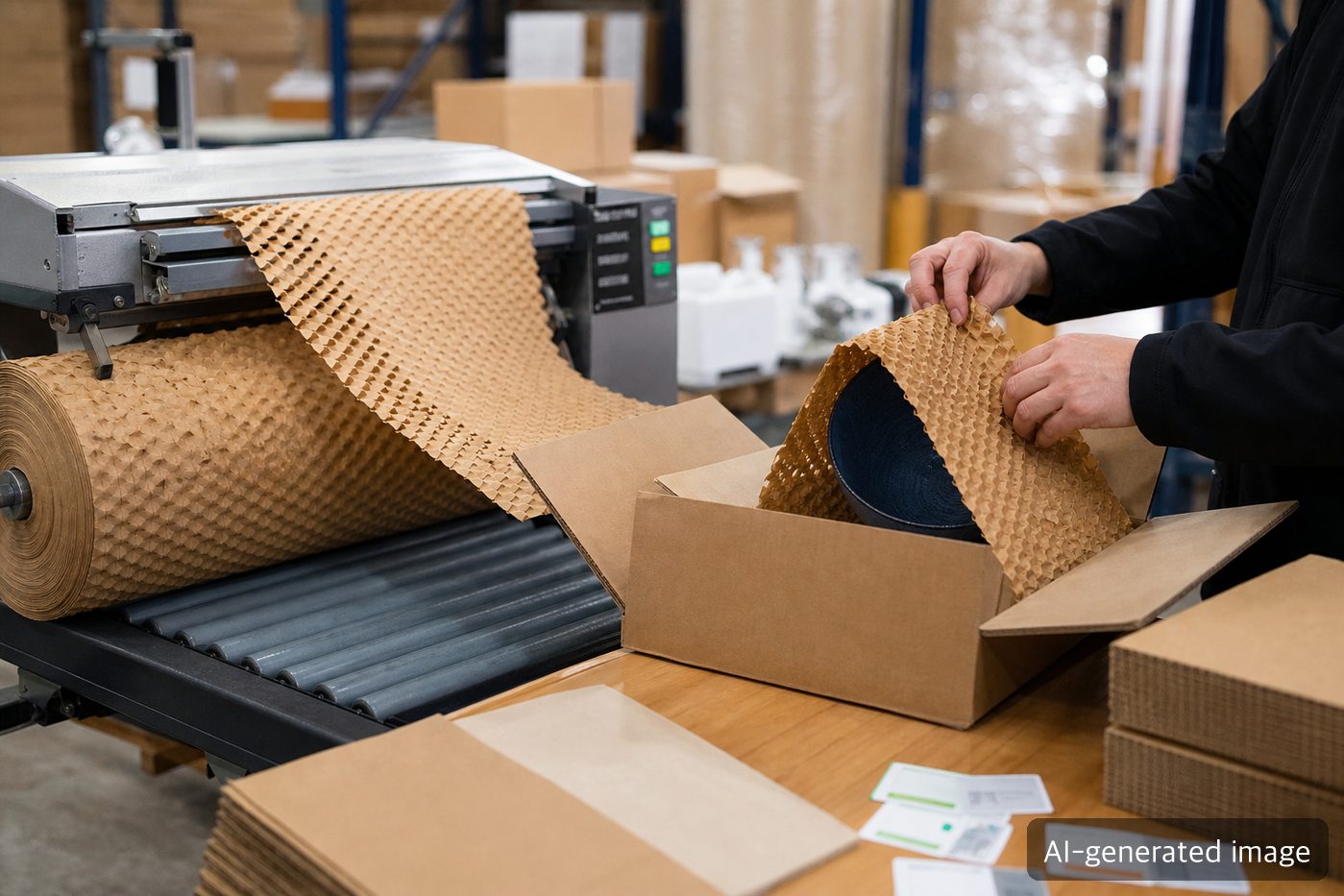
Do Not Use It Exactly Like Plastic Bubble Wrap
A paper cushioning material may fail if it is treated as a one-to-one substitute for plastic air cushioning. The packaging method often needs to change with the material. Thin components may need better edge protection, while heavy parts may need internal fixation rather than more wrap layers.
Paper is also affected by folding direction and storage conditions. The same material can behave differently depending on humidity, operator handling, and empty space inside the box. A safer rollout starts with standardized SKUs and lower breakage-risk products before moving to more sensitive goods.
In Automated Packaging, Downtime Is the Real Test
For automated packing lines, the main question is not whether the material is sustainable. It is whether the line keeps running. If the material is supplied in rolls, buyers should test tension, cutting, dust, curl, static, feeding speed, and jam rate. A sample that works in manual packing may still fail in automated handling.
The test should be based on real production speed. How many units can be packed per hour? Does tape consumption increase? Does the box size change? Does the operator need extra steps? These are part of the cost structure.
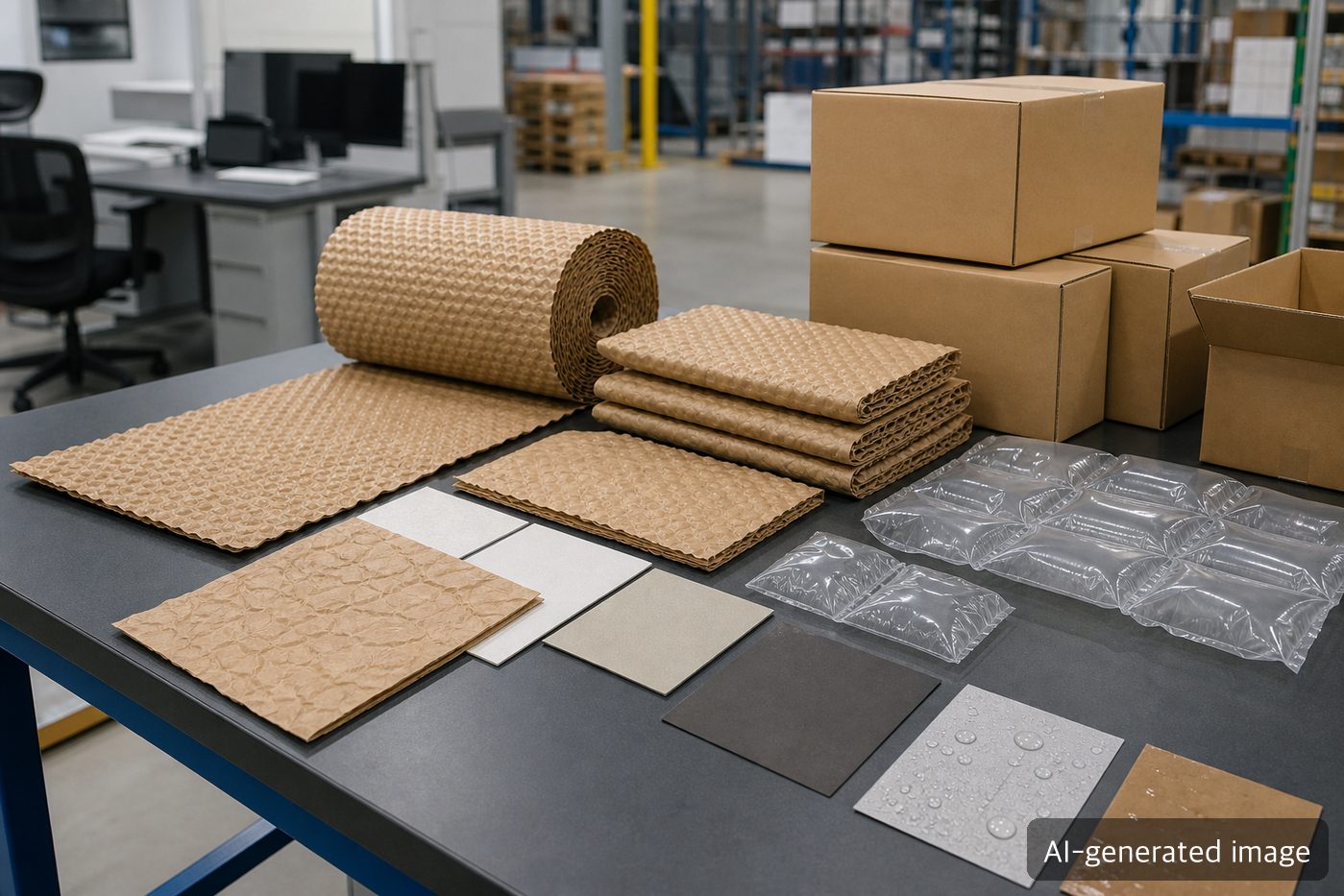
Disposal Claims Need Evidence
It is tempting to say that paper-based cushioning is recyclable because it is paper. In B2B packaging, that statement needs support. Coatings, adhesives, additives, contamination risk, and local collection systems can change the correct disposal guidance. Export products may also face EPR reporting, labeling, and packaging-data requests.
Suppliers should provide material composition, recyclability evidence, test reports, recommended disposal wording, storage conditions, and suitable application ranges. Buyers should connect those documents to quality files and customer-facing specifications.
Conclusion
Paper-based bubble wrap can become a useful way to reduce plastic cushioning, but it should be validated as a packaging system, not just as a material swap. BIOWRAP is important because industrial adoption will require more than a good sustainability message. It will require specifications, test methods, automation compatibility, and disposal evidence that procurement teams can actually use.
About the Author
PackingMaster writes practical guides on paper packaging, export packaging, and packaging regulation from an operations perspective. The focus is on checklists and specification language that packaging teams can use in real projects.
References
- Packaging Europe, “EU project targets industrial scaling of paper-based bubble wrap”
https://packagingeurope.com/news/eu-project-targets-industrial-scaling-of-paper-based-bubble-wrap/14408.article - Circular Bio-based Europe Joint Undertaking, BIOWRAP project page
https://www.cbe.europa.eu/projects/biowrap