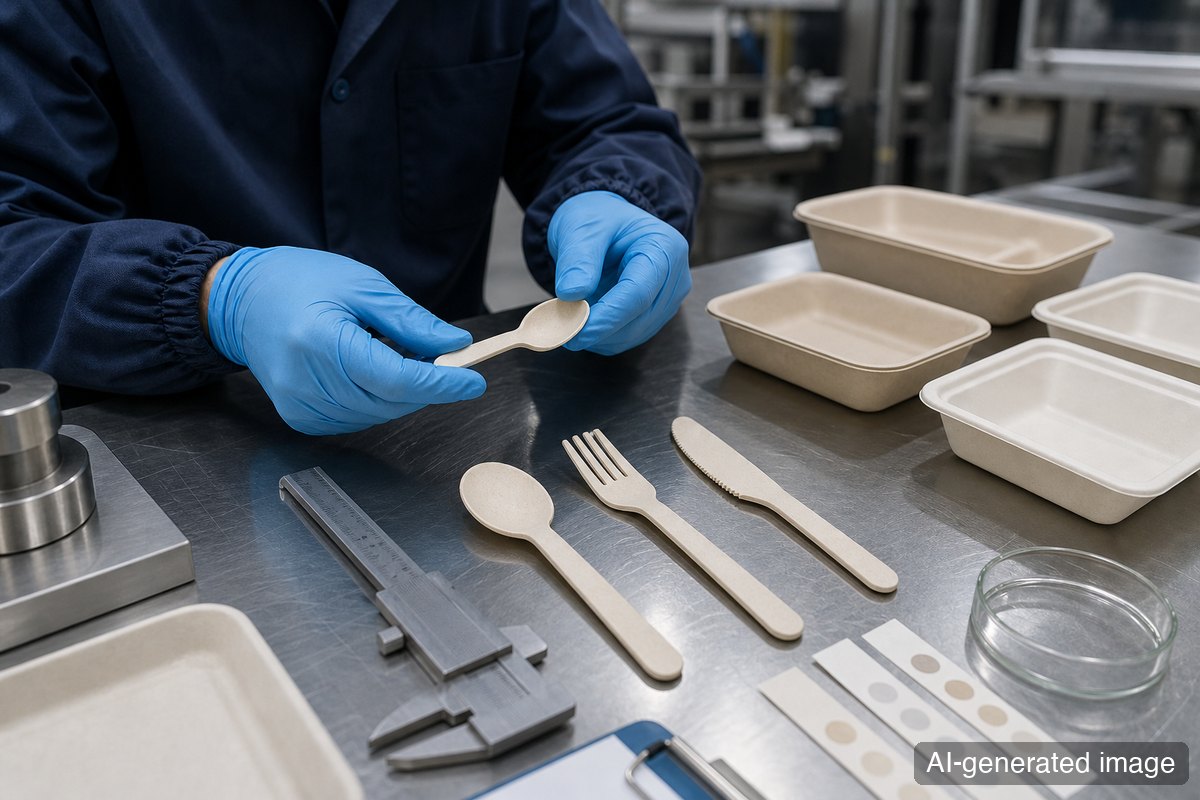
The move away from plastic forks, spoons, and knives is easy to understand. Foodservice, takeout, events, travel catering, and meal kits all use large volumes of disposable utensils. Paper-based cutlery is therefore gaining attention as a practical substitute. Sabert Europe’s recent launch of recyclable and home-compostable paper cutlery is one example of this direction.
But paper cutlery should not be approved simply because it is paper. It touches food and the mouth directly. It must handle hot, wet, oily, and acidic foods while still feeling acceptable to the user. For this product category, usability comes before the recyclability claim.

1. Mouth-contact products need strength and comfort first
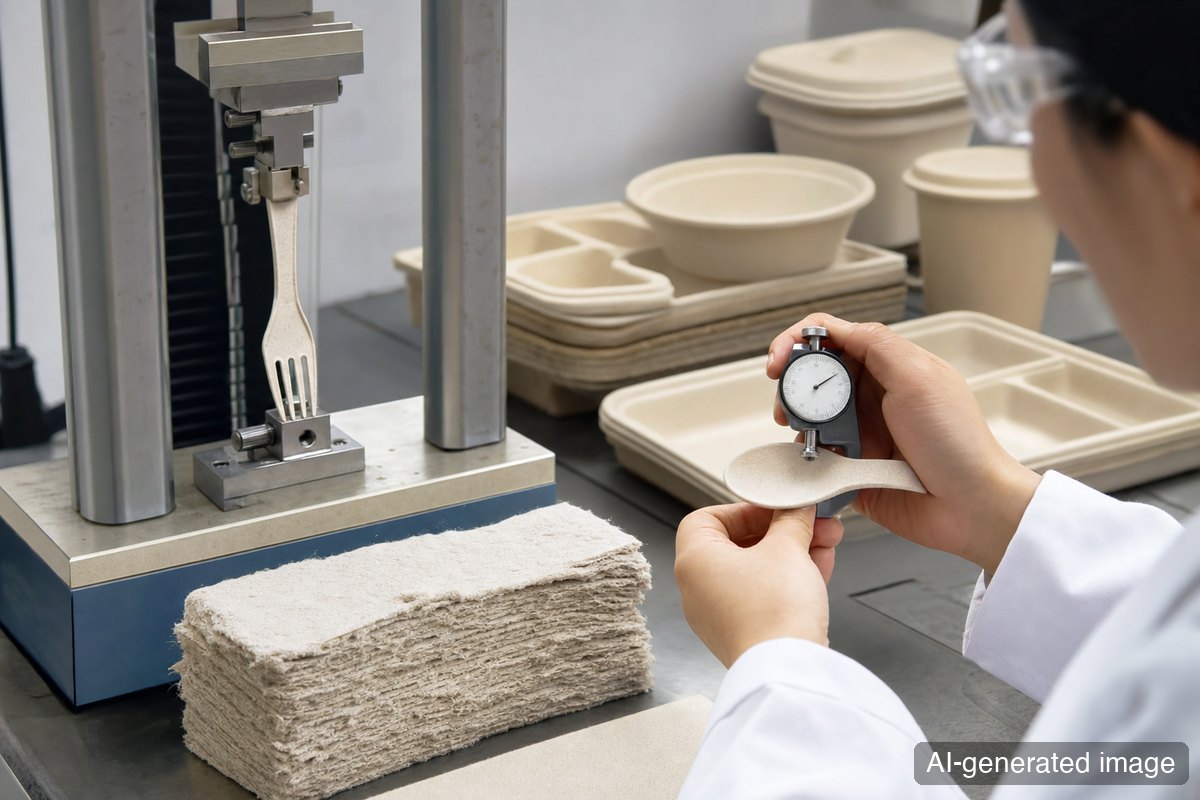
The first test for paper cutlery is mechanical performance. If fork tines bend, a spoon softens in soup, or a knife cannot cut a soft food item, the material change fails. Consumers may support sustainability, but they rarely tolerate a poor eating experience for long.
Packaging and procurement teams should check:
- how much fork tines bend during use;
- how long a spoon holds its shape in soup, sauce, yogurt, or dessert;
- whether a knife can cut soft meat, salad, cake, or baked goods;
- handle thickness and grip;
- edge smoothness where the product touches the mouth;
- fiber shedding, paper odor, or roughness after wet contact.
Unlike many secondary packaging materials, cutlery is judged by touch and use. A recyclability statement cannot compensate for poor ergonomics.
2. Hot, wet, oily, and acidic conditions should be tested separately
Paper-based utensils can behave very differently depending on the food. Hot soup, oily noodles, acidic sauce, ice cream, and dry bakery items all create different stress conditions. Room-temperature testing alone is not enough.
Before approval, ask suppliers for data on:
- recommended temperature and contact time;
- strength retention after hot water, oil, and acidic sauce exposure;
- water absorption and deformation;
- surface sizing or coating treatments;
- microwave, oven, freezer, or chilled-use limitations;
- food-contact compliance evidence.
The word “paper” does not always mean uncoated paper. Barrier or sizing treatments may be used to improve water and grease resistance, and those treatments can affect recyclability or compostability.
3. Recyclable and compostable are not the same claim
Paper cutlery often appears with claims such as recyclable, compostable, or home-compostable. These terms are not interchangeable.
Recyclable means the item can be accepted in a real collection, sorting, and recycling system. Small food-soiled utensils may be treated as contamination in some streams. Compostable means the item can break down under defined conditions. Industrial composting and home composting also have different requirements.
Claims should therefore clarify:
- whether the item is accepted with paper recycling locally;
- how food contamination affects disposal;
- whether the claim refers to industrial or home composting;
- whether coatings, inks, and additives are included in the certification scope;
- whether disposal instructions match local rules.
“Paper” should not automatically be translated into “paper recycling bin.”
4. The cutlery kit matters as much as the utensil
Disposable cutlery is often supplied with napkins, wrappers, trays, cups, and sauce containers. The overall package—not only the utensil—may determine the real environmental benefit.
A paper fork wrapped in excessive plastic film may deliver only a limited improvement. At the same time, some channels need individual wrapping for hygiene. The right answer depends on the use case, not on the utensil alone.
Procurement teams can ask five practical questions:
- Do the utensil and wrapper materials work together in disposal?
- Are individually wrapped and bulk-supply channels separated?
- Can users understand the disposal instructions quickly?
- Do printed logos or inks affect recycling or composting claims?
- How do cost, logistics volume, and breakage compare with plastic cutlery?
Practical takeaway
Paper cutlery can be a meaningful plastic-reduction option. But buyers and packaging developers should verify user experience before approving the claim. Mouthfeel, wet strength, hot-food performance, surface treatment, and disposal instructions all need to work together.
The safest approach is not an immediate full conversion. Test by food type, contact time, and service channel. Paper cutlery is not just a material substitution; it changes both the eating experience and the disposal pathway.
References
- Sabert introduces new home-compostable and recyclable paper cutlery range
- Sabert Corporation Europe unveils foodservice paper cutlery range
- Packaging Europe — Sabert recyclable, home-compostable paper cutlery improves ergonomics
About the Author
PackingMaster: Editor of Paper Pack Log. We collect and organize market trends, product information, and technical insights for the paper packaging industry.