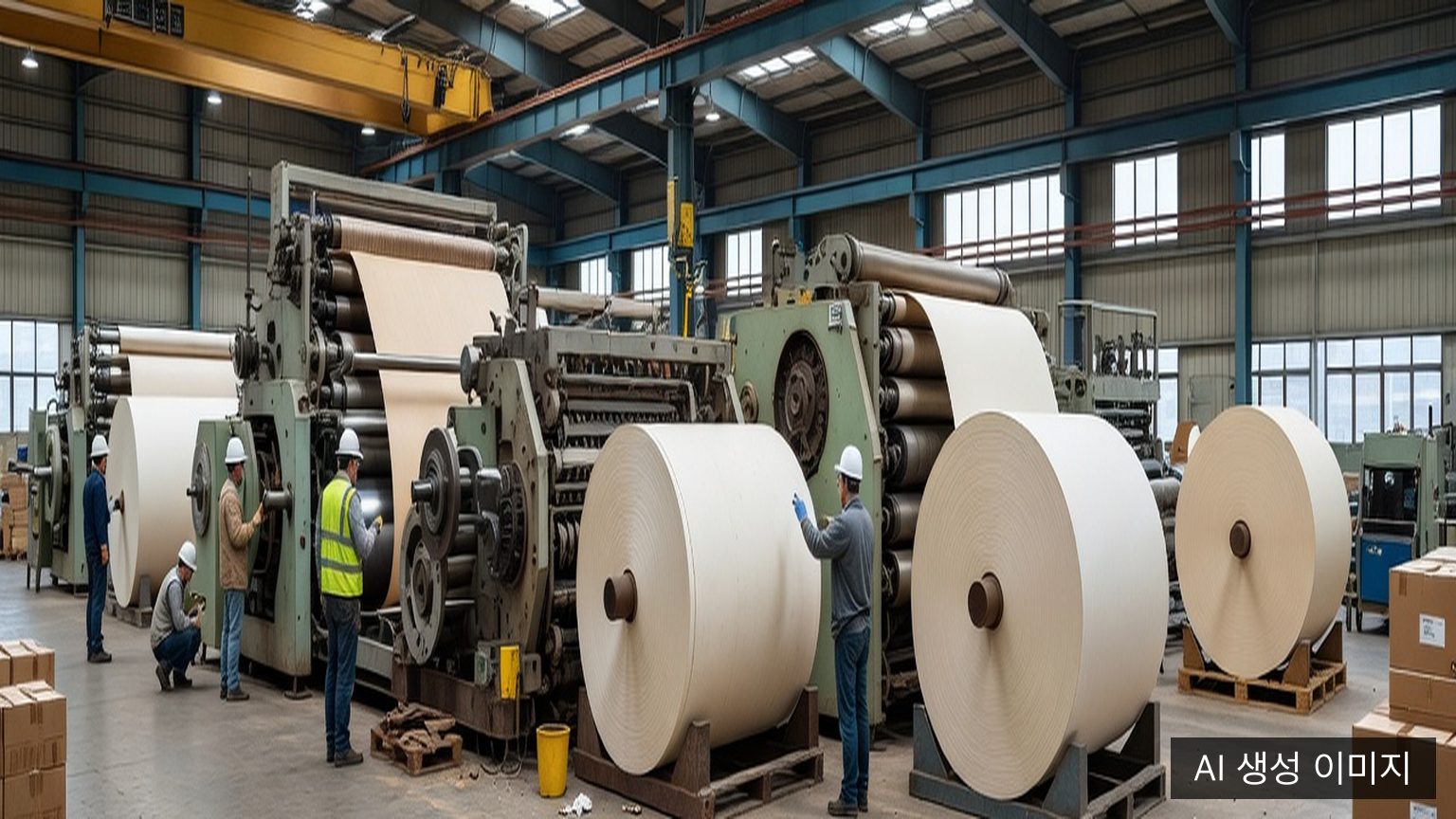
When printing-paper demand weakens and paper-based packaging demand grows, a paper producer may choose to convert an existing paper machine instead of building a new mill. For procurement teams, phrases such as “specialty paper expansion” or “packaging transition” should not be treated only as growth signals. They should trigger a more practical question: which machine will make our grade, under which quality approval process, and from when will the supply be stable?
In November 2025, Valmet announced that Wuzhou Special Paper had selected a complete paper machine conversion rebuild for a relocated machine at its Hubei mill. The target is to convert the machine to recycled fluting and liner grades, extend the lifecycle of the existing machine and increase capacity for the packaging market, with start-up scheduled for early 2027. In contrast, Metsä Board put its Husum BM2 conversion plan on hold in February 2026 after reviewing food packaging papers and siliconised greaseproof papers. Grade conversion is not simply a decision to “make another product”; demand, equipment, quality and timing all have to line up.
현장 문제
The same pressure is visible in Korea. MoneyToday reported in April 2026 that Korean paper companies were diversifying into eco-friendly materials, packaging and consumer-related areas as printing-paper demand fell and pulp and inventory costs increased. The article also described Korea Paper’s move away from a printing-paper-heavy structure toward eco-friendly packaging and specialty papers.
For supplier presentations, that sounds positive. For procurement and quality teams, it creates four immediate questions.
- Will the grade already approved for our product continue to be made on the same line?
- How long will it take for basis weight, moisture, strength, surface and coating uniformity to stabilize after conversion?
- Will production slots be reallocated between legacy customers and new packaging customers?
- Do trial rolls, customer approval and claim handling rules still match the existing supply contract?
A grade-conversion notice is therefore not just industry news. It is a trigger to refresh purchase specifications and quality approval records.
확인할 근거
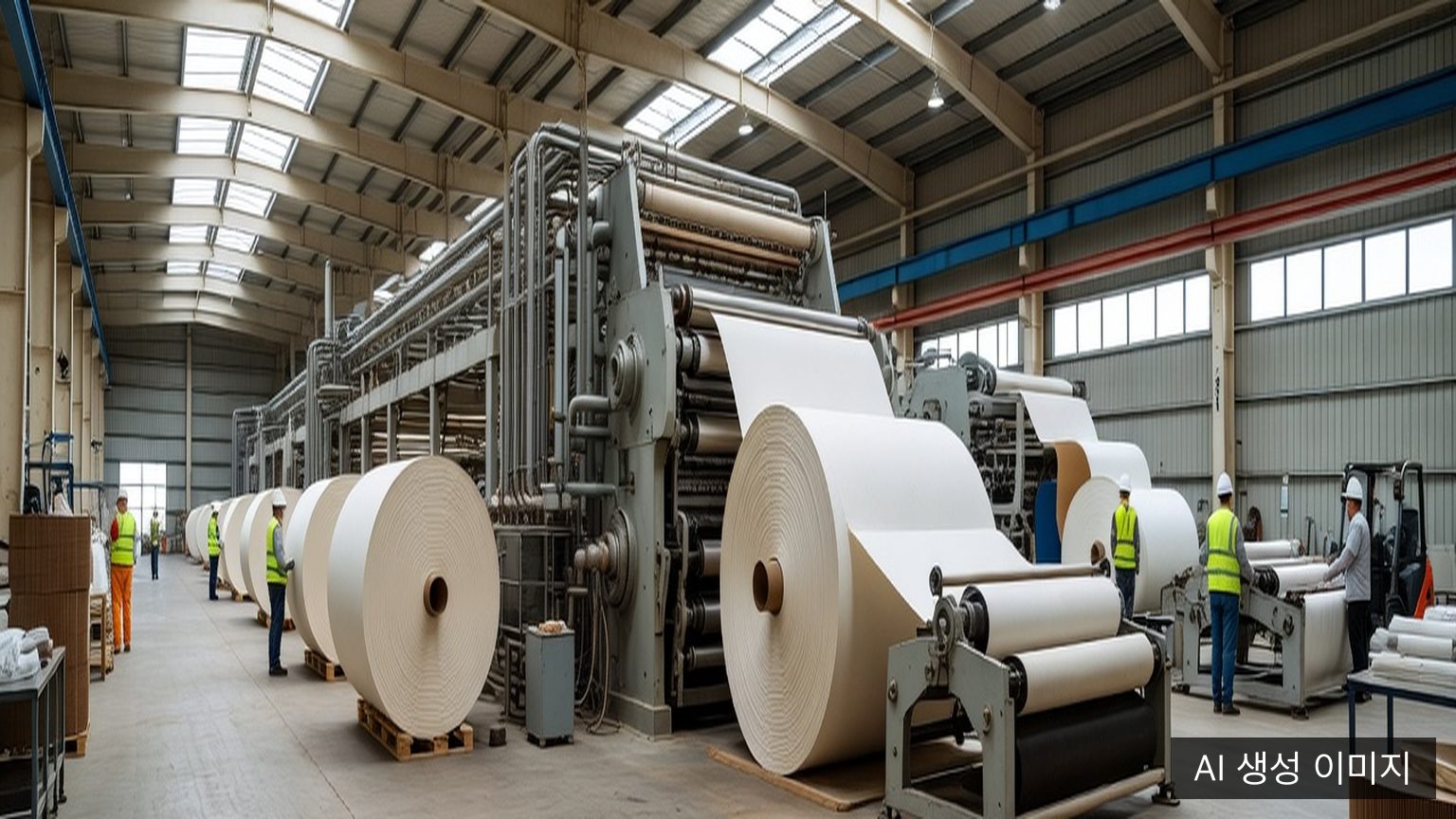
The first item to check is not only the name of the new grade. It is the scope of equipment change. Valmet’s Wuzhou announcement lists a layering headbox with dilution profiler, rebuilds of the forming and press sections, a film sizer, extra-wide winders and a machine control system. That is not merely an operating recipe change; it is a change to process areas that affect quality and runnability.
Procurement teams can sort the evidence as follows.
| Check item | Signal in public information | Procurement or quality question |
|---|---|---|
| Target grade | Printing paper, specialty paper, fluting, liner, greaseproof paper | Is it our exact grade or only a broad substitute? |
| Equipment scope | Headbox, forming, press, sizer, winder, control system | Which process area may create quality variation? |
| Timeline | Start-up date, commercial run, customer approval window | Does the trial or ramp-up overlap with our delivery schedule? |
| Quality target | Strength, surface, barrier, winding, runnability | Which specification items may change? |
| Market decision | Demand uncertainty, investment hold, capacity expansion | Is the project firm, or could it still be delayed? |
The Husum example shows that a conversion plan can be paused. A vague “future conversion” should not by itself drive long-term contracts or substitute approvals. Where the project scope and start-up timing are public, as in the Wuzhou case, the trial and ramp-up period around early 2027 should be managed separately.
실무 산출물
1. Grade-conversion impact table
Start by separating purchased materials by grade. A single “base paper” line item hides the risk.
| Purchased item | Current approved grade and basis weight | Mill and paper machine | Conversion impact | Required action |
|---|---|---|---|---|
| Containerboard | Liner, fluting, medium | Mill, PM, winder | Furnish, strength and lead-time impact | Approve substitute grade and trial roll |
| Food packaging paper | Greaseproof, barrier or coated paper | Line with coating or surface treatment | Food contact and coating-uniformity impact | Review test reports and migration evidence |
| Label and release base | Glassine or release base | Surface, calender and winder areas | Surface and winding-quality impact | Run converting tests and set defect criteria |
| General specialty paper | Functional treated paper | With or without converting step | Function, MOQ and lead-time impact | Update customer approval records |
2. Supplier questions
Use these questions in the next supplier meeting.
- Which paper machine and converting line currently make our item?
- Is there any planned rebuild, grade conversion or product-mix change on that line?
- Which areas will change: headbox, press, sizer, coater, winder or control system?
- What internal standard defines stable commercial quality after start-up?
- How many trial rolls or tonnes are required, and which tests are used for approval?
- Will furnish, coating, surface treatment or winding conditions differ from the approved specification?
- During conversion, will allocation, minimum order quantity or lead time change for existing grades?
- If a defect occurs, how will pre-conversion stock, post-conversion first lots and reworked material be separated?
3. Quality approval checklist
Do not move converted paper straight into production. At minimum, connect the following checks to the same trial lot.
| Item | How to check | Hold condition |
|---|---|---|
| Basis weight, caliper and moisture | COA by roll plus incoming inspection | Cross-direction variation exceeds existing limits |
| Strength | RCT, SCT, burst, tensile or grade-specific tests | Current structure calculation must be reopened |
| Surface and coating | Printing, gluing, oil resistance, water resistance or barrier tests | Equivalence to existing quality is not proven |
| Winding and convertibility | Slitting, rewinding, corrugating or converting test | Wrinkle, edge crack or web break repeats |
| Odor and food contact | Application-specific certificates and test reports | Evidence is insufficient for food or cosmetic packaging |
| Lead time | Trial, ramp-up and regular-order lead time | Existing delivery promise cannot be maintained |
적용 보류 조건
Grade conversion can be an opportunity, but new use should be held under the following conditions.
- Start-up has not occurred and commercial quality data is unavailable.
- The supplier describes the project as a minor improvement but will not disclose which process areas changed.
- There is no side-by-side comparison against existing strength, surface, barrier, odor and food-contact requirements.
- The trial is based on a single roll or a single day and does not show lot variation.
- Allocation and lead-time changes for existing grades are not confirmed in writing.
- Furnish, coating, surface treatment or production site changes without customer approval.
This is especially important for food, cosmetics, quasi-drug and export packaging. “It is paper” is not enough. Specialty papers depend on functional coatings, surface treatments, additives and converting conditions. Hansol Paper’s specialty-paper description lists oxygen and moisture barrier paper packaging, transfer paper, flame-retardant wall paper, glassine and release paper as different application groups. Different functions require different tests.
Conclusion
Paper machine grade conversion can move older assets toward packaging growth markets. But for procurement and quality teams, the important issue is not the broad phrase “specialty paper expansion.” It is the converted line’s equipment scope, trial schedule, quality-approval criteria and allocation impact on existing grades.
When a supplier announces a conversion, build a grade-conversion impact table first. Link each purchased item back to its producing line and approved specification. Until converted output has enough lot-level quality and delivery data, treat new adoption as a small trial with conditional approval.
작성자 소개
PackingMaster: Editor of Paper Pack Log, covering market trends, product information and manufacturing insight for the paper packaging industry.
References
- Valmet, “Valmet supports Wuzhou Special Paper’s transition to recycled board grades with a complete paper machine conversion rebuild” (2025-11-26)
- PulpaperNews, “Metsä Board halts Husum conversion plans” (2026-02-11)
- MoneyToday, “Printing paper demand drops as paper companies seek a new path” (2026-04-16)
- News1, “Please give us paper packaging”… paper industry shifts toward plastic alternatives (2026-04-01)
- Hansol Paper, Specialty paper product description