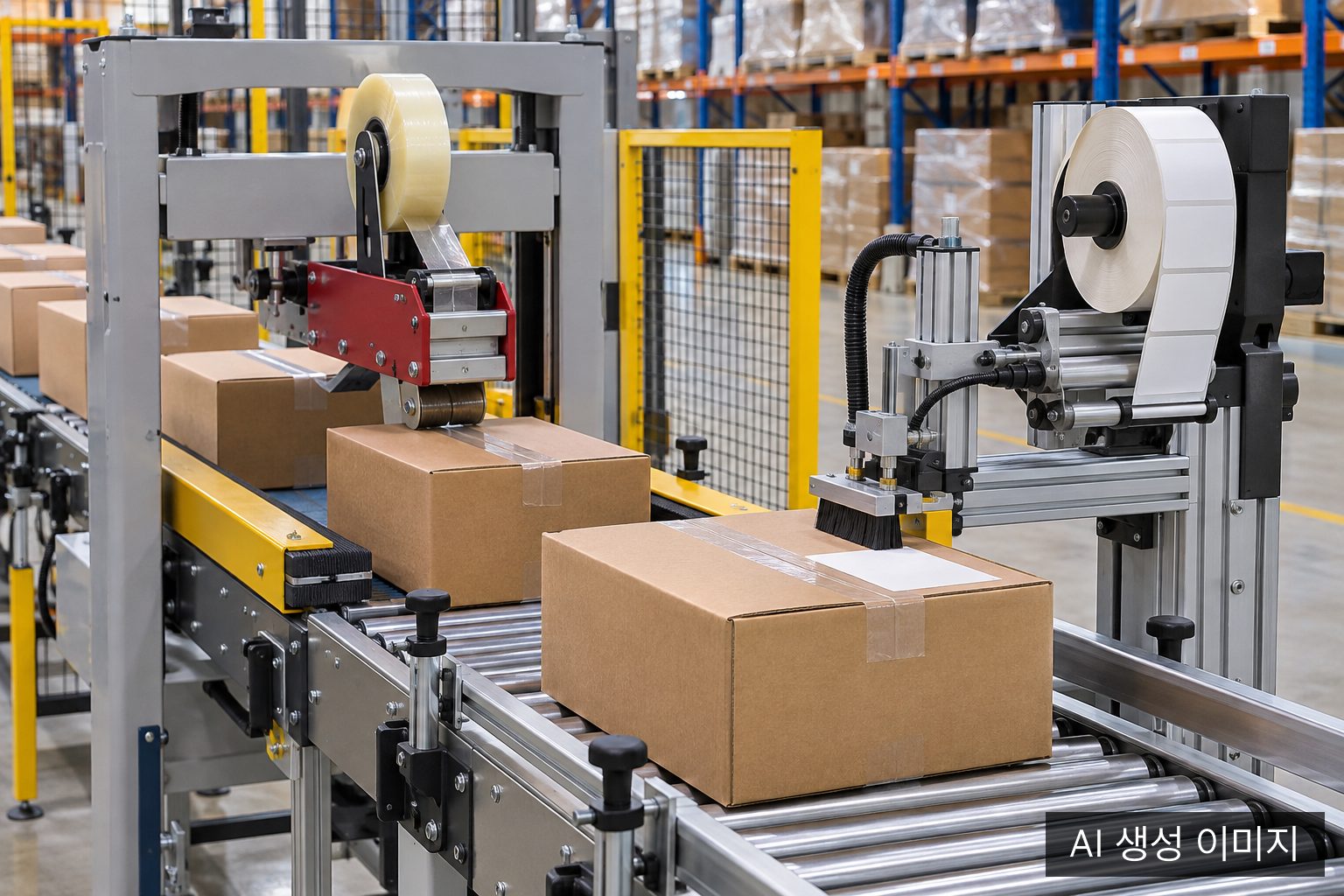
Korean ecommerce-logistics provider Pimz demonstrated linked picking, sorting and packing equipment at the Goodsflow Incheon fulfillment centre in November 2026. Reports published on 13 November by Electronic Times and NBN TV describe a packing section connecting video recording, automatic sealing, shipping-label application and scan inspection. A working demonstration confirms the reported line configuration and event; it does not establish performance across every product and carton format.
The field problem
In a high-mix, low-volume operation, correctly picked goods can still be mis-shipped if the order ID, pack, label and final scan cease to match. Installing a sealer and label applicator next to one another is not enough. Each machine needs a defined identifier, completion signal and exception path.
The reports describe Pimz’s EasyWMS linked to autonomous mobile robots for picking, a table-type robot sorter using Kotech Electronics equipment, and packing hardware from Or Smart Tech. Pimz says the integration reduces mis-shipment and improves dispatch speed. The published accounts do not provide independently measured throughput, error rates or performance by corrugated-carton specification.
Evidence to check
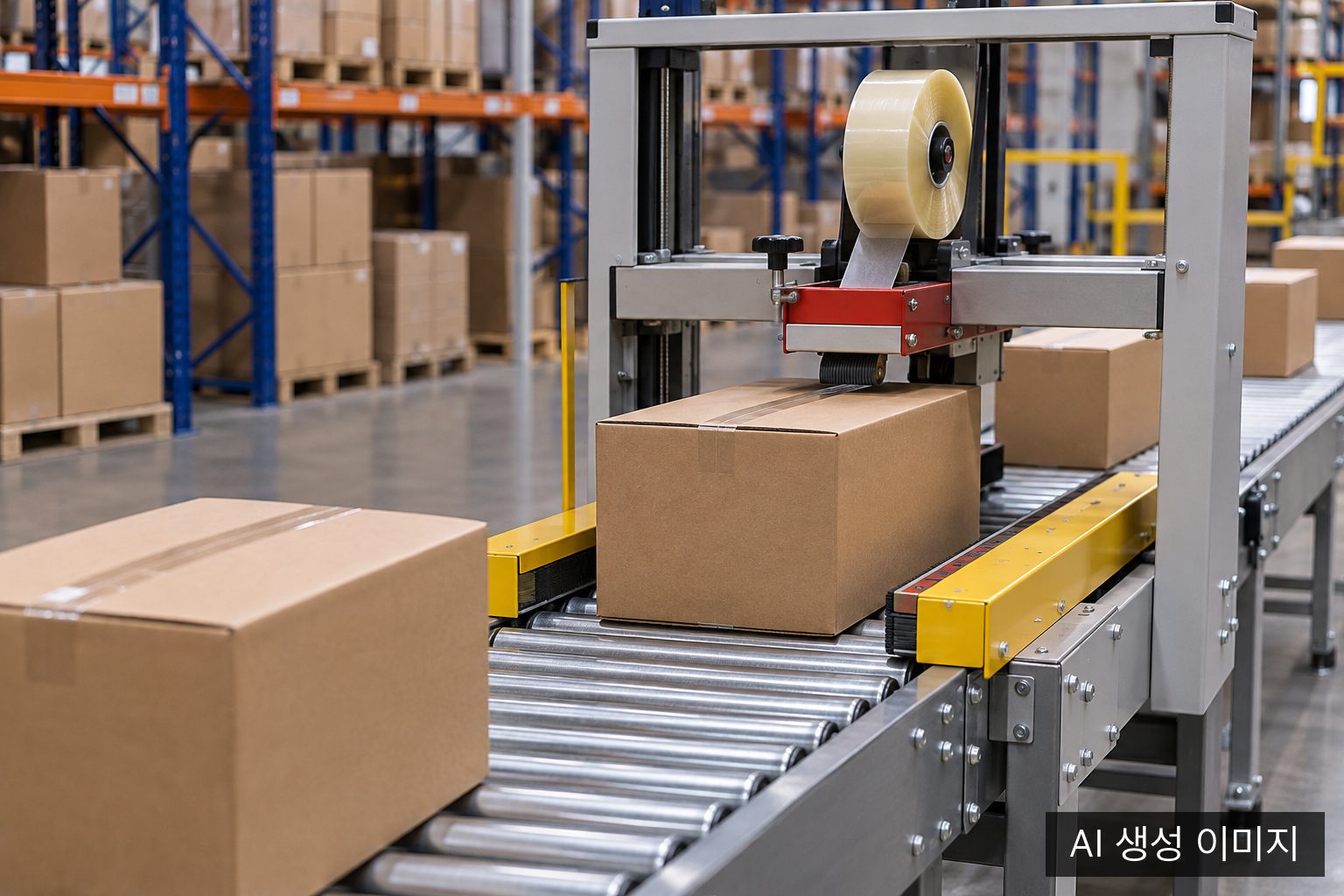
Before treating a demonstration as an investment case, inspect the handoffs into and out of packing. The table below is an operational validation checklist based on the reported equipment, not a claim that Pimz guarantees these exact interfaces or results.
| Handoff | Record to inspect | Exception behaviour to test |
|---|---|---|
| WMS to packing | Order ID, item count, pack format | Hold an order mismatch |
| Sealer to labeller | Pack ID, sealing completion, label number | Prevent release of an unsealed pack |
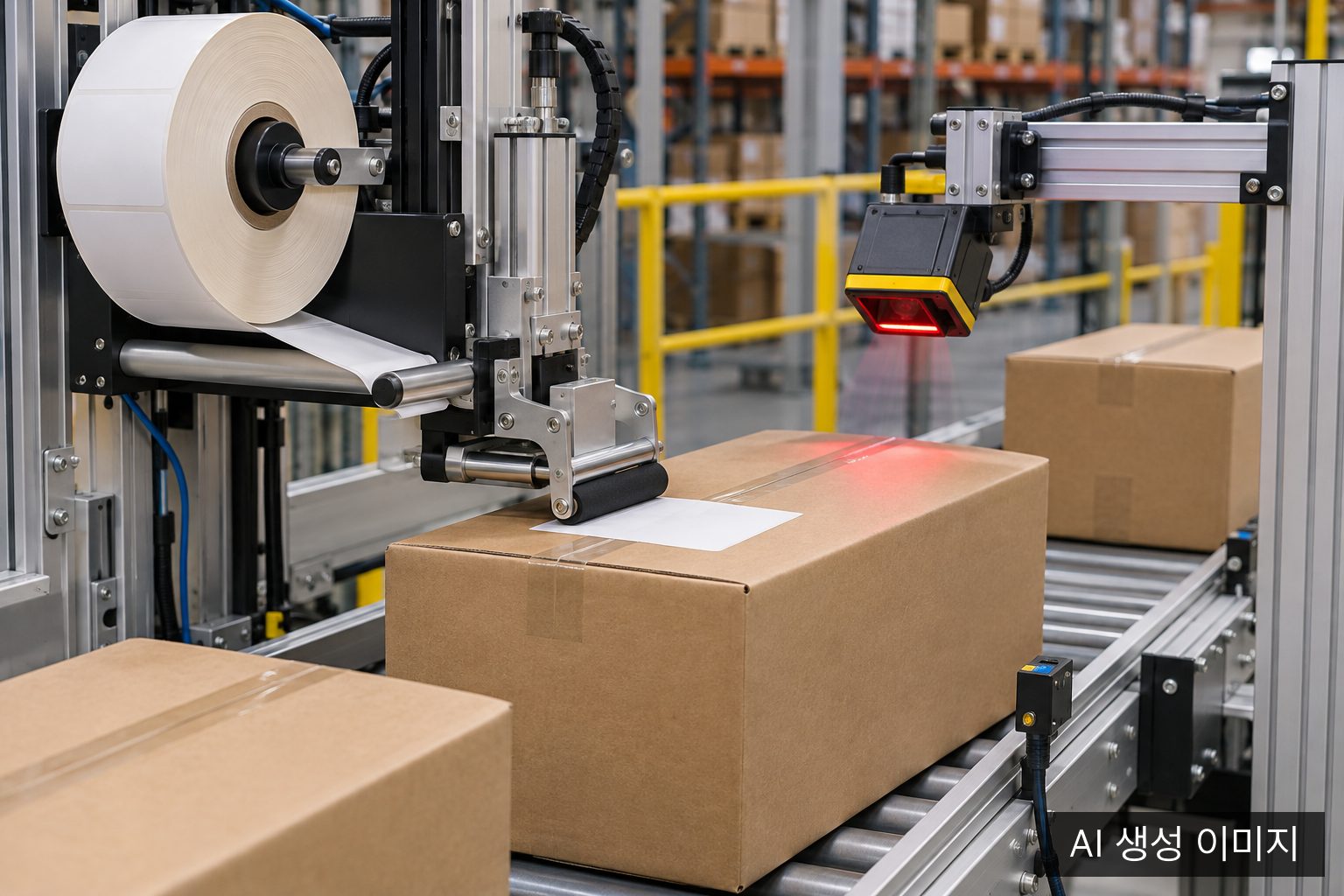
| Labeller to scanner | Label position, read result, order match | Divert unreadable or mismatched packs |
| Scanner to dispatch | Final pass, scan time and trace ID | Block failed packs from dispatch |
If carton formats change frequently, also observe width and height changeovers, flap folding, tape adhesion and the label application surface. Results obtained with bags or a different package type cannot automatically be transferred to corrugated boxes.
Practical deliverable
The most useful pilot output is an end-to-end trace for one order, not a machine list. Connect the order ID to picking completion, sort destination, pack identifier, sealing signal, label number, scan decision and dispatch release in time order. Keep rework events separate so that a corrected order does not conceal the original failure.
Test the site’s own products and carton sizes under normal orders, multi-item orders, missing items, wrong labels, unreadable scans and a stop-and-restart sequence. The buyer should set acceptance thresholds from its baseline and operating requirements. Neither article supplies a general-purpose pass figure.
When to hold application
Defer procurement if the demonstrated product and carton ranges differ from the intended site’s material, dimensions or load, or if the order-to-label-to-pack identifier specification is unavailable. Confirm whether unreadable packs are segregated, how duplicate label issue is prevented after restart, and how video is linked to the order record. Labels and footage containing personal information also require the operator’s own retention and access controls.
Pimz’s announcement presents a connected testbed from picking through packing. For paper-based shipping packs, the next proof point is a site trial measuring sealing quality and data consistency with the real SKU and carton mix.
About the Author
PackingMaster: Editor of PaperPackLog. Covers market trends, product insights, and technology in the paper packaging industry.
References
- Electronic Times, Pimz demonstrates an integrated logistics-automation solution, 13 November 2026.
- NBN TV, Pimz demonstrates automated equipment at its Incheon logistics centre, 13 November 2026.
Sources checked 15 November 2026. Both accounts primarily relay company statements and the demonstration; neither supplies independent throughput-test results.