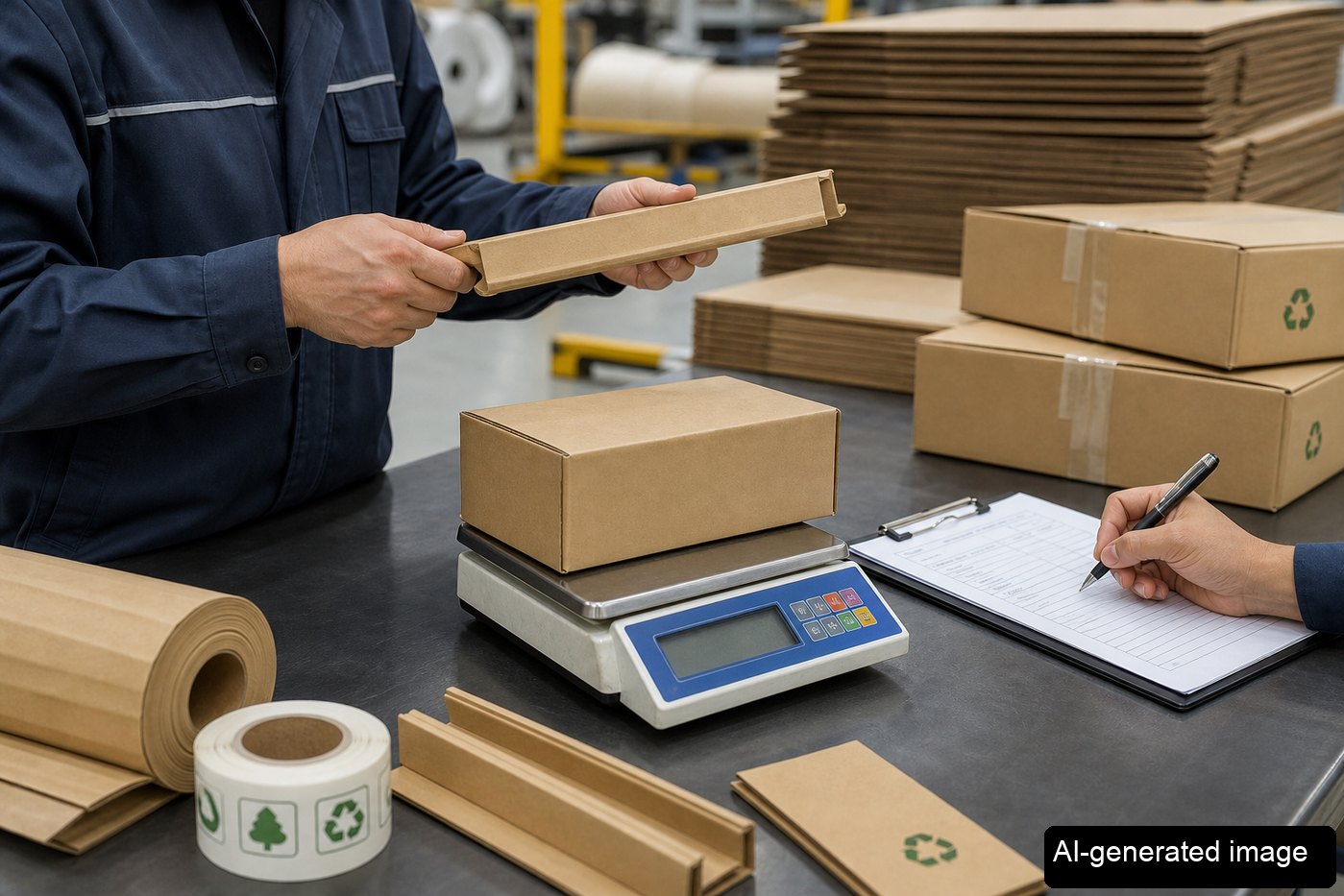
PPWR seminars and training sessions are becoming more visible in Korea. When packaging associations, cosmetics-related groups, and export-support organizations begin to discuss the topic, it signals that PPWR is no longer only a legal issue for large corporations. It is becoming a data-management issue for manufacturers, exporters, procurement teams, quality teams, and logistics teams.
For many companies, the urgent task is not to memorize every regulatory article. The first task is to organize basic packaging data. If packaging weight, material composition, recyclability status, label wording, and supporting evidence are missing, it will be difficult to respond to customer or importer requests.
This article translates the recent rise in PPWR-related seminars into a practical checklist: the five export packaging data files companies should start preparing now.

Seminars are a signal; data files are the action
PPWR is the EU Packaging and Packaging Waste Regulation. Although the regulation is European, the operational burden reaches companies that ship packaged goods into the EU. Once a buyer or importer asks for packaging data, a general statement such as “we use eco-friendly packaging” is not enough.
This is especially relevant for cosmetics, food, consumer goods, electronics parts, and other product groups where packaging is directly tied to export requirements. Seminar notes should not remain as internal reports only. They need to be converted into packaging data sheets.
A previous article discussed data requests for industrial export packaging. This article narrows the focus further: the five files that are most likely to be requested by customers, internal departments, or supply-chain partners.
1. Packaging weight file
The first file is packaging weight. Weight is a common baseline for PPWR preparation, EPR cost review, packaging reduction targets, logistics cost analysis, and recyclability discussions. Do not record all packaging as one total figure only. Break it down into the box, cushioning, label, tape, strapping, pallet, support block, and other components.
| Item | Example record |
|---|---|
| Packaging item | Outer box, inner box, paper cushioning, label, tape |
| Applied product | Product name, SKU, export country, customer |
| Unit weight | g per piece, g per set, kg per pallet |
| Measurement basis | Measurement date, sample quantity, scale used |
| Change history | Paper grade change, size change, supplier change |
The weight file does not need to be perfect at the first stage. What matters is making the gaps visible. “Outer box weight available, label adhesive data missing, cushioning weight needs remeasurement” is already useful because it defines the next action.
2. Material composition file
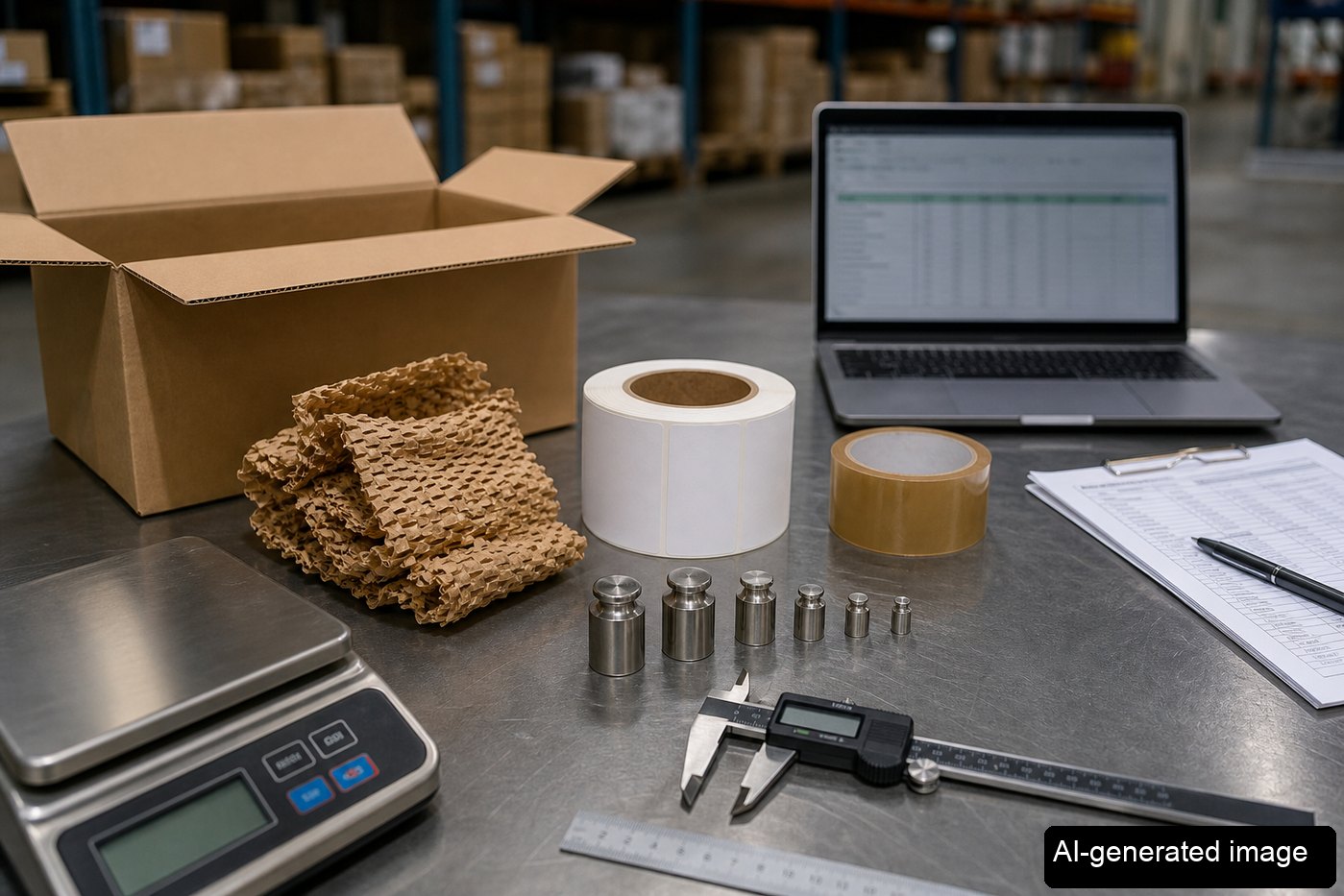
The second file is material composition. Companies need to distinguish paper, plastic, composite materials, metal, wood, adhesives, coatings, labels, and printing inks. Even if a package is called a “paper box,” the full structure may include tape, labels, coatings, inks, and adhesives.
A basic material composition file should include at least the following items:
- Main material: corrugated board, white paperboard, kraft paper, plastic film, etc.
- Secondary materials: label, tape, adhesive, coating layer, ink, strapping
- Separability: whether users or operators can easily separate components
- Supplier evidence: specification sheet, test report, or material confirmation
- Notes: if exact formulation is unavailable, mark it as “supplier confirmation required”
The purpose is not to copy supplier brochures. It is to help procurement and quality teams use the same vocabulary when reviewing packaging risks.
3. Recyclability and disposal-claim file
The third file covers recyclability and disposal classification. The word “recyclable” is too broad by itself. Companies need to know which material stream the package enters, whether composite parts can be separated, and whether coatings or adhesives affect recycling.
Domestic recycling guidance and EU PPWR requirements are not identical. For that reason, it is better not to mix every conclusion into one vague statement. Separate what is currently confirmed from what requires additional checking.
| Category | Practical question |
|---|---|
| Domestic disposal | What disposal wording can be given to users? |
| Export market | Could the claim conflict with local packaging or labeling rules? |
| Composite structure | Can paper, plastic, metal, and adhesive parts be separated? |
| Contamination risk | Does the material stay in the same recycling stream after product contamination? |
| Evidence | Is supplier or test evidence available? |
4. Label and wording file
The fourth file is label wording. Labels may look small, but they often create export-review issues. Recycling marks, disposal instructions, material statements, and environmental claims can be interpreted differently by country.
Terms such as “eco,” “recyclable,” “plastic-free,” and “paper-based” may look like marketing language, but in a customer review they can become evidence-based claims. Export packaging teams should not leave this information only in design files. Label wording should be managed as a separate data file.
A label file should include:
- Actual printed wording and location
- Language and export country
- Evidence supporting the wording
- Change approver and change date
- Customer or importer confirmation status

5. Supporting evidence folder
The final file is actually a folder: supporting evidence. Packaging data is not complete when numbers are written into a spreadsheet. When a customer or importer asks for the basis of the data, supporting documents must be available.
Not every test report needs to be ready from day one. A practical starting point is to separate files that are already available from those that are missing.
- Packaging specification sheets
- Weight measurement records
- Material confirmation letters or supplier emails
- Recyclability or disposal-related evidence
- Label and artwork approval files
- Change-history table
- Customer submission history
File names matter. A folder filled with files named packaging_data.pdf will be hard to use later. A better convention includes date, product, packaging item, and document type, such as 2026-06_product_outer-box_weight-record or 2026-06_supplierA_material-confirmation.
Assign responsibility, or the data will scatter
PPWR preparation is difficult because no single department owns all packaging data. Procurement knows suppliers, quality receives customer document requests, logistics understands packing structures, and sales receives buyer questions.
The five files should therefore be assigned to practical owners.
| File | Primary owner | Supporting teams |
|---|---|---|
| Weight file | Quality or logistics | Procurement, production |
| Material composition file | Procurement | Supplier, quality |
| Recyclability file | Quality | Procurement, sales |
| Label wording file | Sales or marketing | Quality, design |
| Evidence folder | Quality | Procurement, logistics, sales |
The key question is not “who knows the law best?” It is “who can keep the data updated?” Packaging specifications change when paper grades, suppliers, printing, or customer requirements change. Change history is therefore part of compliance readiness.
Conclusion
The increase in PPWR seminars in Korea is a warning that the issue is approaching, but it also clarifies what exporters can do first. Companies should not stop at collecting seminar materials. They should begin organizing packaging weight, material composition, recyclability, label wording, and supporting evidence files.
A perfect regulatory document is not required at the start. The first step is to make the gaps visible and place procurement, quality, logistics, and sales teams around the same table. In practical terms, PPWR preparation begins by building five packaging data files.
About the Author
PackingMaster: Editor of Paper Pack Log. We collect and organize market trends, product information, and technical insights for the paper packaging industry.
References
- Google News, Korean news search results for PPWR and export packaging
- European Commission, Packaging waste
Background — https://environment.ec.europa.eu/topics/waste-and-recycling/packaging-waste_en - Korea Environment Corporation, EPR portal
- 2026년 글로벌 포장 규정 준수를 위한 준비 방법
- 한상연, EU 포장규제 대응 위한 중소 제조기업 중심 정부 지원체계 구축 촉구 - 머니투데이