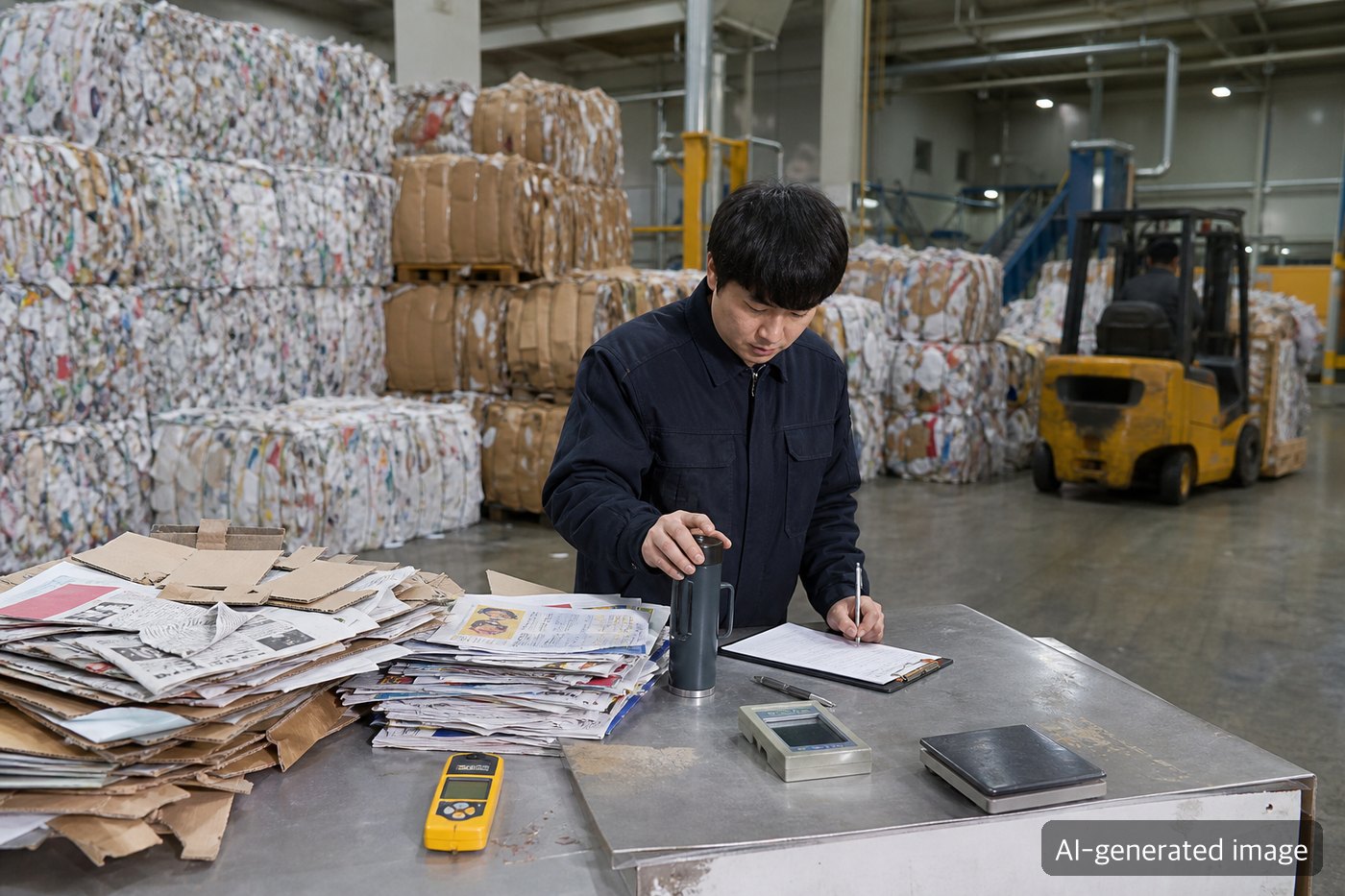
Around Korea’s Paper Day on June 16, the role of the paper industry as part of the circular economy has received renewed attention. Paper is one of the most visible materials built around recovery and recycling, and containerboard and packaging papers are directly affected by recovered paper and OCC flows. For packaging procurement teams, the practical message is clear: recovered paper is no longer just a raw material to buy cheaply; it is becoming a strategic asset that affects supply stability and cost defense.
For paper manufacturers, the quantity, grade, moisture, contamination, and sorting quality of recovered paper directly influence paper quality and mill productivity. For packaging buyers, the same factors appear as box prices, quotation validity, delivery risk, and quality claims. Recovered paper risk is therefore not only a mill-side sourcing issue. It is also linked to the shipping stability of companies that use paper packaging.

Why Recovered Paper Should Be Treated as a Strategic Asset
Recovered paper is the starting point of paper recycling, but it has often been treated as just another cost item. That view is becoming too narrow. When packaging demand, export shipments, consumer activity, sorting-center operations, and local collection systems shift, recovered paper price and quality can move at the same time. Under those conditions, it becomes harder for paper mills to make stable paper at stable cost.
OCC is especially important for corrugated packaging. It is connected to e-commerce, export packaging, and manufacturing shipments. When the economy slows, box generation may decline and recovered paper availability may tighten. During seasonal peaks, lower-quality material, moisture, and contamination can become bigger issues. Poor recovered paper quality increases sorting and cleaning burdens and can lead to lower productivity or paper-quality variation.
That is why recovered paper should be seen as an asset with four procurement functions.
- A core input for containerboard and packaging paper production
- A cost variable that can absorb or amplify price volatility
- Evidence supporting recycling and circular-economy claims
- A supply-chain risk indicator linked to delivery and quality stability

Three Risks Packaging Buyers Actually Feel
The first is price risk. When recovered paper prices rise, containerboard and packaging-paper quotations may follow with a time lag. The real problem is not only the increase itself, but how it is explained. A buyer cannot easily secure internal approval or pass cost changes to customers with only a general notice that raw materials have become more expensive. Buyers need to understand how recovered paper prices, inventory, alternative fiber, and energy costs are reflected in packaging prices.
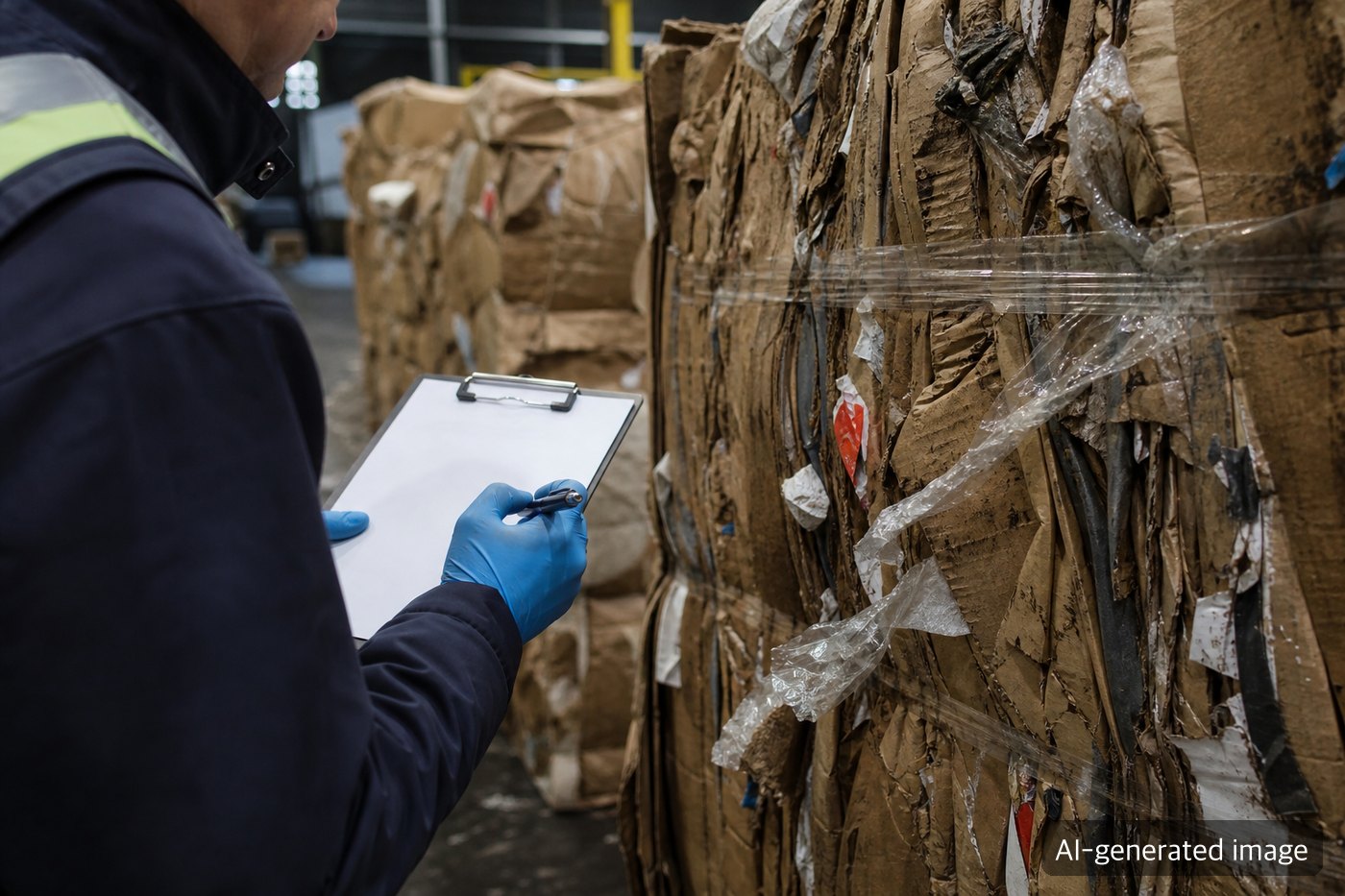
The second is quality risk. If recovered paper contains excess moisture, plastic film, tape, metal, or other contaminants, the mill process becomes more difficult. Even at the same basis weight, paper strength, moisture, surface condition, and glueability can vary. In packaging, this may appear as compression-strength variation, bursting, printing defects, or bonding issues.
The third is delivery risk. If recovered paper sourcing becomes unstable, paper-mill production plans can also change. If a specific grade or basis weight becomes tight, a packaging converter may need to use substitute paper. The customer may then need to approve a sample again or accept a specification change. If this process is delayed, finished-goods shipments can also be delayed.
| Risk | Signal Seen by Buyers | Question to Ask |
|---|---|---|
| Price | Shorter quotation validity, more monthly price discussions | What benchmark or rule reflects OCC and recovered-paper movement? |
| Quality | Box strength variation, bonding or printing issues | Can paper quality and recovered-paper issues be traced by lot? |
| Delivery | Delays in specific grades or basis weights | Is there a pre-agreed list of substitute paper combinations? |
| Compliance | More requests for recyclability evidence | Can the supplier provide recycling and quality-control documentation? |
Add Recovered Paper Risk to Supplier Evaluation
Packaging procurement usually evaluates suppliers by price, delivery, and claim response. Recovered paper risk management now belongs in that evaluation. This is especially true for corrugated boxes, paper cushioning, industrial paper tubes, and paperboard packaging where recycled fiber can be a major input.
The questions do not have to be complicated. Buyers can begin with the following discussion points.
- Can the supplier explain the recovered paper and pulp mix used in key paper grades?
- Can price-adjustment timing and criteria be agreed before recovered paper prices move sharply?
- Can paper test results and production dates be traced by lot?
- When recovered paper quality is expected to weaken, does the supplier propose substitute grades or specification options early?
- For long-term items, are inventory, production plans, and quotation validity managed together?
- Can the supplier respond to customer requests for recycling or circular-resource documentation?
These questions are not meant to pressure the supplier. They are meant to create a structure where price increases and delivery delays can be explained when they occur. When the recovered paper market moves, the biggest risk is often not the cost increase itself, but late information sharing.
Visibility Comes Before Extra Inventory
Not every buyer can directly secure recovered paper or build large paper inventories. Excess inventory also creates storage cost, quality deterioration, and cash-flow pressure. Therefore, the first step should be visibility, not simply more stock.
For example, buyers can create a one-page table for key packaging items: paper grades used, substitute grades, average monthly consumption, minimum safety stock, quotation validity, and price-adjustment conditions. Suppliers can provide monthly signals on paper supply and cost movement. Customers can be informed in advance about the conditions under which price discussions may be needed. This makes it easier to handle sudden price notices or delivery delays internally.
Export packaging requires even more attention because the time between quotation, order confirmation, production, and shipment can be long. When paper prices are moving quickly, buyers should shorten the gap between quotation and production or document adjustment conditions clearly. Recovered paper risk eventually becomes a quotation-management and delivery-management issue.
Conclusion
The message of Paper Day is not only that paper is an eco-friendly material. It also shows that stable paper packaging depends on a circular resource being collected, sorted, and converted into usable paper at scale.
Packaging procurement teams should now treat recovered paper as a strategic asset, not just a commodity input. Buyers who understand recovered paper supply and quality can explain cost changes earlier, review substitute specifications sooner, and reduce shipment risk for customers. In the next phase of paper packaging, strong supply chains may be defined less by the ability to buy cheaply and more by the ability to read and share raw-material risk early.
Frequently Asked Questions
Q: Should packaging buyers track recovered paper prices directly?
They do not need to track every daily price. However, they should understand which recovered paper or pulp variables influence key paper and packaging costs, and what criteria trigger price discussions.
Q: Is recovered paper risk management only realistic for large companies?
No. Smaller packaging buyers can also gain value by mapping key paper grades, substitute specifications, quotation validity, and supplier communication channels for critical items.
Q: How is this different from the recent AX/DX article?
The AX/DX article focused on how data transformation in the paper industry changes procurement. This article focuses on recovered paper and OCC as raw-material risks and strategic assets for packaging supply stability.
About the Author
PackingMaster: Editor of PaperPackLog. Curates and organizes market trends, product information, and technical insights for the paper-packaging industry.