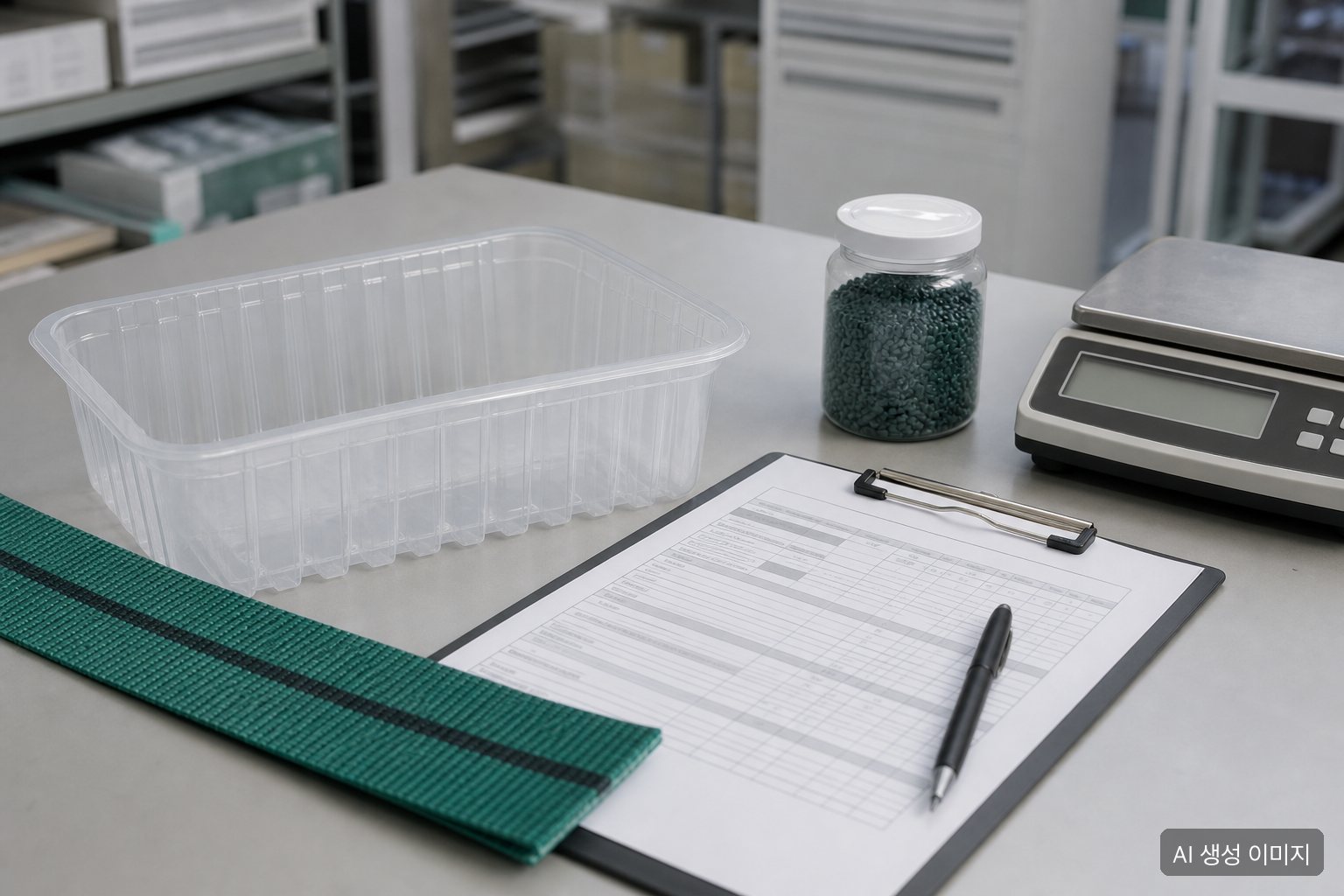
As plastic packaging regulations tighten, recycled polypropylene is becoming a more common specification item. PP is used in food containers, caps, trays, straps, closures, transport packaging components, and many other formats. That makes recycled PP and PCR content relevant for both consumer brands and industrial packaging teams.
But recycled PP packaging is not solved by a percentage alone. Resin origin, batch variation, odor, color, food-contact suitability, recyclability claims, and EPR reporting data all matter. Recent developments around packaging EPR, including California SB 54 disputes and producer deadlines, show that packaging data management is becoming operationally important.
The PCR percentage can be misleading
A recycled PP part may look similar to a virgin PP part, so a claim such as “30% PCR” can appear sufficient. In practice, teams often face color variation, odor control, lower impact performance, food-contact limitations, batch-to-batch variation, and uncertainty around recyclability labels.
The starting point should be a clear application scope and a data package, not a marketing claim.
1. PCR content and resin origin
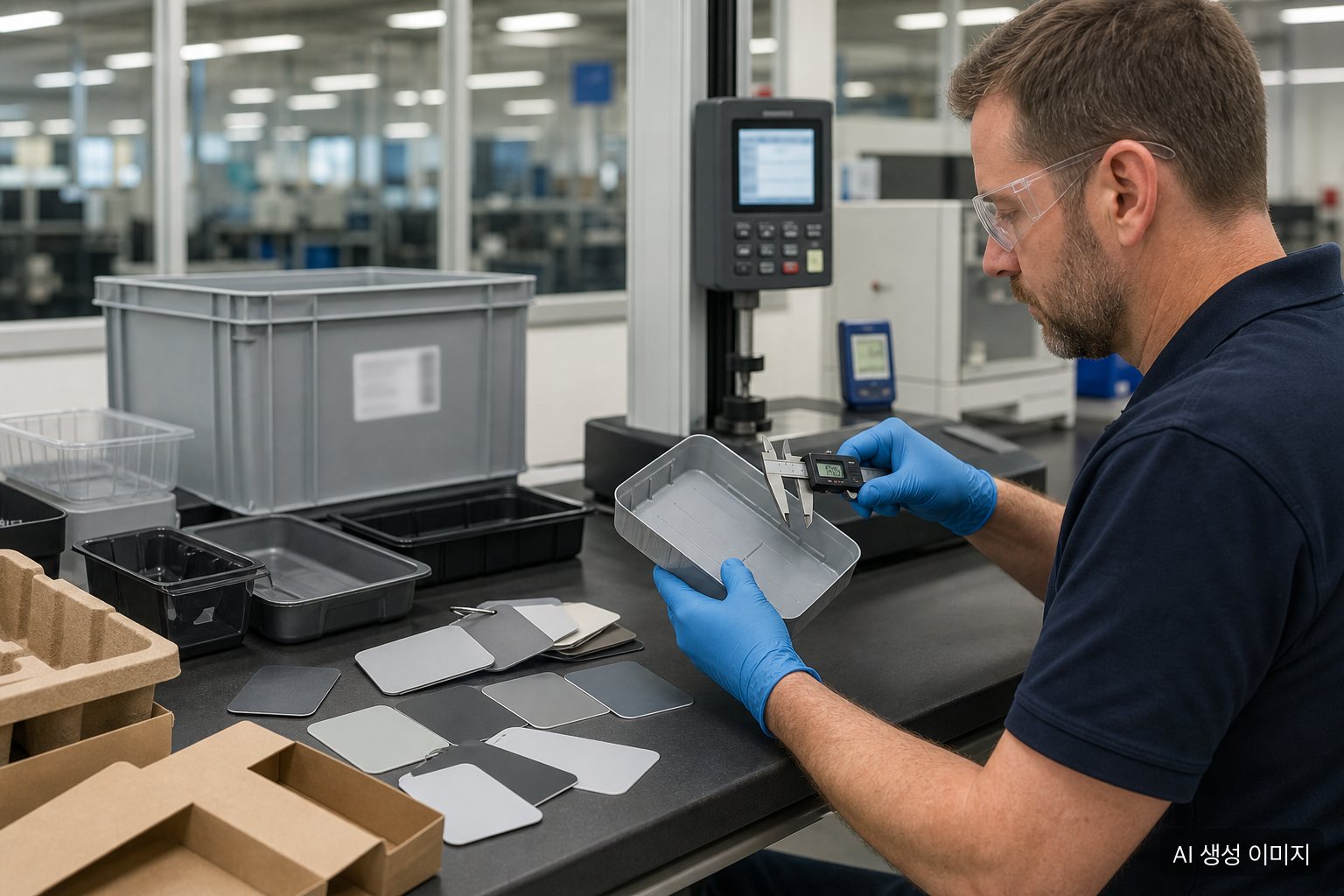
Ask how the PCR percentage is calculated, whether it applies to the whole package or one component, whether the resin is post-consumer or post-industrial, and what documentation supports the claim. Certification or traceability schemes may be relevant, but the scope must match the actual part being supplied.
2. Food-contact suitability
PP is widely used in food packaging, but recycled PP is not automatically suitable for direct food contact. Resin source, cleaning, decontamination, deodorization, and regulatory jurisdiction all matter. If the recycled PP is not appropriate for direct contact, teams may still use it in non-contact components, secondary packaging, caps, trays, or logistics parts.
3. Color, odor, and appearance
Recycled PP can show greater color and odor variation. That may be unacceptable for transparent containers or premium consumer packaging but manageable for darker transport parts or industrial components. Specifications should include color tolerance, odor limits, and surface defect criteria.
4. Mechanical performance
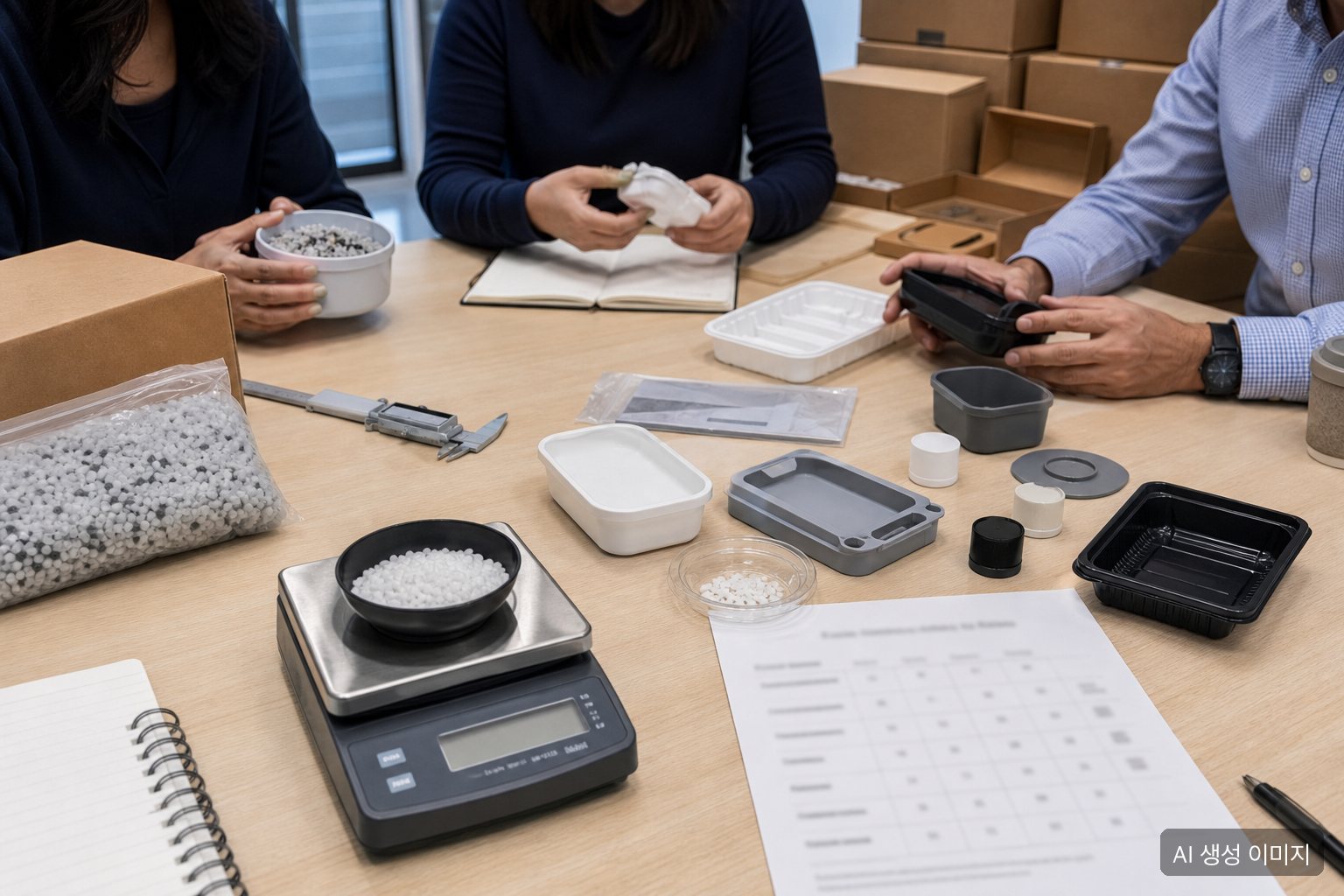
PP packaging components may need impact resistance, hinge durability, closure force, strap tension, or compression strength. Higher recycled content can change impact strength, tensile properties, fatigue resistance, and low-temperature brittleness. Test the part under the actual use condition, not only as a resin data sheet.
5. Recyclability labels
Using recycled content does not automatically make a package recyclable. Color, labels, adhesives, metal parts, multi-material construction, and residue all affect real recovery. Separate recycled-content claims from recyclability claims, and specify which component contains recycled PP.
6. EPR reporting data
EPR and PPWR-style systems are pushing packaging teams toward more granular data: component list, resin type, weight, recycled content, labels, adhesives, recyclability basis, and market-specific reporting scope. Without this data, brands may need to re-survey suppliers later for registration, fees, buyer ESG requests, or claim review.
7. Supply stability and cost
PCR resin supply can vary by quality, price, odor, color, and availability. A sample run may pass while later batches vary. Quotations should include MOQ, monthly capacity, alternative resin options, batch approval rules, and price adjustment conditions.
Takeaway
Recycled PP packaging can be a practical improvement when plastic cannot be eliminated immediately. But a PCR percentage is only one part of the decision. Teams should manage food-contact suitability, mechanical performance, appearance, recyclability claims, EPR data, and supply stability together. Starting with non-contact or logistics components can be a safer route while building the evidence base.
About the Author
PackingMaster: Editor of Paper Pack Log. We collect and organize market trends, product information, and technical insights for the paper packaging industry.
References
- Resource Recycling, “Producer deadlines approach as EPR lawsuits loom”, https://resource-recycling.com/policy-now/2026/06/23/producer-deadlines-approach-as-epr-lawsuits-loom/
- The Guardian, “California single-use plastic law”, https://www.theguardian.com/environment/2026/jun/26/california-single-use-plastic-law
- CalRecycle, “Packaging EPR”, https://calrecycle.ca.gov/packaging/packaging-epr