A corrugated shipping carton can look reusable without having a measured reserve of stacking or compression strength for another journey. PackMojo’s guide to weather and humidity explains that water exposure and storage conditions affect cardboard. First published in 2021 and updated in July 2026, it is a general guide, not a before-and-after compression trial on a particular cohort of reused cartons in October 2026. It cannot justify a universal claim that reuse reduces strength by a fixed percentage.
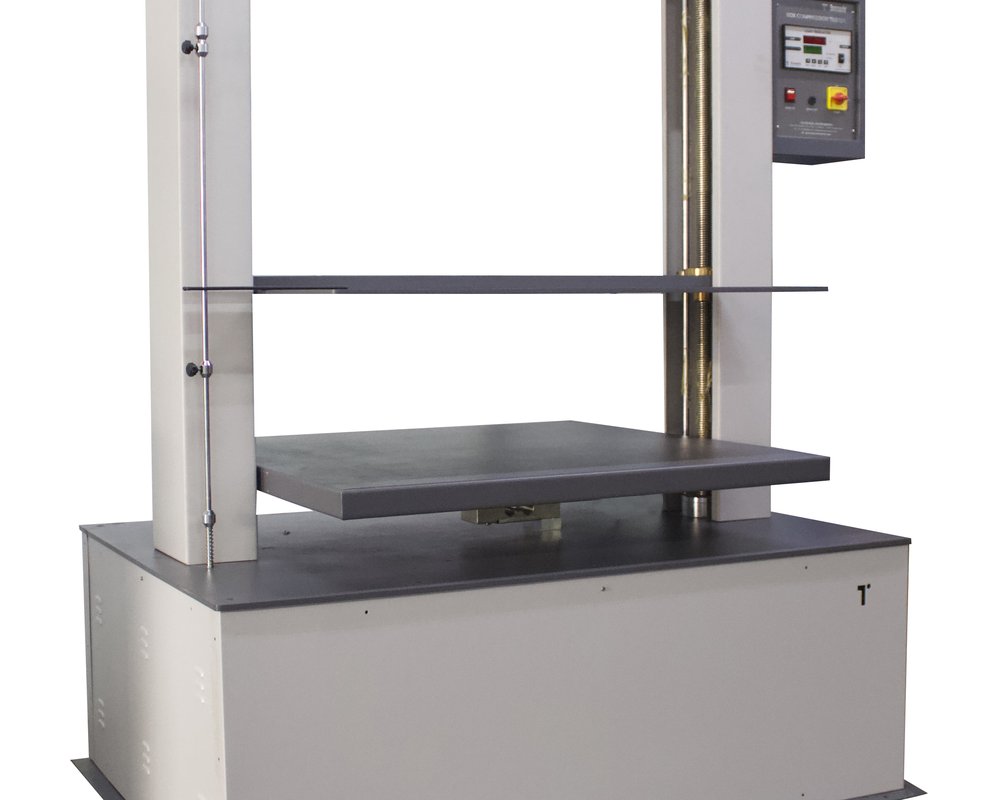
Cover equipment reference photo: “Box compression tester” by Testronix Instruments, CC BY-SA 4.0; center-cropped and resized, adaptation shared under the same license. An empty machine, not a box tested for this article, a measurement, or an equipment endorsement.

A visual screen is not a compression result
Check for water staining, delamination, crushed corners, torn slots, loose joints and repeated-fold damage, along with residue from products, tape or adhesive. Do not treat a visibly damaged or contaminated carton as equivalent to an undamaged carton of the same nominal size. But even a clean exterior does not reconstruct previous loads, moisture exposure or the state of hidden flutes. These are proposed operational screening questions, not a claim that any cited standard sets a particular pass/fail threshold.
In a 2025 experiment by Csavajda and Böröcz, each of eight box designs had five specimens fully immersed in water for 30 seconds and subsequently dried, plus five separate non-immersed controls for compression testing. This was a controlled wetting-and-drying comparison, not a multi-journey trial on returned shipping cartons. The authors note the small replicate count and that operational reuse still needs validation. Its strength-loss range cannot be transferred to every recovered box or inferred from appearance.
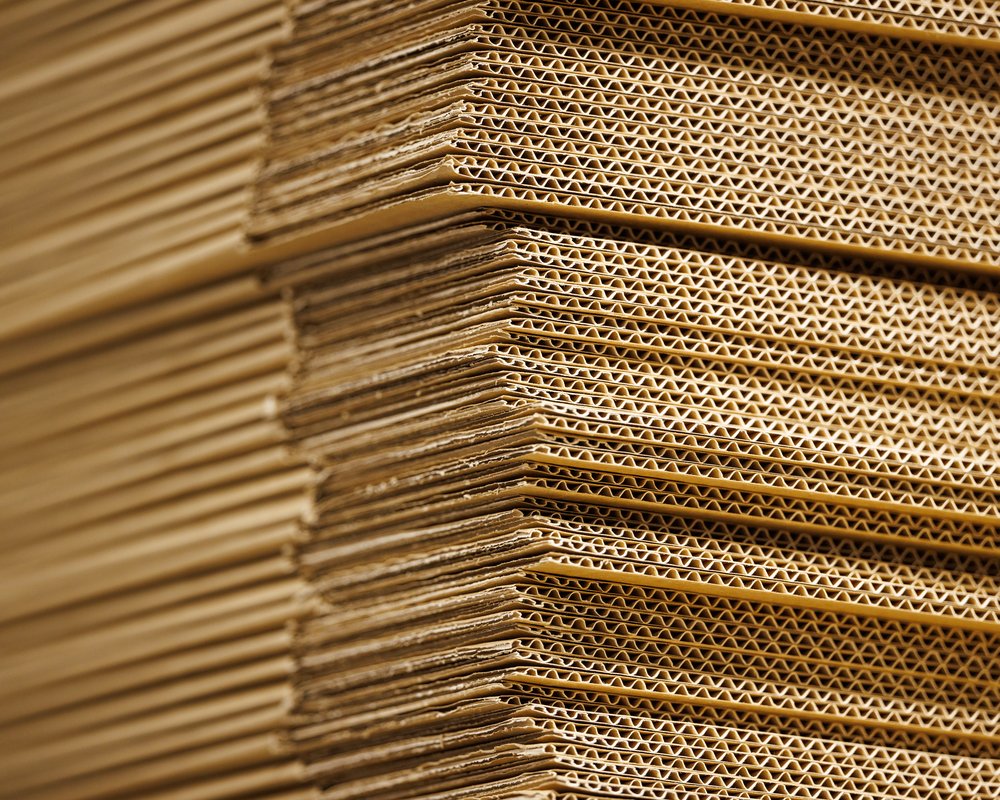
Material reference photo, original title “Cardboard boxes” by Henry Söderlund, CC BY 2.0; center-cropped and resized. Not a returned or compression-tested sample.

Ask the test the right question
To assess the box’s own compression or stacking resistance, specify the carton construction, storage conditions, representative recovered lots and a new-carton comparator before designing a box-compression test. Record the packed product’s acceptance criteria, intended stack height and time, humidity and sample conditioning. Compression testing commonly damages the test specimen: a lot-based sample plan is not a demand to crush every carton intended for dispatch. Select sampling and acceptance limits for the actual product and distribution route with a qualified test laboratory or customer.
The International Safe Transit Association’s procedure overview serves a different purpose. Its 1-Series are screening tests of a product-and-package combination; its 3-Series are general simulations of distribution motions, forces and sometimes climatic conditions. Procedure 3A is one option for a parcel-delivery system, not a dedicated certificate of the residual strength of every reused box. A passed packaged-product distribution sequence, if obtained, is not identical to measuring box compression and cannot guarantee every later shipment.
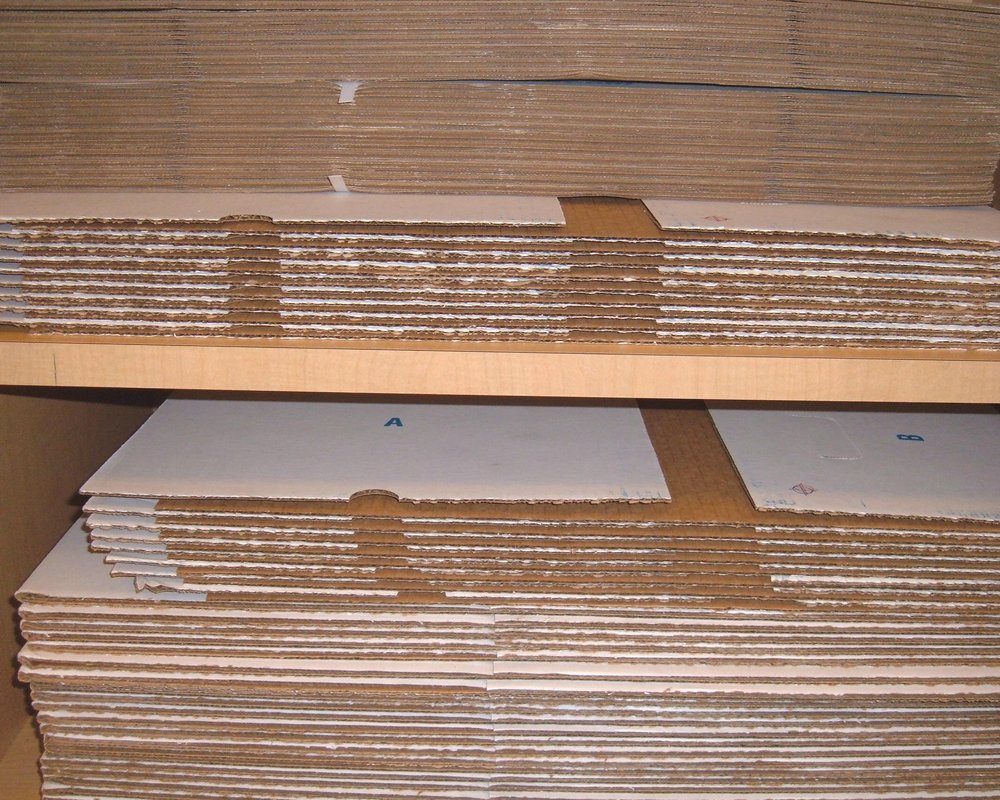
Flat-box reference photo: “Unassembled banker’s boxes” — © BrokenSphere / Wikimedia Commons, CC BY-SA 3.0; center-cropped and resized, adaptation shared under the same license. Neither a returned-box specimen nor a measured new-box control.

Keep a reusable-carton decision record
- History: board and flute construction, intended product weight, reuse count if known (otherwise “unknown”), storage and collection route.
- Condition: incoming moisture, contamination, deformation and joint status, with documented rejection criteria. Do not convert a visual grade into an unmeasured strength figure.
- Test design: new and returned sample lots, common conditioning, compression-load and failure definitions; report the test method and sample count alongside any number.
- Transport fitness: choose an applicable ISTA procedure or agreed distribution test for the actual packed product and cushioning separately from box compression.
No direct comparative measurements of new versus returned cartons were obtained for this article. Nor do these sources establish that reuse is automatically better on environmental or cost grounds; return logistics, inspection, cleaning, repacking and disposal would need separate analysis. The safe stacking load and shipment approval of an individual lot depend on actual test evidence and customer requirements.
About the Author
PackingMaster: Editor of PaperPackLog. Covers market trends, product insights, and technology in the paper packaging industry.
References
- PackMojo, How Weather and Humidity Affect Cardboard Packaging (first published 2021; updated July 28, 2026)
- Csavajda & Böröcz, Can It Still Be Used? Compression Strength Recovery of Corrugated Boxes After Moisture Exposure, Chemical Engineering Transactions 121 (2025), DOI 10.3303/CET25121008 — full paper
- ISTA, Test Procedures: scope of the 1- and 3-Series (checked October 8, 2026)