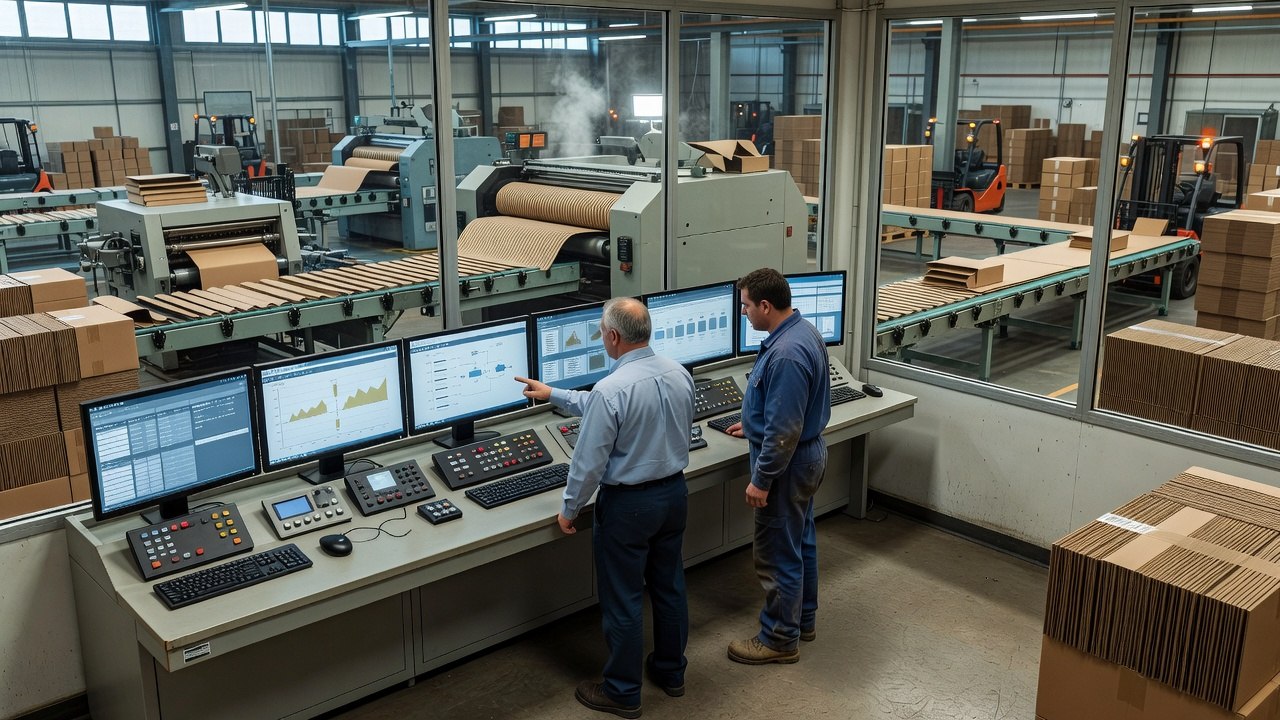
Austrian corrugated producer Rondo Ganahl recently went live with an integration of SAP PP/DS, SAP Digital Manufacturing and SAP EWM supported by Aicomp and T.Con. The stated goals are more transparent planning, a digital shop floor and controlled material flow. No before-and-after figures for lead time, defects, work in process or inventory accuracy are public. The important lesson is therefore not simply that “SAP was installed,” but how customer-specific corrugated variants are connected from order to finished pallet.
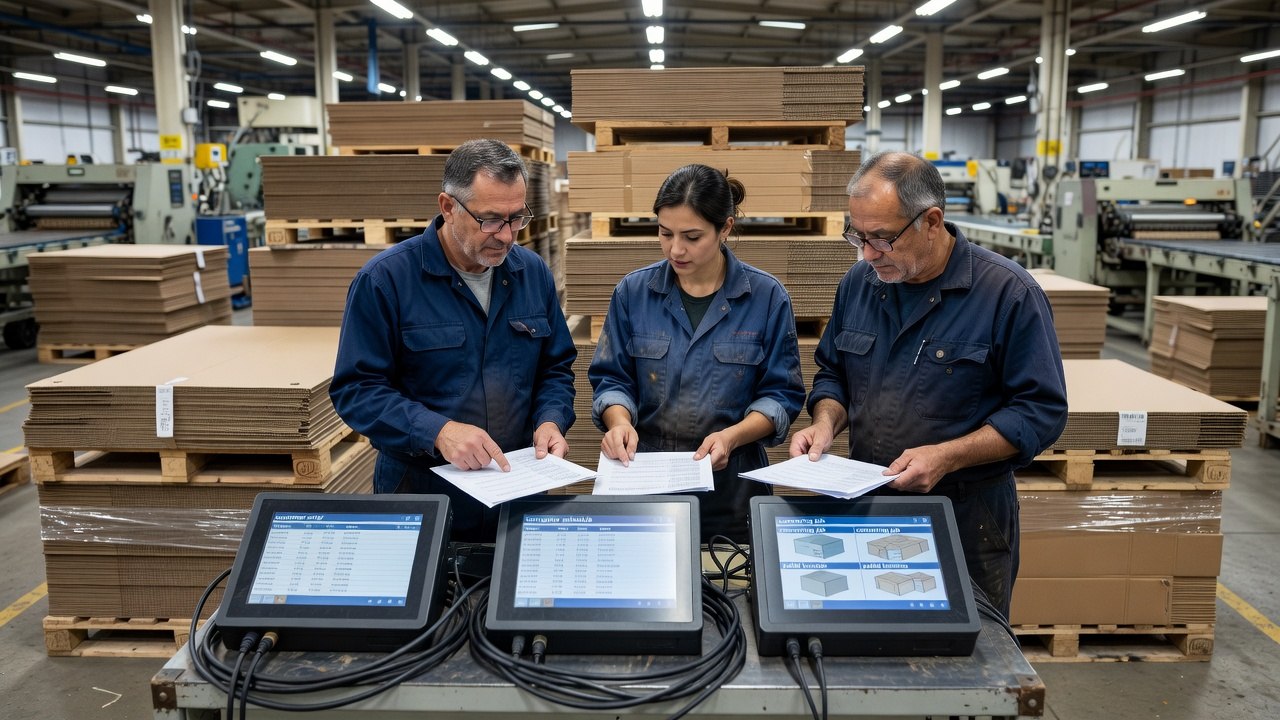
Why Master Data Can Constrain a Corrugator
Corrugated is effectively make-to-order. Dimensions, board grade, flute, print, die cut, glue pattern, stacking and palletization vary by customer order. Before production, these choices must become material master data, a bill of materials, routing and packaging instructions. Manual variant creation can delay quotation and order release, while errors may not appear until the shop floor or the customer’s filling line.
An earlier Aicomp customer reference listed heterogeneous systems, duplicate master data, limited automated connectivity, extensive spreadsheet use and divergent processes as starting conditions at Rondo. The recent project report says an SAP ERP template and a specialist MES were already present, but new requirements exposed limits in end-to-end planning and integration with SAP processes across several production stages.
What the Three Systems Contribute
| Layer | Reported solution | Corrugated data to connect | Result to measure |
|---|---|---|---|
| Detailed planning | SAP PP/DS | Priority, capacity, paper/flute/print/tool constraints and setup sequence | Plan changes, on-time delivery, setup and waiting time |
| Shop-floor execution | SAP Digital Manufacturing | Release, instruction, output, defects, downtime and consumption | Reporting delay, WIP, defect cause and data completeness |
| Production logistics | SAP EWM | Paper and component location, inter-process moves, pallets | Inventory accuracy, picks, trace time and dwell time |
| Variant and master | ERP and packaging-industry tools | Material, BOM, routing, CAD, print, glue and pallet conditions | Quotation and setup time, duplicates and change errors |
System names do not create integration by themselves. The order’s identity must persist across quotation, design, planning, output, quality and pallet, and each field needs a declared system of record.
The Reported Scope and Its Boundary
Public interviews say preparatory work led to an official project start in autumn 2024 and a recent go-live. Early user feedback at the active site was described as consistently positive. Aicomp also expects many plants to operate hybrid architectures for years. It would therefore be misleading to present the case as proof that every legacy MES, conveyor, CAD or EDI interface was removed in a single big-bang transition.
| Confirmed | Not publicly disclosed |
|---|---|
| Use of PP/DS, Digital Manufacturing and EWM | Implementation cost, staffing, licenses and support cost |
| Integration of planning, shop floor and production logistics | Before/after lead time, OEE, defects and inventory accuracy |
| Recent go-live and positive early user feedback | Full site rollout, stabilization defects and ROI |
| Limits of a specialist MES for new end-to-end integration | Detailed scope retained or replaced in the legacy MES |
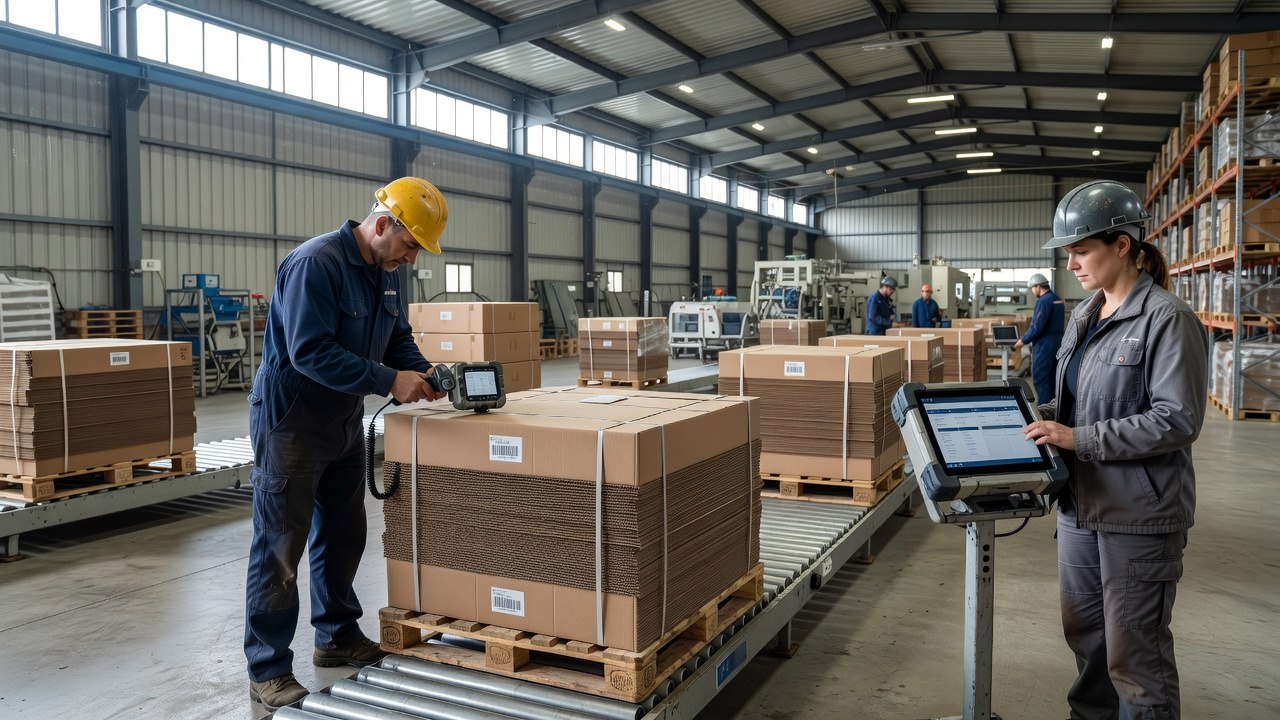
Four Steps for a Corrugated Plant
1. Normalize Variant Rules
Decide when a print-only change creates a new material and when it remains an option. Separate rules from exceptions for size, flute, paper combination, print, die, glue, bundle and pallet pattern.
2. Declare Systems of Record
For example, customer, material, BOM and routing may originate in ERP; machine output in MES; and location and inventory in WMS. Uncontrolled two-way editing produces duplication and conflict.
3. Trace One Order End to End
Connect quotation, drawing, paper lot, production order, inspection, finished pallet and shipment with one trace chain. Verify IDs, not screenshots from separate systems.
4. Freeze Before-and-After KPIs
Measure quotation lead time, order-release time, plan changes, setup, WIP, wrong-material events, pallet tracing and on-time delivery under the same definitions before and after go-live.
Integration Readiness Table
| Question | Evidence | Practical pass condition |
|---|---|---|
| Are customer variants generated from rules? | Material/BOM/routing creation log | No unexplained duplicate entry or exception |
| Does planning model real constraints? | Capacity, setup matrix and availability | Shop-floor replanning has coded reasons |
| Is execution connected automatically? | Order, machine, operator, defect and downtime IDs | Spreadsheet re-entry is not the primary record |
| Are material and pallets traceable? | Paper lot, moves and finished location | Complaint scope can be traced backward |
| Was the effect measured? | Identical KPIs before and after | Go-live is separated from performance improvement |
The Rondo case shows that corrugated digitalization starts with variant logic and master-data discipline, not with another screen on the shop floor. Success still depends on the unpublished performance indicators. A safer path for other plants is to connect one product family and one site from quotation to pallet, then verify whether manual re-entry and trace time actually decline before expanding.
About the Author
PackingMaster: Editor of Paper Pack Log. We collect and organize market trends, product information, and technical insights for the paper packaging industry.