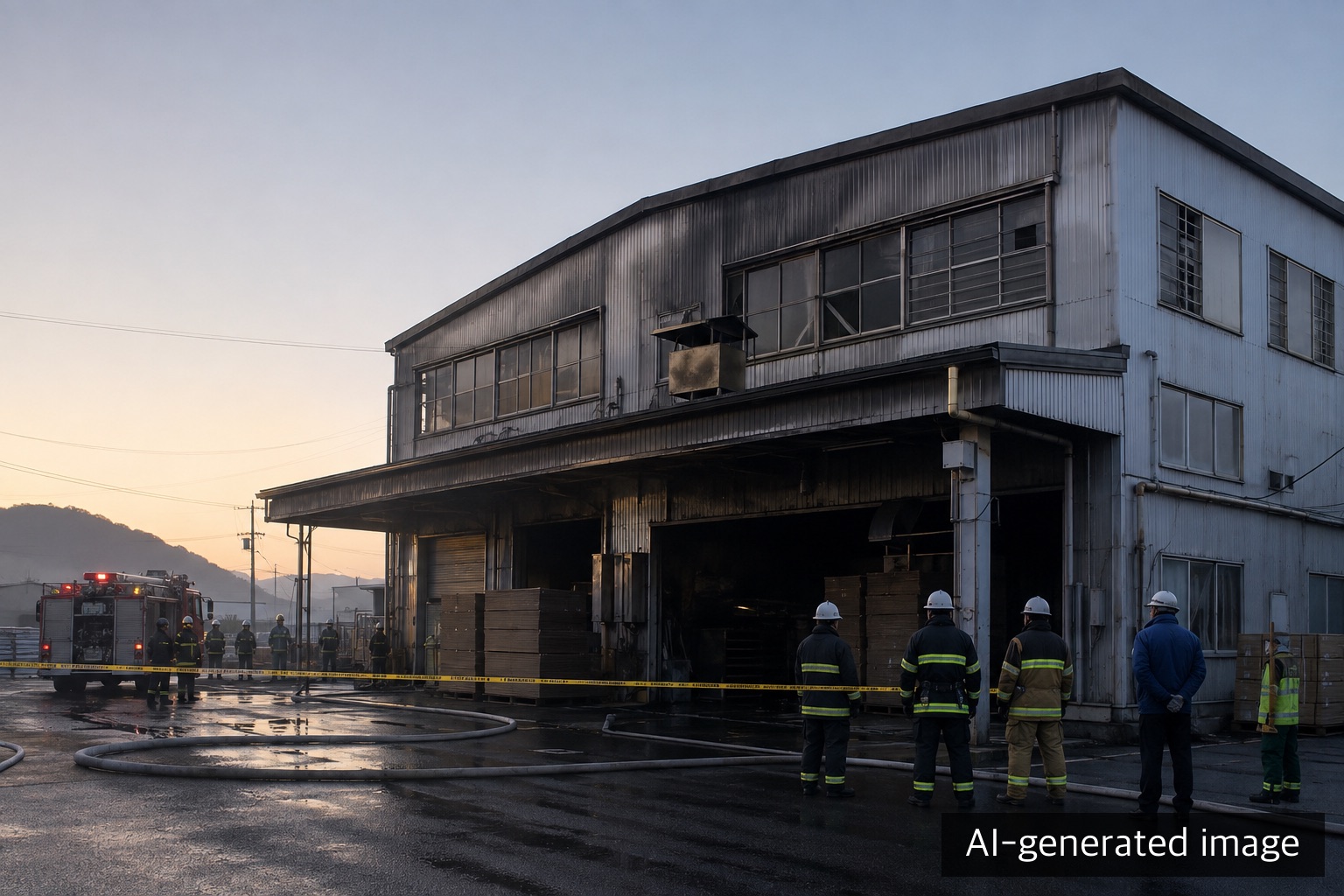
At about 9:00 p.m. on September 4, 2026, the owner of a corrugated-board cutting and converting plant in Hashidatecho, Sabae, Fukui Prefecture, Japan, reported that the inside of the plant was on fire. Local reporting said the fire was extinguished at about 2:15 a.m. on September 5 and that one approximately 290-square-metre, two-storey steel-frame plant building was destroyed. No one was inside the plant at the time, and no injuries were reported. Police and fire authorities are investigating the cause.
The public record reviewed does not establish the production stoppage, inventory loss, alternate-converter arrangements or customer delivery changes. A fire at one plant is not evidence of a Fukui-wide or Japan-wide corrugated-packaging shortage. This article avoids sensational treatment of the incident and focuses on safety, official confirmation and supply continuity.
Status checked at 12:00 p.m. KST on September 6, 2026. Production and delivery status may change if the company, police, fire service or suppliers issue a later formal update.
Field Problem
The public reports describe a plant that cuts and converts corrugated board. Recasting it as a paper mill would misidentify the potentially affected supply-chain stage. Containerboard supply could continue while a concentration of box cutting, printing, die-cutting, gluing or short-run work at one converter creates a finished-packaging bottleneck. Conversely, exposure may be limited if the plant does not handle the company’s POs or another converter can reproduce the approved specification.
Procurement, production, quality and logistics teams should therefore keep the incident facts separate from their own PO exposure instead of translating the size of the fire into assumed delay days.
| Observation | Source Basis | Current Status | Owner and Specific Action |
|---|---|---|---|
| Fire reported at about 9:00 p.m. on September 4 | Local broadcaster and fire-service information | Confirmed | Safety owner retains the latest extinguishment and site-handover notice |
| Fire extinguished at about 2:15 a.m. on September 5 | Local broadcaster | Confirmed | Procurement records the check time and waits for operating updates |
| One two-storey steel-frame plant, about 290 square metres, destroyed | Local broadcaster | Confirmed | Do not convert floor area into capacity or inventory loss |
| No one inside and no injuries reported | Local broadcaster | Confirmed | Do not sensationalise the human impact |
| Cause of the fire | Police and fire-service investigation | Under investigation | Safety owner does not record a possibility as a confirmed cause |
| Production, inventory, alternate-converter and delivery effect | No public company operating notice identified | Unresolved | Procurement requests a written reply by item, specification and PO |
Evidence to Check
Five Links Between the Fire and Packaging Delivery
- Actual converter mapping: Look beyond the supplier name on the PO and confirm the cutting or converting plant, subcontracted processes and shipment point.
- Inventory, work in process and tooling location: Establish where finished boxes, board, work in process, printing plates and cutting dies needed for the item are located. This is a verification request, not a claim that public reports confirmed those assets were lost.
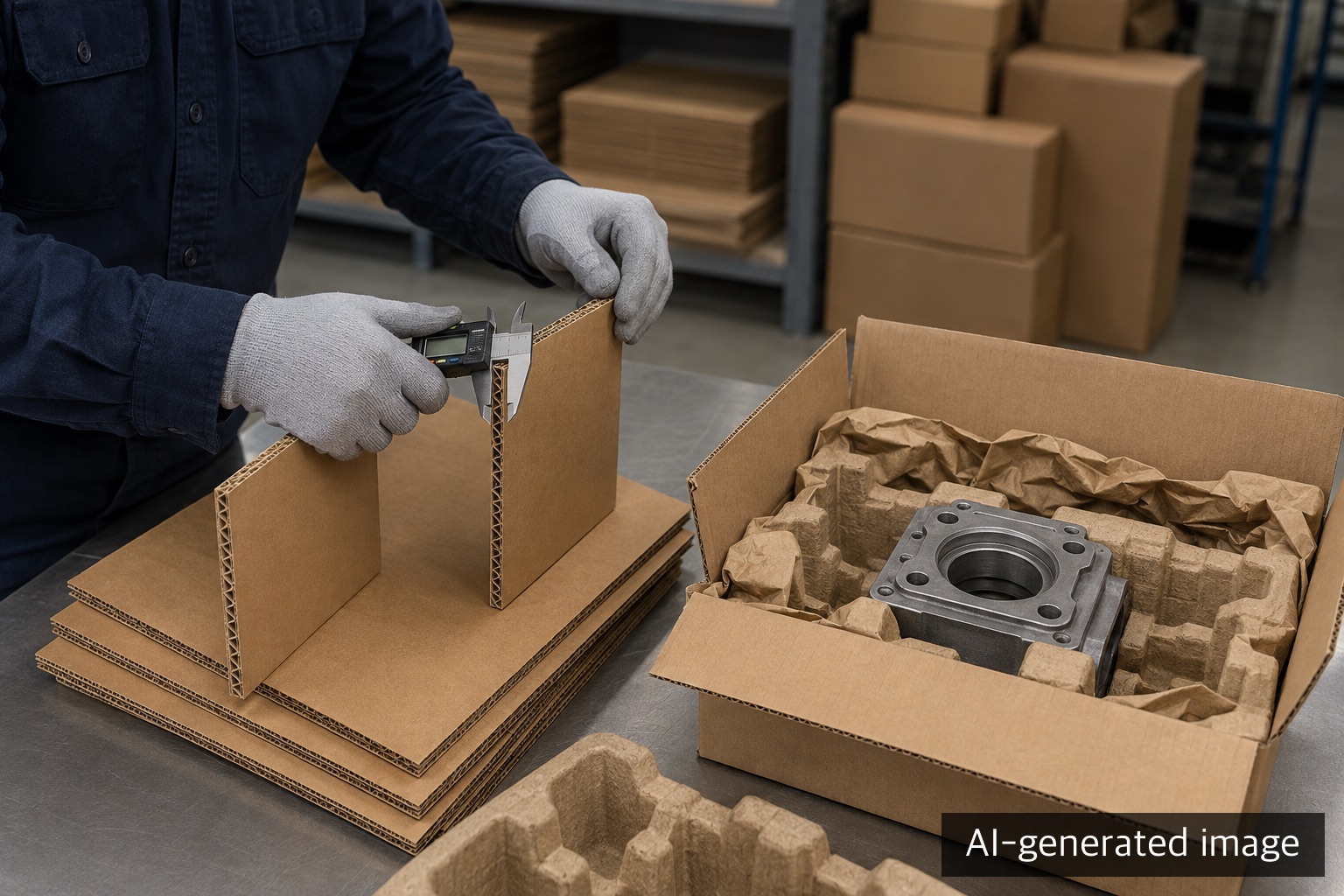
- Specification reproducibility: Confirm with documents and samples whether an alternate converter can reproduce flute, paper combination, dimensions and tolerances, printing, die-cutting, gluing and cushioning fit.
- Alternate capacity and lead time: Separate minimum order quantity, short-run scheduling, first-sample date, production date and firm available quantity.
- Shipment and transport route: Check concentration in Fukui or the wider Hokuriku region and identify changes to collection, port routing and Korean arrival if another plant ships the order.
The local fire-information archive recorded a general building fire near Hashidatecho at 9:09 p.m. on September 4 and issued an extinguishment message at 2:20 a.m. on September 5. Fukui TV’s FNN report said the call was made at about 9:00 p.m. and that extinguishment occurred at about 2:15 a.m. These are not necessarily conflicting event times: the archive shows message timestamps, while the broadcaster reported the underlying call and extinguishment times.

Practical Deliverable
The following tables do not reconstruct the plant’s actual damage. They are working templates for Korean manufacturers and exporters that source corrugated cartons, paper cushioning or small packaging items in Japan.
1) Impact-Chain Status Card
| Stage | Evidence Required | Example Current Assessment | Next Action and Release Condition |
|---|---|---|---|
| S0 Safety and official basis | Latest fire, police and company notice with check time | Fire extinguished; cause under investigation | Safety owner confirms the latest official record and site handover |
| S1 Supply exposure | Actual converter, item code, specification and open PO | Relevance to our items being checked | Procurement requests the plant and PO status in writing |
| S2 Stock and work in process | Location and usable quantity of finished goods, board, WIP and tooling | Inventory effect being checked | Supplier identifies usable, isolated and remake quantities |
| S3 Alternate approval | Alternate converter, specification, sample, quality and customer approval | Candidate under review | Quality and production approve first sample and process fit |
| S4 Shipment and transport | Firm quantity, plant release, collection, shipment and ETA | PO delivery being checked | Sales and logistics release the schedule after firm shipment and approval |
2) Item and PO Exposure Tracker
| Item and Specification | PO and Quantity | Actual Converter | Current Location | Confirmed or Unconfirmed Date | Owner and Next Check |
|---|---|---|---|---|---|
| [Flute, paper combination, inside dimensions] | [PO, units] | Sabae link confirmed/unconfirmed or other plant | [Board, WIP, finished, released] | [Firm ship date or under review] | Procurement records converter, quantity and reply time |
| [Print, die-cut and glue specification] | [PO, units] | [Alternate converter candidate] | [Sampling or production queue] | [Sample and production date] | Quality checks drawing, sample and customer approval |
| [Cushioning or small packaging] | [PO, units] | [Fukui or Hokuriku concentration] | [Warehouse or in transit] | [Collection, vessel and ETA] | Logistics confirms alternate shipment point and route |
3) Fire or Disaster Alternate-Order Check
| Check | Approved Baseline | Alternate Evidence | Current Assessment | Owner and Specific Action |
|---|---|---|---|---|
| Structure and material | Flute, paper combination, basis weight or thickness | Specification, sample and applicable CoA data | Evidence being checked | Quality compares each field with the approved pack |
| Dimensions and converting | Inside and outside dimensions, tolerances, print, die-cut and glue | Drawing, first sample and process range | First approval pending | Production tests packing, assembly and line fit |
| Protective performance | Product weight, stacking and transport conditions, cushioning fit | Internal test plan and results | Not yet tested | Quality applies customer specifications and internal criteria |
| Supply terms | MOQ, firm quantity, sample date and production date | Written quote and production slot | Commercial review | Procurement confirms short-run and mixed-item scheduling |
| Logistics terms | Release point, collection, port and ETA | Alternate route and firm schedule | Route being checked | Logistics updates carrier, customs and arrival plan |
| Change approval | Customer-approved specification and change control | Change list and traceable first lot | Shipment on hold | Sales releases only after customer approval where required |
Do not invent basis weight, strength, tolerance or acceptance numbers that are absent from the public reporting. Qualify the alternate using customer requirements, the approved drawing, supplier data and internal test criteria.
Ten Questions to Send to the Supplier or Converter
- Please confirm the actual cutting or converting plant and subcontracted processes for each open PO.
- Separate each PO into board, work in process, finished goods, plant release and in-transit status.
- Are any of our items, specifications or quantities directly linked to this incident?
- What finished-goods and board quantities are usable, isolated or require remanufacture?
- Are the printing plates, cutting dies or other item-specific tools usable, or must any be remade?
- Which flute, paper combination, dimensions, print, die-cut and glue specifications can the alternate converter reproduce?
- What are the alternate MOQ, firm quantity, first-sample date and production date?
- Which changes require quality or customer reapproval?
- If the shipment point changes, how do collection, vessel, ETA and freight terms change?
- When is the next formal operating update, and when will each PO receive a written reply?
Immediate Actions by Role
Procurement
- Verify exposure by actual converter, item and PO, not only by supplier name.
- Mark items concentrated in Fukui or Hokuriku converters and warehouses.
- Obtain MOQ, firm quantity, sample and production dates with the alternate quote.
Quality and Production
- Compare alternate flute, paper combination, dimensions, printing, die-cutting, gluing and cushioning fit with the approved pack.
- Segregate the first alternate lot so receiving, trials, use and complaints remain traceable.
- Confirm packing, assembly, product protection, line fit and customer-approval conditions before production use.
Logistics and Sales
- Separate plant stock, external warehouse stock, collection, port cargo and shipped goods when updating ETA.
- Distinguish
impact under reviewfromconfirmed delayin customer communication. - Record the time, owner and evidence whenever the supplier’s written status changes.
Conditions That Require a Hold
Hold an alternate order, customer delivery announcement or supply normal status if any of the following remain unresolved.
- The link between the incident plant and the actual converter for the company’s PO is unknown.
- The approximately 290-square-metre loss is being converted into capacity, inventory loss or delay days.
- Finished goods, board, work in process and item-specific tooling have not been located and assessed.
- Alternate flute, material, dimensions, converting specification and first sample are unapproved.
- MOQ, scheduling date and firm quantity for short-run or mixed-item demand are unavailable.
- Collection, shipment and ETA for the alternate release point are unconfirmed.
- Media reports are available, but no item- and PO-level supplier reply has been received.
- A possible supply effect is being described to customers as a confirmed stoppage.
Documents to Check Today
- Supplier and actual-converter list for Japanese corrugated cartons, cushioning and small packaging
- Board, WIP, finished-goods and release status by open PO and item code
- Approved drawings, flute and paper combination, print, die-cut, glue and customer change requirements
- Alternate converter MOQ, firm quantity, sample date, production date and delivery lead time
- Concentration in Fukui or Hokuriku warehousing and transport, with alternate shipment routes
- Supplier reply timestamp, owner and next planned formal update
What is confirmed is the fire, building loss, extinguishment and reported injury status at a corrugated cutting and converting plant in Sabae. Production and delivery effects remain publicly unconfirmed. The practical job for manufacturers and exporters is not to predict a regional shortage, but to connect the actual converter, specification, inventory and WIP, alternate approval, shipment and transport at PO level.
About the Author
PackingMaster: Editor of PaperPackLog. Covers market trends, product insights, and technology in the paper packaging industry.
References
- Fukui TV and FNN, Sabae corrugated plant destroyed by fire; extinguishment and injury status (September 5, 2026)
- Koshinomiyako Network, Sabae and Nyu fire-service incident and extinguishment messages (September 5, 2026)
- Fukui TV and FNN, initial report on the Sabae corrugated cutting plant fire (September 4, 2026)