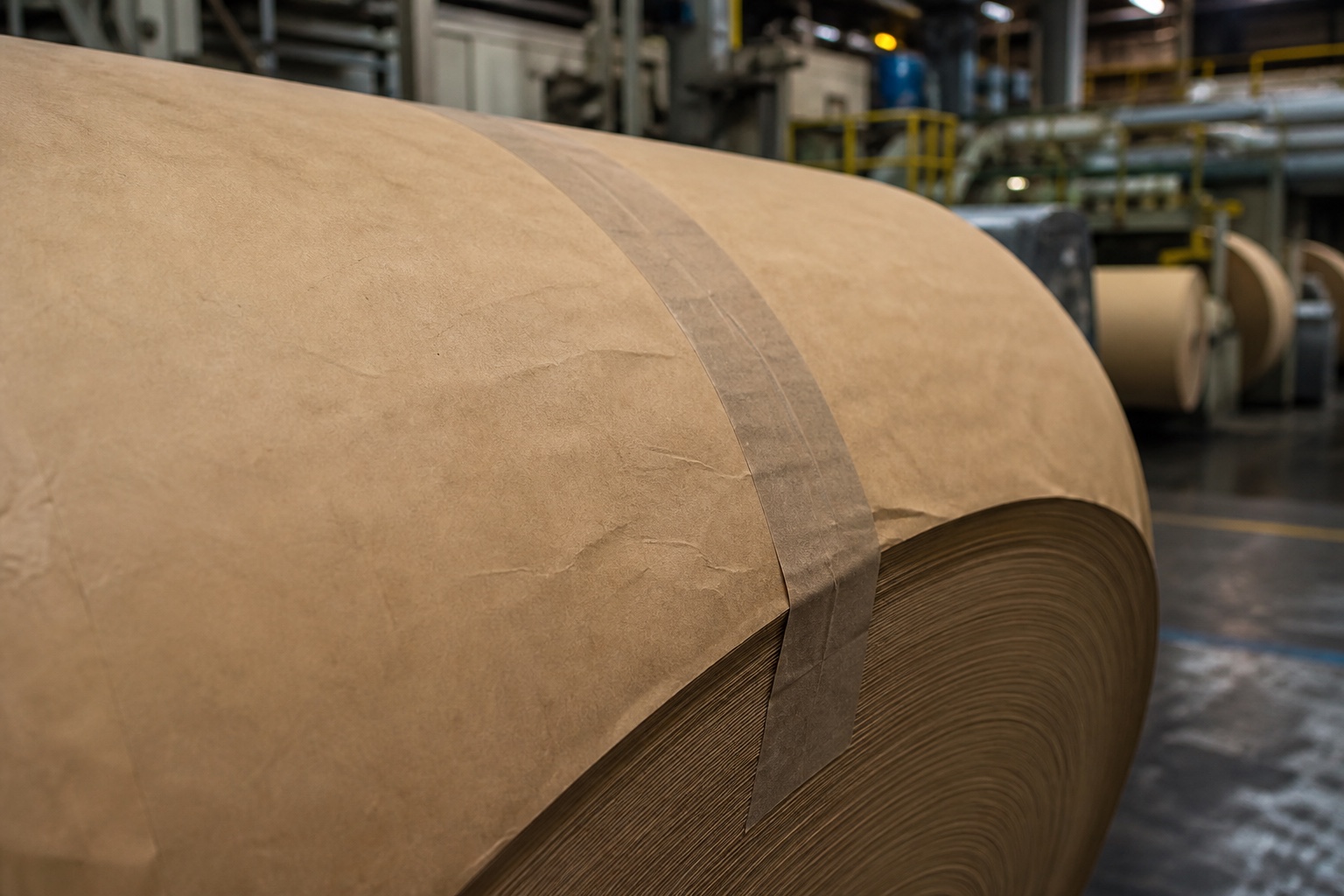
A supplier statement that a recycled-paper tape works on standard reel-wrapping machines without equipment changes or investment does not qualify it for every paper mill. Saica’s source confirms a backing made from 100% recycled fiber sourced within the group, a self-adhesive linerless structure, unwind and overlap functionality, repulpability and implementation at El Burgo de Ebro in Spain. It does not disclose backing basis weight, adhesive chemistry, peel/shear/tack, operating humidity, dust, repulp yield or contaminant-removal criteria. The reel-sealing-tape qualification table below separates “potentially no modification” from “no testing required.”
Product Scope Confirmed by Public Sources
Saica announced the tape on February 11 as a joint development by Saica Flex and Saica Paper.
| Item | Supplier statement | Safe interpretation |
|---|---|---|
| Backing | 100% recycled fibers sourced within the group | Do not extend this to 100% recycled content for the entire tape |
| Structure | Self-adhesive and linerless | No release liner; adhesive type and coat weight remain undisclosed |
| Application | Adheres to paper and board and protects Saica Paper’s own reels | Not a blanket guarantee for every external paper or coated surface |
| Handling | Designed for efficient unwinding and overlap | No public quantitative unwind or overlap-strength data |
| Repulping | Can be repulped for fiber recovery | Method, yield, screen reject and stickies criteria undisclosed |
| Equipment | Works with standard reel-wrapping machines, no change/investment, compatible with all reel types | Supplier claim under Saica conditions; does not replace site SAT |
| Implementation | Used at Saica Paper’s El Burgo de Ebro facilities | One site confirmed; not automatic approval for other lines or climates |
| Rollout | Planned for other European paper lines | Plan, not completed deployment |
Packaging Europe restated the linerless design, repulping objective, standard-machine compatibility and El Burgo de Ebro introduction on February 16. Both reports ultimately rely on Saica’s product announcement, so users still need the supplier TDS and test reports.
Why Reel Sealing Is More Than a Small Tape Test
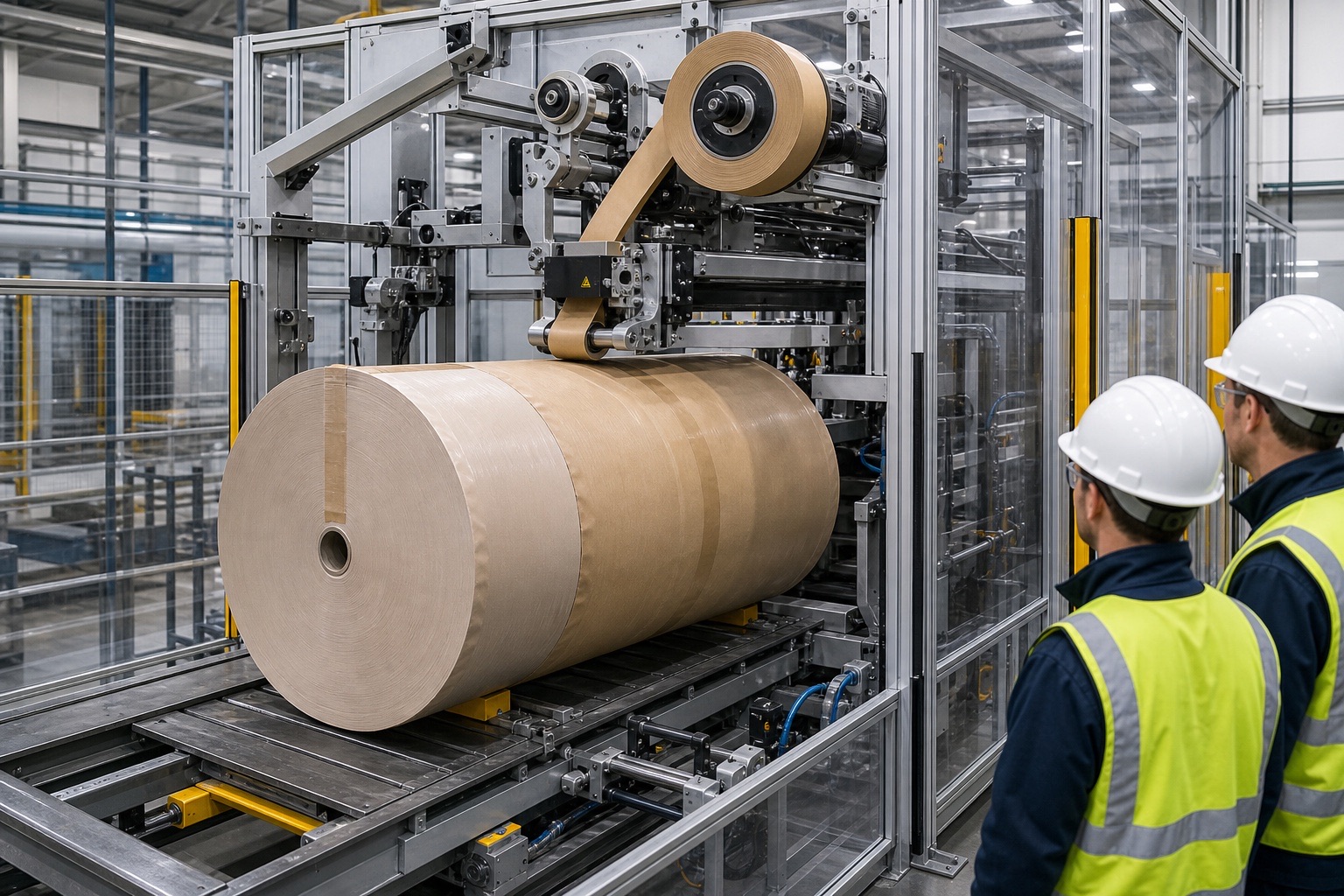
A reel-sealing tape must do more than stick when the wrapper stops. It must feed at wrapper speed, bond to the overlap and paper surface, withstand storage and transport humidity and vibration, and avoid residue on the product or machine. In recovery, the backing must disperse while adhesive and coating remain manageable through screens, cleaners and water treatment.
“No equipment change” is a useful starting point. It becomes valid at a particular mill only when tape width, roll OD, core, winding direction, unwind force, tension control, cutter and application pressure fit the installed equipment window.
Five Qualification Tests Before Use
1. Roll and Machine Fit
Confirm width, caliper, roll length/OD, core ID, winding direction and splice. Record feeding, tension, cut, position, change time and sensor detection at low speed, rated speed and stop/restart.
2. Unwind and Overlap
Measure unwind force after conditioning by temperature, humidity and storage age. Check blocking, interlayer tear and curl in the linerless roll. Vary overlap length and application pressure and measure peel, shear and opening.
3. Paper-Surface Adhesion and Transport
Test kraft, coated, moisture-treated and recycled-paper surfaces across dust levels. Measure initial tack, 180-degree peel, static shear, edge lift and residue before and after cold, heat, humidity, vibration and storage on a real reel.
4. Dust, Contamination and Opening
Record paper dust at cutters and guides, adhesive transfer, sensor contamination and residue on the reel. Simulate customer opening and evaluate cutting, removal, paper-surface damage and entry into the converting process.
5. Repulping and Process Impact
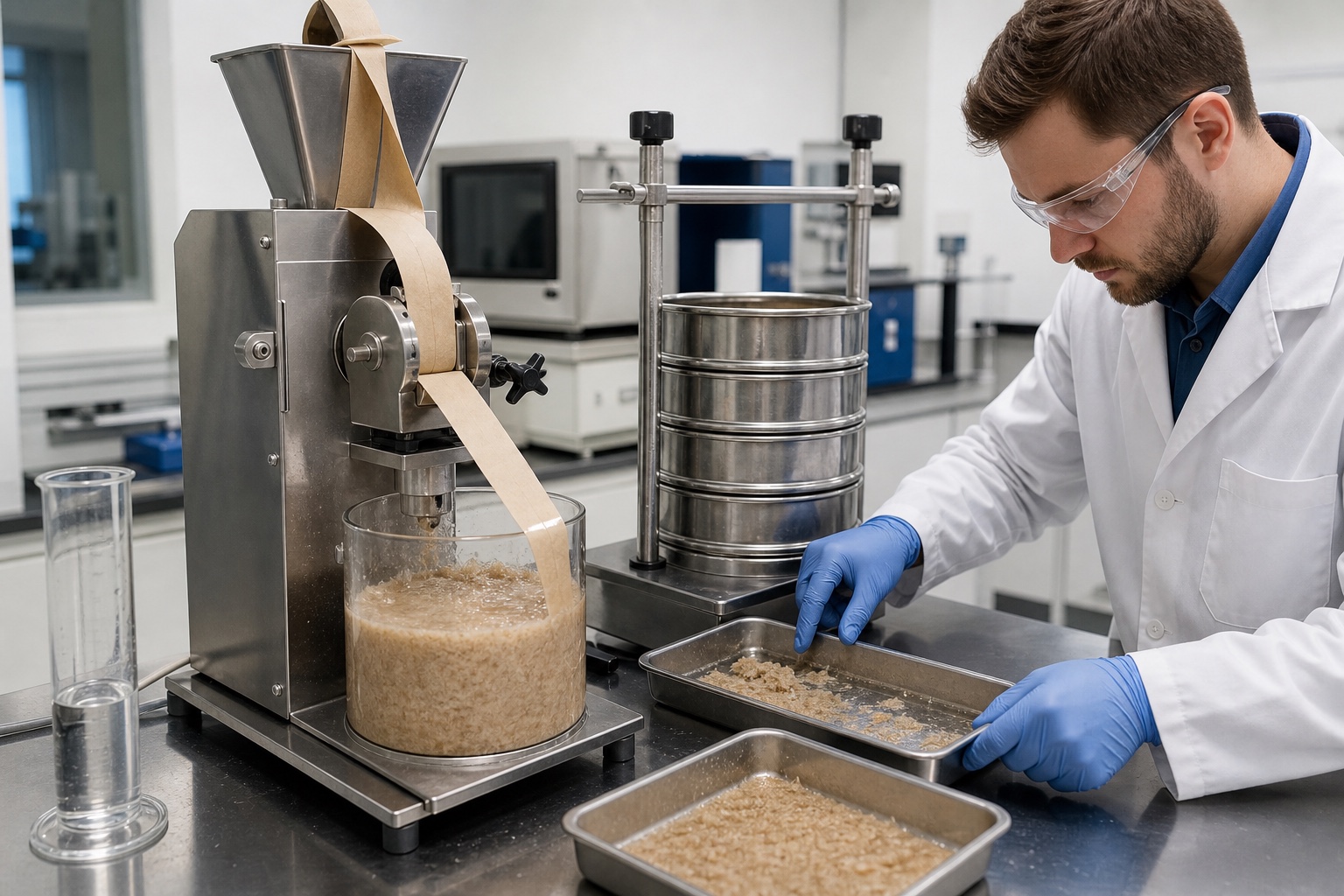
Use the actual tape-to-fiber ratio in the target pulper. Measure dispersion, screen reject, macro/micro stickies, freeness, white-water and treatment effects. “Repulpable” is not identical to acceptance by the final mill; use that mill’s method and criteria.
Copy-Ready Qualification Table
| Test | Conditions/sample | Observations | Acceptance source | Hold trigger | Owner/action |
|---|---|---|---|---|---|
| Machine fit | Low/rated speed, stop/restart, min/max reel | Feed faults, tension, cut, position, change time | Existing machine window, supplier TDS and internal rule | Jam, double feed, cut failure, sensor miss | Production engineering completes SAT by wrapper |
| Unwind/overlap | Temperature/humidity/age, overlap and pressure | Unwind force, blocking, overlap peel/shear, opening | Incumbent comparison and pre-agreed criteria | Interlayer tear, curl, overlap opening | Quality trends each condition |
| Adhesion/transport | Surface/dust, cold, heat, humidity, vibration | Tack, peel, shear, edge lift, residue | Product/customer requirements and incumbent | Reel exposure, residue, surface damage | Packaging/logistics tests actual reels |
| Dust/opening | Long run and customer opening simulation | Dust, sensor/guide contamination, cut/removal | Cleaning and customer-approval criteria | Shorter cleaning interval or paper damage | Production/sales closes customer feedback |
| Repulping | Actual dose and target pulper/screen conditions | Dispersion, reject, stickies, white-water effect | Mill method and recycling/customer criteria | Excess screen, stickies or treatment load | Paper/environment owner approves pilot result |
Not Disclosed in the Public Sources
- Adhesive chemistry, bio-based/recycled content and food-contact status
- Backing basis weight/caliper, tape width/length and core specification
- Tack, peel, shear, overlap strength and operating temperature/humidity range
- Maximum speed and sensor/cutter compatibility by wrapper model
- Repulp test method, fiber-recovery yield, screen reject and stickies data
- Third-party certification or recyclability in every collection system
- Total cost, waste and carbon impact versus the incumbent tape
Conditions That Require a Hold
- Describing “100% recycled-fiber backing” as recycled content for the entire tape
- Applying the supplier compatibility claim to every line without machine SAT
- Omitting adhesion and overlap tests under actual dust, humidity and transport
- Claiming “fully recyclable” without repulping method and result
- Residue or dust remains on paper, sensors or guides
- A customer specification names an approved tape or reel-wrap configuration
Saica’s tape is notable for connecting recycled-paper backing, a linerless structure, reel-wrapper use and repulping in one product concept. Qualification must connect unwind → overlap → adhesion → transport/opening → repulping using the same tape lot and actual machine. “No modification” should mean that a sample SAT can begin before capital investment—not that testing can be omitted.
About the Author
PackingMaster: Editor of Paper Pack Log. We collect and organize market trends, product information, and technical insights for the paper packaging industry.