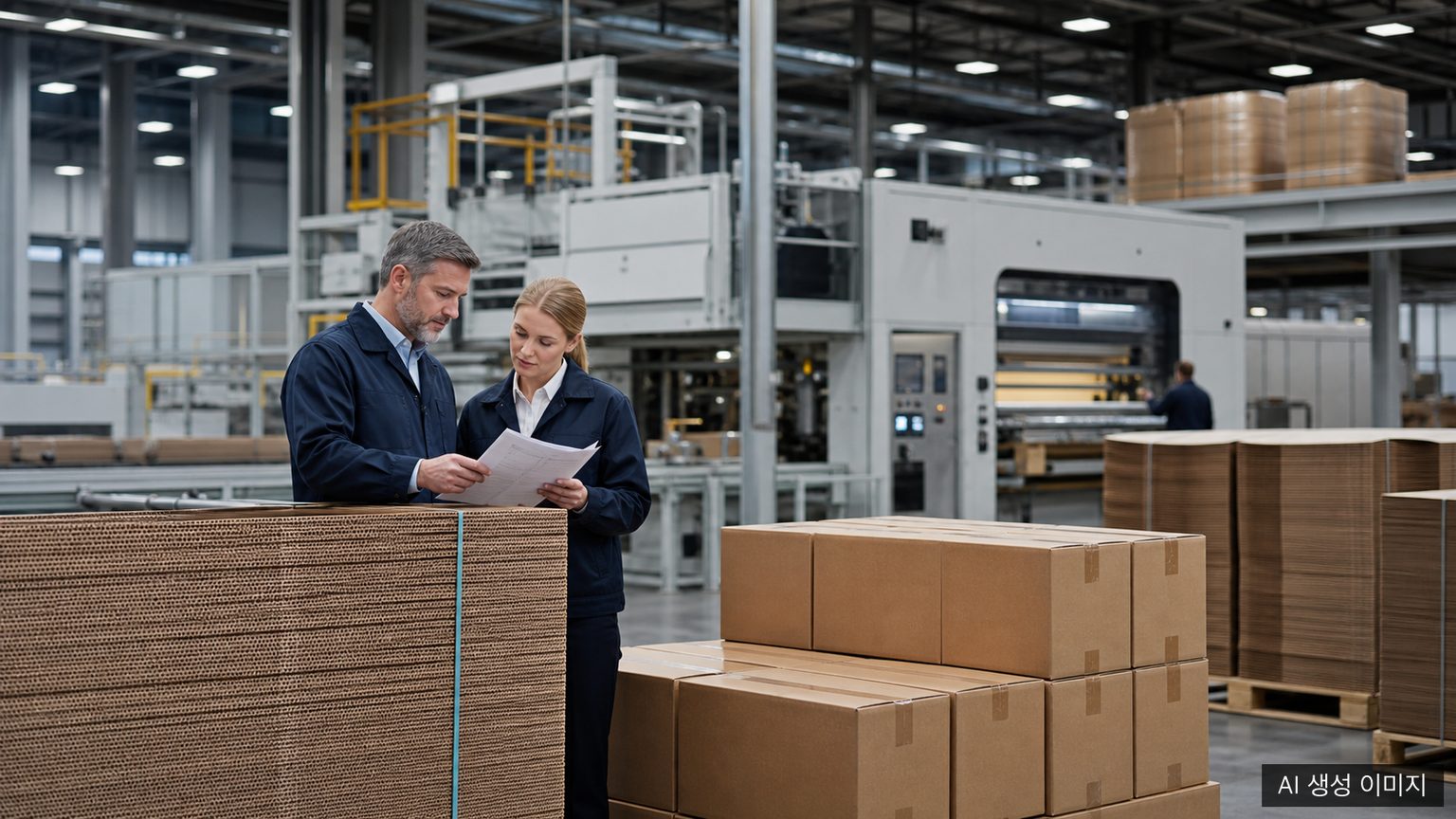
On May 12, 2026, Spain’s paper and packaging group Saica Group announced an agreement to acquire Germany’s corrugated packaging company Thimm Group. The deal value was not disclosed, and final closing is pending approval from the relevant competition authorities.
This is not a routine overseas M&A headline. Saica already operates in Spain, France, Italy, Portugal, the UK, Ireland, Turkey, Luxembourg, the Netherlands, Poland, and the US, putting it among the major European packaging groups. Adding Thimm, which supplies corrugated packaging and display solutions across Germany, Poland, the Czech Republic, and Romania, raises the geographic density of Europe’s corrugated packaging market by another notch.
For Korean exporters and packaging buyers, the relevant point is in that geography. Large European packaging groups are no longer just paper producers; they are turning into networked converting companies that design and deliver boxes, displays, transport packaging, and retail packaging close to the customer. Companies exporting to Europe should expect packaging specifications, lead times, recycling rules, and local vendor management to get more complex.
Who Are Saica and Thimm
Saica is a family-owned group headquartered in Zaragoza, Spain, founded in 1943. The business runs on four axes. Saica Paper produces recycled paper for containerboard, Saica Natur handles waste management and environmental services, Saica Pack produces corrugated packaging, and Saica Flex is the flexible-packaging arm.
Based on Saica’s own disclosure, group revenue in 2025 was approximately EUR 3.962 billion, with more than 12,000 employees. Because Saica combines recycled paper and corrugated packaging, it functions less as a box manufacturer and more as an integrated player linking recovery, paper, converting, and packaging solutions.
Thimm was founded in Germany in 1949 as a specialist in corrugated packaging and displays. 2024 revenue was approximately EUR 539 million, with around 2,500 employees. According to Saica’s announcement, Thimm has annual corrugated packaging capacity of about 1.2 billion square meters, with operations centered in Germany, Poland, the Czech Republic, and Romania.
Thimm’s strength is not in plain transport boxes. The portfolio runs from transport packaging for consumer goods to e-commerce shipping packaging, sales packaging, in-store displays, and industrial high-quality pre-print. In short, it is a company that understands both factory-floor packaging and retail-floor display packaging.
Why European Corrugated Companies Are Scaling Up Now
Three currents converge behind this deal.
First, the European corrugated market is fiercely competitive. Paper prices, energy, labor, and logistics costs all push at once, and large customers demand shorter lead times and more complex packaging specifications. It is increasingly hard for a mid-sized family business to fund equipment investment, digital printing, automation, and sustainability documentation on its own.
Second, European customers are moving toward integrated packaging management rather than buying packaging country by country. A customer with production and logistics footprints across Germany, France, Poland, the Czech Republic, and Romania often prefers a single large network providing consistent quality standards and consolidated reporting, rather than a different packaging supplier in each country.
Third, EU packaging regulations and brand sustainability requirements are raising the documentation bar for packaging suppliers. Providing customers with recyclability, material composition, recovery-system data, carbon information, and EPR documentation requires data management and technical support, not just manufacturing capacity.
Read this way, the deal is not simply Saica buying more production capacity. It is Saica securing customer touchpoints in Germany and Eastern Europe.
Saica’s Recent Path: From Poland Into the German-Speaking Belt
Saica’s European expansion did not start here. In 2024 it acquired Schumacher Packaging’s Polish business. That deal included two corrugated packaging plants in Poland, two recycled containerboard mills, and three service centers. The acquisition let Saica scale both recycled paper and corrugated packaging capacity in Poland at the same time.
The Thimm acquisition reads as the next step. Thimm is anchored in Germany and extends through Poland, the Czech Republic, and Romania. Saica, having already built up paper and packaging capacity in Poland, is now tightening its grip on German-speaking customers and the Eastern European production network.
This matters for the European packaging supply chain. Germany is the center for automotive, machinery, chemicals, consumer goods, and retail packaging. The Czech Republic and Romania are large manufacturing and assembly hubs with significant packaging demand. Poland is a market where logistics and manufacturing are growing together. When Saica binds this axis together, the corrugated packaging network connecting Western and Eastern Europe gets stronger.

Implications for Korean Export Packaging Operations
This deal will not change Korean packaging costs tomorrow. But for companies shipping to Europe or supplying European customers’ packaging standards, the following shifts deserve attention.
1. European Customers May Push for Standardized Packaging Specs
When a large packaging supplier holds production and converting networks across multiple countries, customers find it easier to apply the same box construction and the same print standards across markets. For Korean exporters, that means moving away from managing “Germany packaging,” “Poland packaging,” and “Czech packaging” separately and toward common specifications aligned to a Europe-wide standard.
At that point, spec documentation matters more than unit price. Flute type, paper grade, compression strength, print color, barcode position, recycling marks, pallet stacking pattern, and drop and vibration conditions all have to be on file.
2. The Line Between Retail and Transport Packaging Will Blur Further
Thimm is strong not only in transport packaging but also in sales packaging and display solutions. European retail customers look at packaging efficiency from warehouse to shelf. Boxes have to do more than protect the product; they need to convert directly into shelf-ready or promotional display formats.
Korean companies supplying European retail channels should review not just basic export boxes but also retail-ready packaging (RRP), shelf presence, opening convenience, and disposal convenience.
3. Connecting Domestic Design to Local Packaging Vendors Becomes Critical
When European customers source packaging through local networks like Saica or Thimm, packaging designed in Korea may not feed directly into local production. Structure can be adjusted to local equipment width, die-cutting capacity, print method, minimum order quantity, and lead-time constraints.
It is safer to confirm local-conversion feasibility during domestic design. Packaging drawings, die-line files, paper specs, print files, and test standards should all be in a form local partners can review immediately.
4. Supply Risk May Sit in the Approval Schedule, Not the Price
The deal still requires competition-authority approval. Large M&A processes can shift organization, sales contacts, production allocations, and systems during approval and integration. Short-term customer impact may be muted, but long-term contracts and new projects can see approval and integration timelines emerge as variables.
Companies using European local packaging vendors should avoid single-vendor dependence and keep alternative production regions and substitute specifications on file.
Procurement and Sales Team Checklist
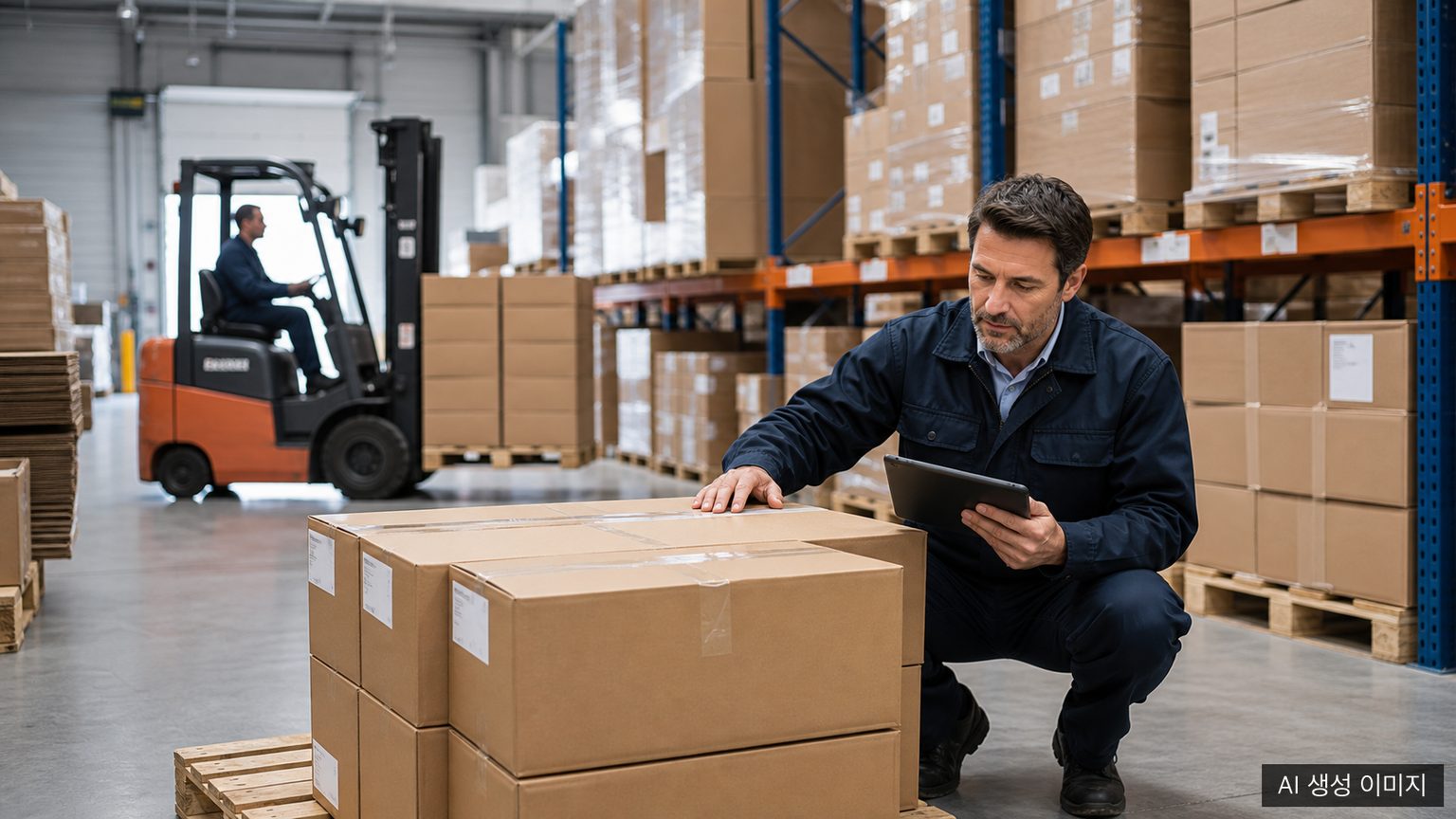
When reviewing corrugated or display packaging for Europe, confirm the following in advance.
- Target countries: actual sales and logistics destinations such as Germany, Poland, the Czech Republic, and Romania
- Packaging role: transport box, e-commerce shipping box, retail packaging, in-store display
- Spec data: flute type, paper grade, basis weight, ECT/BCT, print method, die-line
- Local production feasibility: local converter equipment width, die-cut size capability, MOQ
- Labeling standards: recycling marks, barcode, product information, handling notes
- Logistics conditions: pallet dimensions, stacking layers, container loading, warehouse humidity
- Risk management: backup vendors, substitute papers, lead-time impact under approval delays
With this checklist in hand, packaging discussions with European buyers can shift from “box unit price” to “supply stability and total logistics cost.”
Conclusion: Europe’s Packaging Market Is Becoming a Larger Network Game
Saica’s acquisition of Thimm is a signal that consolidation in the European corrugated market continues. Read alongside the moves of large groups like Smurfit WestRock, International Paper and DS Smith, and Mondi, the European packaging market is being reshaped around companies with broader regional networks and customer-specific converting capabilities.
For Korean companies, two tasks remain. First, packaging specifications demanded by European customers need tighter documentation. Second, domestic design has to connect to overseas production conditions so changes in the local packaging network do not break the supply.
Export packaging to Europe can no longer be described simply as “a sturdy corrugated box.” It is moving toward an area where regulation, recyclability, retail merchandising, local production, and lead-time stability are all designed together. The Saica and Thimm combination is one of the more recent signals pointing in that direction.
Frequently Asked Questions
Q: Is Saica’s acquisition of Thimm finalized?
Based on the official announcement, both sides have agreed to the transaction, but final closing requires approval from the relevant competition authorities. The deal value was not disclosed.
Q: What kinds of packaging does Thimm mainly produce?
Thimm is a European packaging company that handles corrugated transport packaging, e-commerce shipping packaging, sales packaging, in-store displays, and industrial pre-print. Its strength lies in solutions that link production-floor packaging with consumer-goods distribution and retail merchandising, rather than plain box manufacturing.
Q: Does this directly affect Korean exporters?
Short-term direct impact is limited. However, as the large European packaging suppliers’ networks grow, buyers’ requirements for packaging specifications, recyclability documentation, local-production response, and lead-time management will become more systematic.
About the Author
PackingMaster: Editor of PaperPackLog. Curates and organizes market trends, product information, and technical insights for the paper-packaging industry.
References
- Saica Group, “Saica Group acquires Thimm Group” (2026.05.12)
- EUWID Paper, “Saica to acquire Germany’s family-owned corrugated packaging group Thimm” (2026.05.13)
- Packaging Journal, “Saica Group acquires packaging manufacturer Thimm” (2026.05.12)
- Background: Saica Group, “Saica Group and Schumacher Packaging reach an agreement for Poland” (2024.07.22)
- Background: Saica USA, “Saica Groupe acquires Schumacher Packaging in Poland” (2024.11.05)