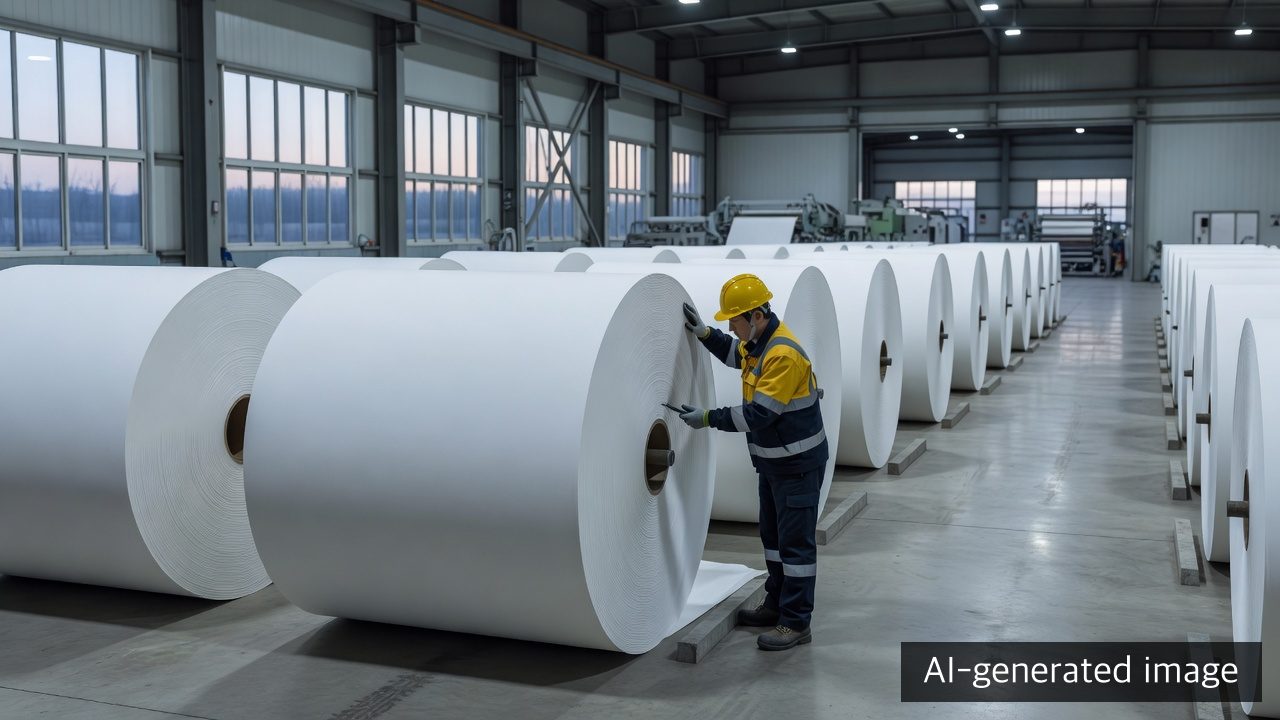
Sam Jung Pulp disclosed on August 28, 2026 that it had decided to halt the tissue parent-roll production line at its Cheonan mill on September 30. The production-halt filing states that the company plans to maintain and expand sales of the affected Cheonan products through overseas sourcing while concentrating parent-roll production at the Haman mill. For customers, the practical question is not whether every product will stop. It is which ordered item will move to which manufacturing source, under what approval and delivery conditions.
Source status — checked on August 31, 2026 KST: The KIND viewer displays the August 28 production-halt filing as the latest document and shows no active correction-request warning or separate correction filing. The filing itself states that the halt and restart dates may change due to the company’s internal circumstances. Later filings and supplier notices should therefore be checked before commercial decisions.
Filed Facts and Company-Stated Plans
The affected operation, decision date, scheduled halt date and revenue figures are filing entries. The reasons and measures are the company’s stated explanations, while customer- and item-level implementation details were not disclosed.
| Item | Production-halt filing | What the buyer still needs |
|---|---|---|
| Affected operation | Sam Jung Pulp Cheonan mill base-paper division | Customer- and item-level line mapping |
| Action | Halt of the Cheonan base-paper production line | Scope of other processes, inventory and shipping activity |
| Halt date | September 30, 2026 (scheduled in the filing) | Later filings, supplier notices and the date applied to each PO |
| Scheduled restart | Not stated | Official clarification on whether the change is temporary or long-term |
| Revenue attributed to the affected field | KRW 36,764,611,973 (the filing note identifies this as the Cheonan mill’s 2025 annual revenue) | It should not be described as parent-roll-only revenue or as a forecast loss |
| Share of recent revenue | 24.75% of 2025 separate-company revenue | A company-level ratio, not the exposure of any individual customer |
| Reasons stated by the company | Weaker price competitiveness from imported base paper, intensified oversupply, difficult medium- to long-term market recovery and expected operating-loss expansion if the line remains in operation | The language does not prove the direction of market-wide price or supply |
| Measures stated | Overseas sourcing for Cheonan products and concentrated base-paper production at Haman | Overseas mill, Haman item allocation, quantities and approval schedule |
The filing is limited to the Cheonan base-paper division. It should not be rewritten as a halt of every Sam Jung Pulp product, closure of all Cheonan operations, a Korea-wide hygiene-paper shortage or an immediate price increase. The company states that it intends to maintain sales through overseas sourcing and Haman production concentration. The public filing does not, however, identify the item-level transfer scope, supplying mills, quantities or delivery dates.
How to Read the Scale Without Overstating It
Sam Jung Pulp’s 2025 annual report describes its main business as the manufacture and sale of tissue, hygiene paper and other paper products. The report lists annual maximum 2025 tissue base-paper capacity of 36,500 tonnes at Pyeongtaek, 34,675 tonnes at Cheonan and 34,675 tonnes at Haman. Reported production was 23,924 tonnes, 25,445 tonnes and 27,384 tonnes respectively. It also states that the Pyeongtaek base-paper and finished-product lines were halted on December 29, 2025.
These figures provide historical scale for the Cheonan operation. Do not treat 34,675 tonnes as the future shortage volume. Capacity is a maximum measure rather than actual production, and the public sources do not state the overseas-sourcing volume, additional Haman allocation, available inventory or transferred grade mix. The 2025 output figure also cannot be converted directly into actual supply after September 2026.
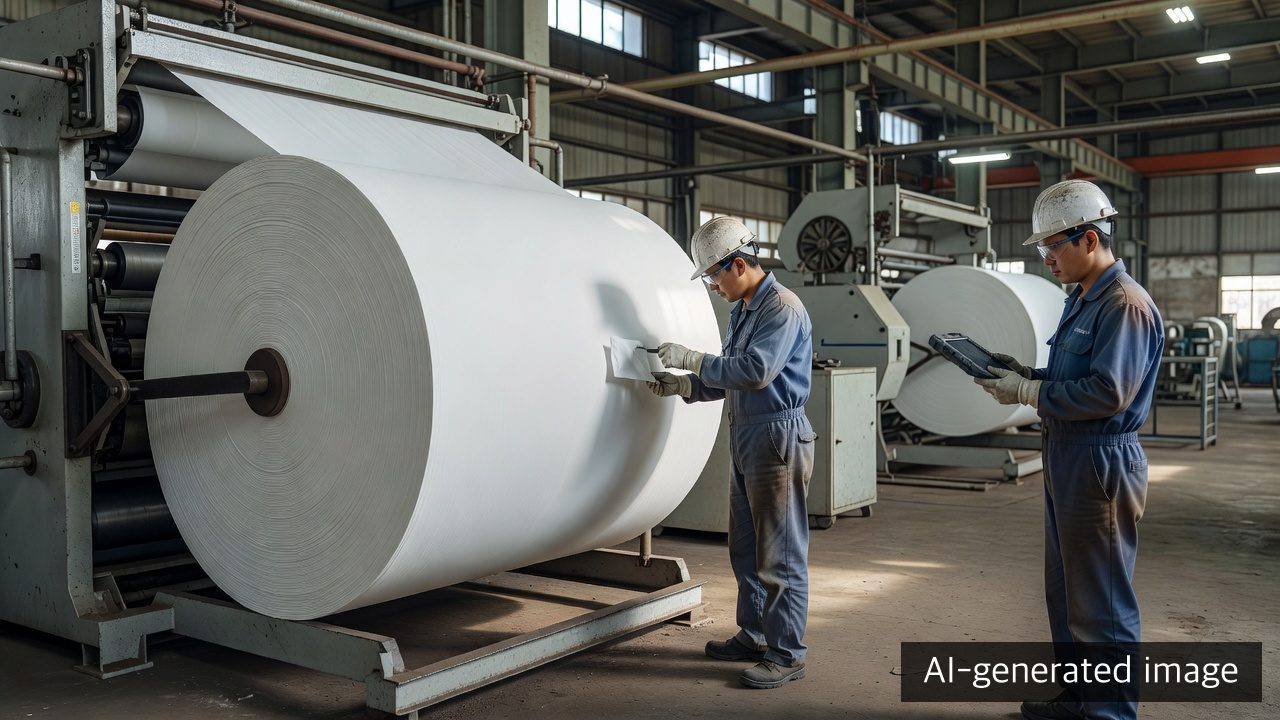
Seven Checks Before Source Transfer
1. Is Our Item Actually Linked to Cheonan Base Paper?
Do not stop at the company or brand name. Connect item code, grade, basis weight, width, ply, fibre composition and current manufacturing mill on one line. The filing contains no customer-level item list, so a written supplier reply is required.
Evidence: current base-paper mill by item, transfer applicability and first affected lot.
2. Where Are Open POs and Inventory Now?
Orders placed before September 30 may sit at different stages: base-paper production, converting, inspection, finished inventory, external warehouse or shipment. “Ordered before the halt” does not prove that the existing mill will supply the PO.
Evidence: production completion by PO, base-paper reel or finished-product lot, current location and firm ship date.
3. Separate Haman Transfer from Overseas Sourcing
The two routes have different quality, logistics and commercial conditions. Identify whether the item will use Haman production, a foreign mill, existing inventory or a combination.
Evidence: actual manufacturing mill, country of manufacture, supplier, transfer quantity and earliest production, shipment and arrival dates.
4. Does the Same Nominal Specification Stay Within Approval?
Tissue base paper can differ in fibre composition, basis weight, width, ply, colour or brightness, dry and wet tensile, absorbency, softness, dust, winding condition and converting behaviour. Do not auto-approve a new source because the commercial name and basis weight match.
Evidence: incumbent-versus-transfer TDS and CoA comparison, test samples, first-lot inspection and converting trial results.
5. Is Customer Change Approval or Notification Required?
If an approved specification identifies a mill, raw material, country of manufacture or controlled quality property, internal quality acceptance may not be enough to release shipment. Check the contract, specification and approval record for notification and approval triggers.
Evidence: change list, customer notification and approval status, and hold conditions before approval.
6. Is There an Inventory and Segregation Plan Through the Transition?
Mixing old Cheonan material, Haman material and overseas material can make variation and complaint tracing difficult. Segregate receipt, storage, conversion and shipment of first transfer lots, and define the release point.
Evidence: lot-segregation map, safety-stock days, incumbent depletion sequence and first-lot approval and release record.
7. Have Delivery and Price Been Split into Firm Values and Variables?
Overseas sourcing adds shipment, transport, customs, foreign-exchange and MOQ conditions to the production date. The filing’s “maintain sales” measure does not guarantee the existing date or price of an individual PO.
Evidence: firm ship and arrival dates by PO, route, MOQ, quotation validity, FX and freight basis, and the time of the next official update.

Eight Questions to Send to the Supplier
- For each of our item codes, identify the current base-paper mill and the intended mill after September 30.
- Is each open PO assigned to existing Cheonan production, Haman transfer, overseas sourcing or existing inventory?
- For overseas sourcing, identify the manufacturing mill, country, available quantity and earliest firm ship date.
- For Haman transfer, state the allocated quantity, first commercial lot and earliest release date.
- What changes from the approved item in fibre composition, basis weight, width, colour, tensile, absorbency, winding and converting performance?
- When will the TDS, CoA, sample and first lot be available?
- Which items require customer change approval, and which shipments must remain on hold before approval?
- Provide each PO’s firm ship date, arrival date, current inventory location and the time of the next official update.
Use a Verification Status Board for the Seven Checks
| Item and PO | Incumbent mill | Intended route | Quality status | Customer approval | Inventory and location | Firm delivery | Next action |
|---|---|---|---|---|---|---|---|
| [item/PO] | Cheonan/other to confirm | Haman, overseas or existing stock to confirm | Data pending, sample test or approved | Not required, requested or pending | [reel/finished goods/warehouse] | [firm/unconfirmed] | Written reply, test or approval |
Before the supplier responds, do not write no supply effect, alternative secured or no price effect. Record the verification stage instead: manufacturing mill being confirmed, transfer-item data pending, first-lot test in progress or PO delivery being confirmed.
Conditions That Require a Hold
- Applying September 30 as the final transfer date for every item and PO without checking later filings and supplier notices
- Manufacturing mill and transferred item not identified
- Describing overseas sourcing as “secured” without a mill, country, quantity and ship date
- Required TDS, CoA, sample, first-lot trial or customer approval not complete
- Cheonan, Haman and overseas material mixed without lot segregation
- Treating the company’s sales-maintenance plan as a guarantee of an individual PO’s existing date or price
This filing is not proof of an immediate supply interruption. It is notice of a planned supply-structure transition. The customer’s job is to connect item–PO–base-paper mill–transfer route–specification approval–lot–delivery with written evidence. Any later filing or supplier notice should be reconciled against the date, figures and stated measures.
About the Author
PackingMaster: Editor of Paper Pack Log. We collect and organize market trends, product information, and technical insights for the paper packaging industry.