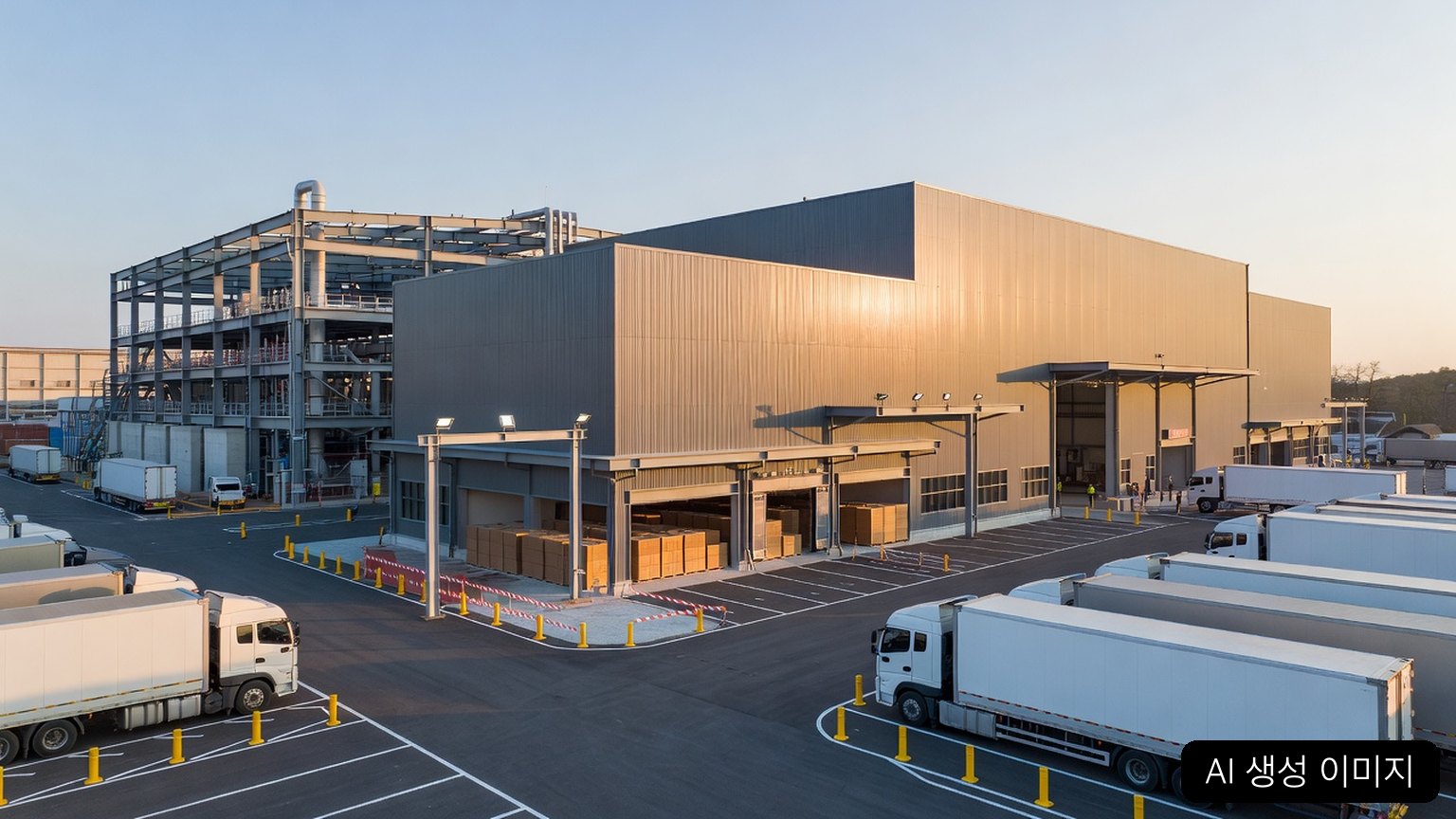
Sambo Corrugated Board (삼보판지) has decided on a KRW 123.8 billion investment in a new corrugated board and box plant in Pocheon, Gyeonggi Province. EBN reports that the project is intended to relieve high utilization at existing facilities and expand capacity. The company’s integrated structure—from containerboard to corrugated sheet and boxes—makes the announcement relevant across the Korean packaging supply chain.
The investment amount and construction plan are not yet qualified output available for delivery. Even after the building is complete, equipment commissioning, customer-item approval, stable yield, lot release and logistics must close before a buyer can count the new asset as usable capacity.
Status checked on September 23, 2026 (KST). Public reporting describes the investment decision and its context but does not disclose item-level output, customer qualification timing, start-up yield, a firm commercial-production date or customer allocation. The five gates below are an editorial validation framework, not Sambo’s official ramp-up plan.
What is public—and what remains open
On mobile, swipe the table horizontally to view hidden columns.
| Area | Publicly supported scope | What it does not prove | Evidence needed next |
|---|---|---|---|
| Investment | Decision for a KRW 123.8bn Pocheon plant project | That the full amount has already been spent | Follow-up disclosure, construction progress and equipment acceptance |
| Purpose | Relieve high utilization and expand capacity | Immediate lead-time improvement for every item | Item allocation, approved lots and customer assignments |
| Production structure | Integrated containerboard-to-box structure | That every process bottleneck expands at the same rate | Rated and demonstrated capacity by process |
| Commercial effect | Expected growth platform | Guaranteed sales, margin or market-share gain | Stable shipments and subsequent financial disclosure |
It is equally premature to translate the announcement directly into oversupply or lower prices. Planned capacity takes time to become released output, and product mix, regional logistics and customer qualification determine how quickly it reaches the market.
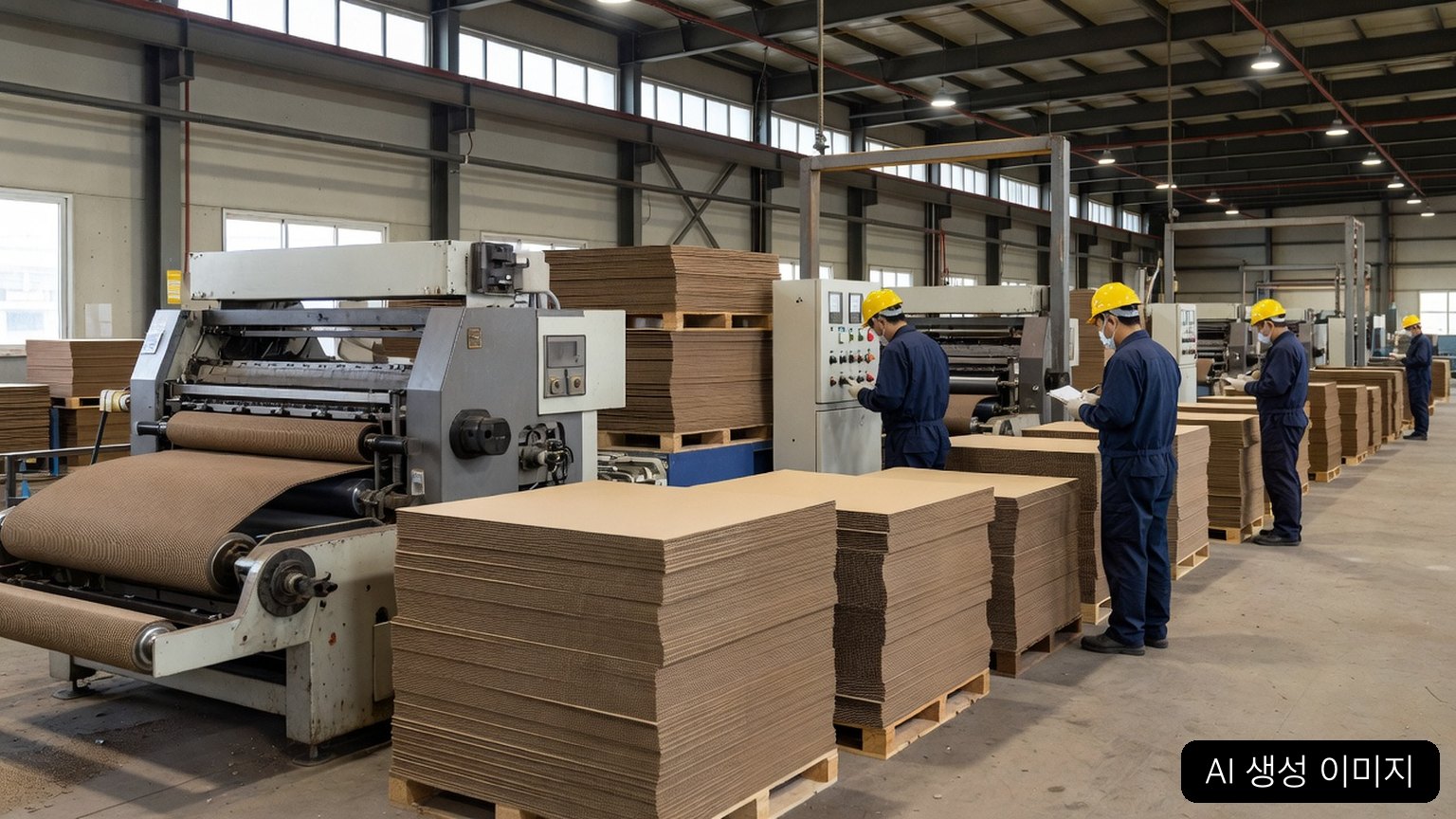
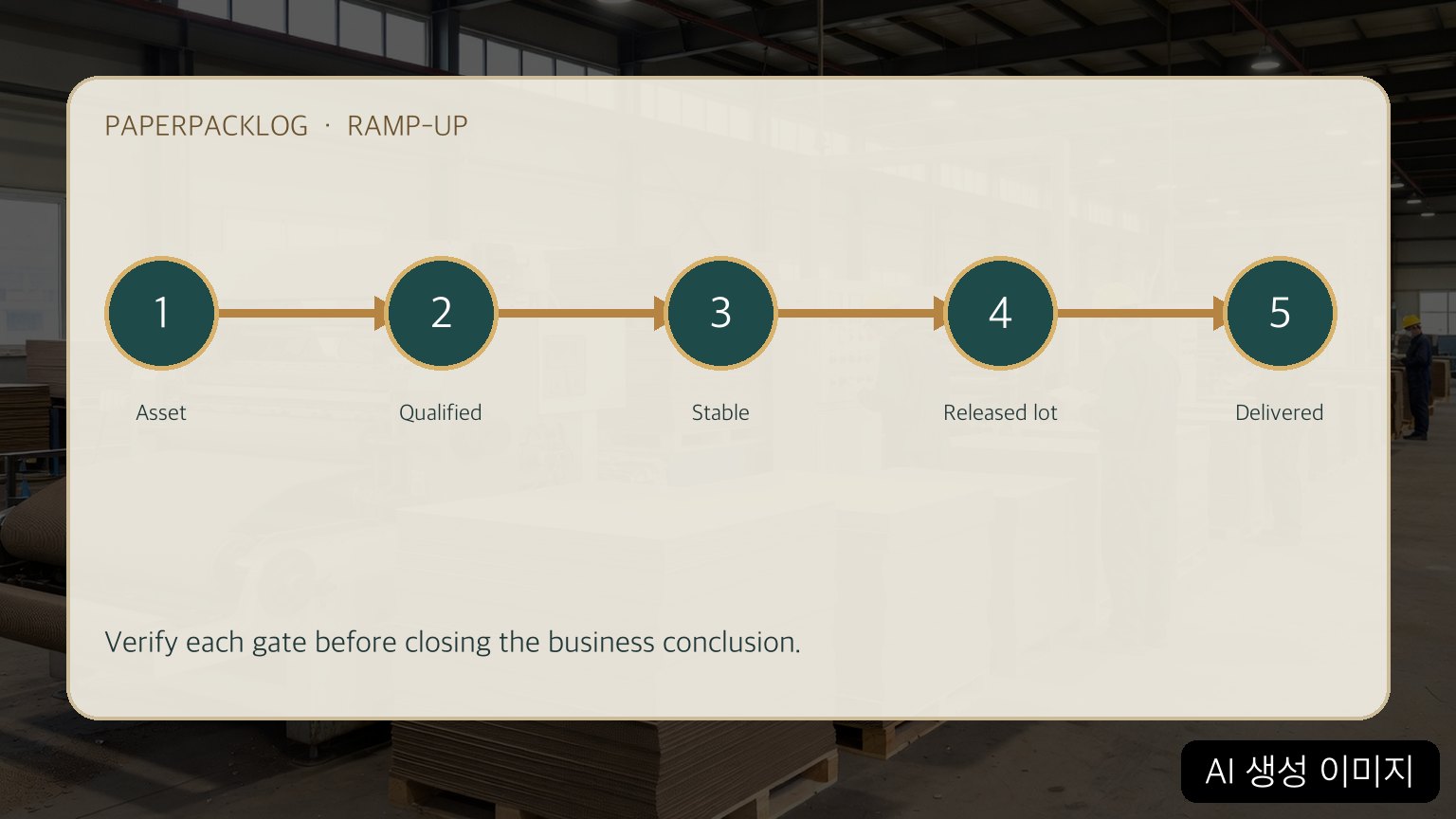
Operating deliverable: five new-plant ramp-up gates
1. Asset completion: validate production cells, not only the building
Separate building completion from production-equipment acceptance. Verify utilities under load—including power, steam, compressed air, dust extraction and water treatment—and identify which corrugating, printing, die-cutting, joining, inspection and packing cells have actually been accepted.
State: under construction / equipment installed / dry commissioning / loaded trial / accepted
Close with: acceptance certificates, safety inspection, loaded-trial record and open punch list.
2. Item qualification: can the running machine make the buyer’s order?
The customer buys an approved specification, not machine uptime. Paper combination, flute, basis weight, print, dimensions, bond and compression requirements must pass the applicable customer process.
State: pre-sample / sample submitted / under test / conditional approval / mass-production approval
Close with: approved drawing, sample evaluation, physical-test results, written customer approval and revision history.
3. Stable production: require repeatable speed, not a peak trial
During early ramp-up, a momentary maximum speed says less than stop frequency, scrap, rework, bond and print variation, and shift-to-shift repeatability. Do not use rated capacity and demonstrated stable capacity as the same number.
State: initial tuning / restricted speed / stability observation / target met
Close with: speed, stoppage, waste and accepted-yield trends for a defined period, plus cause-coded corrective actions.
4. Released lots: separate gross production from shippable quantity
Not every produced sheet or box is available to ship. Separate inspection-complete, quality-released, held and retest quantities. Count only lots that connect to an approved customer order.
State: not tested / under inspection / released / on hold / scrap or rework
Close with: lot trace, inspection certificate, accepted quantity, release timestamp and hold reason.
5. Customer delivery: prove commercial operation through repeat shipments
Commercial operation is not only an engineering declaration. Connect item code, order quantity, approved lot, firm allocation, loading, transport document and actual receipt in one order row.
State: production complete / quality released / allocated / dispatched / received
Close with: customer allocation record, release instruction, loading and transport record, proof of delivery and complaint history.
Ten questions for buyers and production planners
- Which new asset and production cell will make each of our items?
- Is that cell at dry commissioning, loaded trial or formal acceptance?
- What rule moves an item from an existing plant to the new site?
- What are the sample and mass-production approval dates by item?
- Is the capacity denominator calendar time, planned time or gross output?
- How are start-up scrap, rework and held output excluded from accepted yield?
- When will the first approved lot and test certificate be available?
- How are existing orders and new demand prioritized for allocation?
- Who owns the next loading, dispatch and receipt update, and at what cut-off time?
- Which open item must close in the next ramp-up update?
Statements to hold until evidence exists
Do not close any of these conclusions from the headline alone:
The KRW 123.8bn decision means capacity has already increased.The new plant shortens lead time for every product.Incremental supply automatically lowers corrugated-board prices.Rated capacity will be achieved immediately upon completion.Vertical integration means there is no process bottleneck.
The important signal is not the large investment number by itself. Usable supply appears only when asset completion–item qualification–stable production–released lot–customer delivery connect to the same specification and purchase order. Keep undisclosed yields and dates blank, and track each ramp-up gate with evidence.
About the Author
PackingMaster: Editor of PaperPackLog. Covers market trends, product insights, and technology in the paper packaging industry.