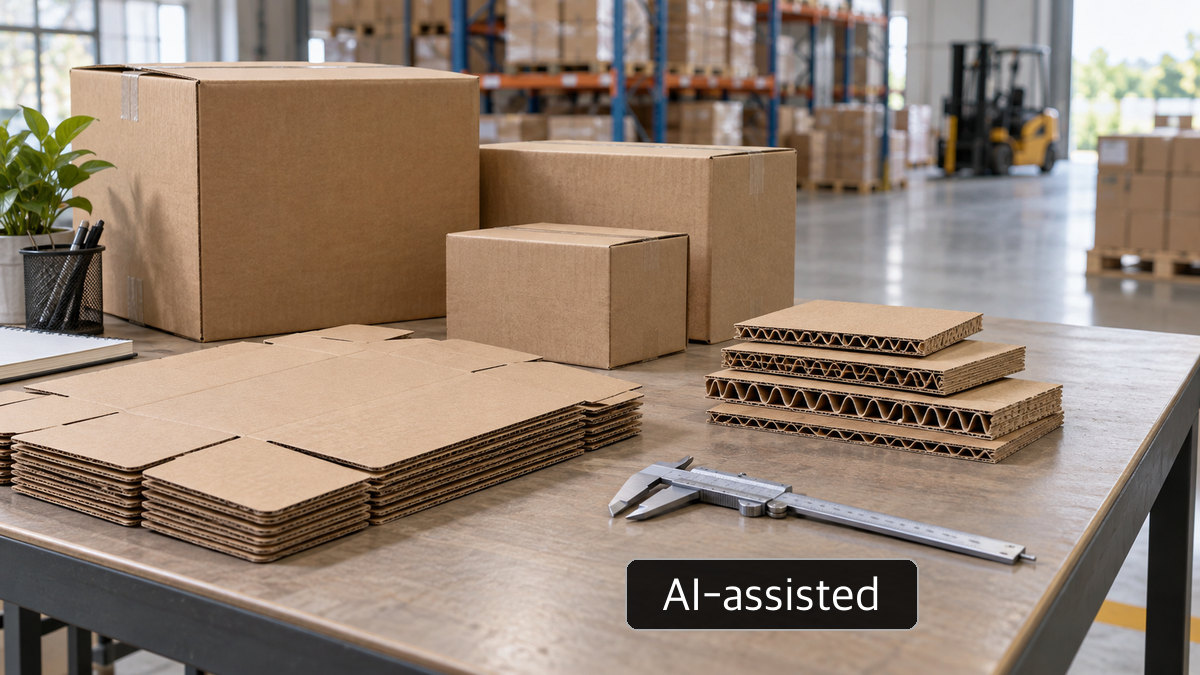
“Automation” and “one-stop” are not acceptance criteria on a purchase order. An October 12, 2026 interview with Shin-An Packaging (Shinan Packaging Industry) CEO Kim Il-young in Today’s Korea describes short runs across many corrugated sheet and box specifications, corrugating and box-making, offset color printing, and an ERP system spanning finance, purchasing, sales, production and inventory management. But the article does not establish a new plant investment or commissioning in 2026, nor does it document a tested, order-level connection between ERP, corrugator, printing and inspection. The buyer’s question is which production and approval route applies to the box being ordered.
Short-run variety was part of the story in 2016
A December 15, 2016 Seoul Economic Daily profile already described Shin-An as specializing in multi-SKU, small-batch corrugated boxes with contemporary equipment. That makes the 2026 interview a poor basis for claiming the capability first appeared this year. The older report does not, however, explicitly document automation, the 2026 ERP arrangement or an integration test. Its then-future target for starting an Ansan second plant in the following April is not a record of current operation.
The 2026 interview is a first-hand record of the CEO’s account of a one-stop corrugated-board, box-making and offset-printing offering and of ERP’s management scope. The same article also narrates real-time equipment-data collection and analysis, incoming paper checks and plant roles. These passages show what was reported or claimed; they are not independent evidence that a customer order ID automatically follows a raw-paper lot through corrugating, print approval, finished-box inspection and shipment. Production speeds or box-equivalent volumes quoted in the profile are not used here as available capacity or contractual guarantees.
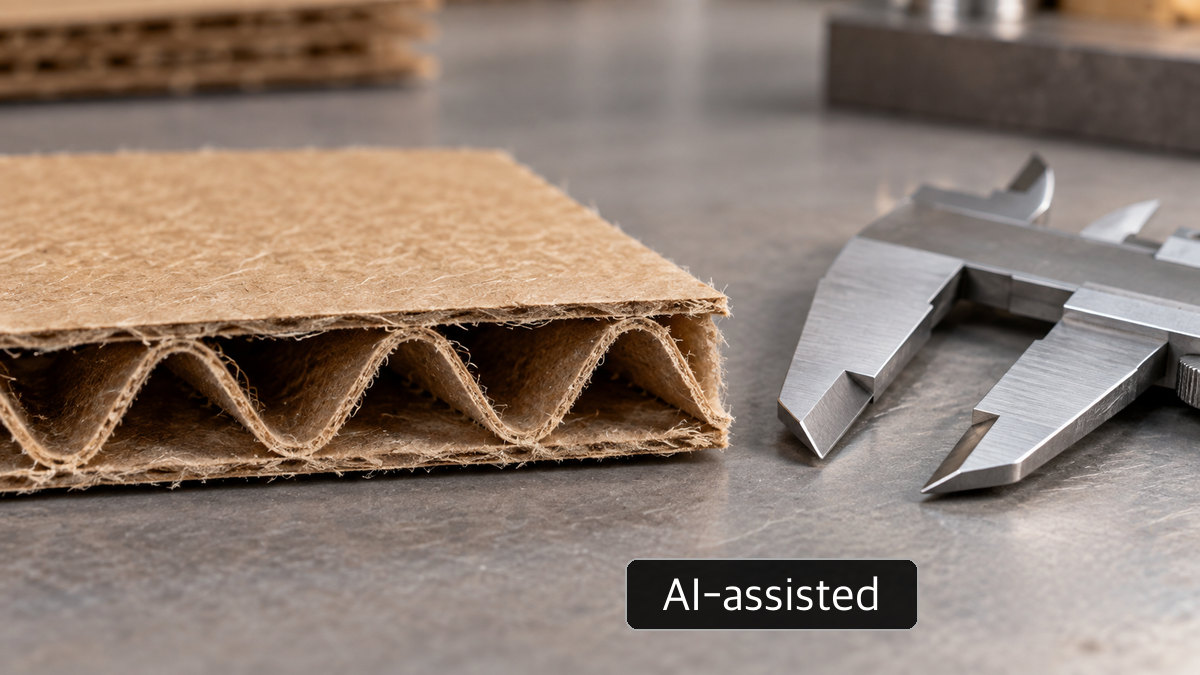
Audit the order route, not the equipment list
The following is an editorial buyer’s due-diligence sequence, not a record of tests Shin-An has performed for any customer. Name the contracting entity and manufacturing plant, then trace one box SKU against a controlled drawing revision. A list of several plants does not establish that each can supply the same flute combination, printing method, timing or complete process. For an offset-printed box, identify where the printable board comes from, where it moves, and who owns printing and finishing quality at each step.
| Purchase gate | Records to request from the supplier | Decision boundary |
|---|---|---|
| Quote and specification | Manufacturing site, drawing revision, inside/outside dimensions, flute and paper combination, print method and proof approver, MOQ, plate and setup charges | A corporate equipment description does not define a specific SKU’s route or price |
| Board and conversion | Paper-lot ID, sheet specification, sampling conditions, procedure for approving waste and paper substitution | Sheet inspection is not approval of the finished box |
| Printing and finishing | Approved print proof, method for approving color, copy and barcode, die-cut/gluing conditions, subcontracting and accountability | “Offset available” does not mean every box uses that process at the same plant |
| Delivery and reorder | Method for comparing production with the approved sample, lot ID, defect notice and rework rules, lead times for changed orders and backup supply | One approved sample does not guarantee repeat-lot variation or delivery |
These are requests for a sourcing discussion, not published Shin-An procedures. Do not invent a board-strength limit, color tolerance or delivery pass rate for this supplier. The buyer and supplier should agree on test methods and acceptance ranges in light of packed-product weight, stacking conditions and the buyer’s packing equipment.
One useful short-run exercise: trace a controlled change
Suppose only the printed copy changes after the first box has been approved, or a paper grade must be substituted. Ask whether the old and new drawing/artwork revisions, paper lot, work order, print proof, inspection and shipment label carry the same change identifier. Decide who approves proofs and substitutions, how old-version work in process is held, and what a reorder does to MOQ, setup cost and lead time. This is a proposed qualification scenario, not a feature of Shin-An’s existing integration established by the interview.

Mentions of ERP’s management functions and real-time machine data do not disclose the scope, operating date or completeness of any ERP-to-machine-to-quality interface. If connectivity matters in selection, review the records the supplier can provide for the named plant and order type, including missing entries, manual re-entry exceptions and change history. A 2016 short-run profile → a 2026 company account → SKU-specific production and approval evidence are three different levels of proof. Treat this as a prompt to verify a real purchase route, not as news of a newly integrated plant.
About the Author
PackingMaster: Editor of PaperPackLog, covering paper-packaging industry developments, products and technical decisions.