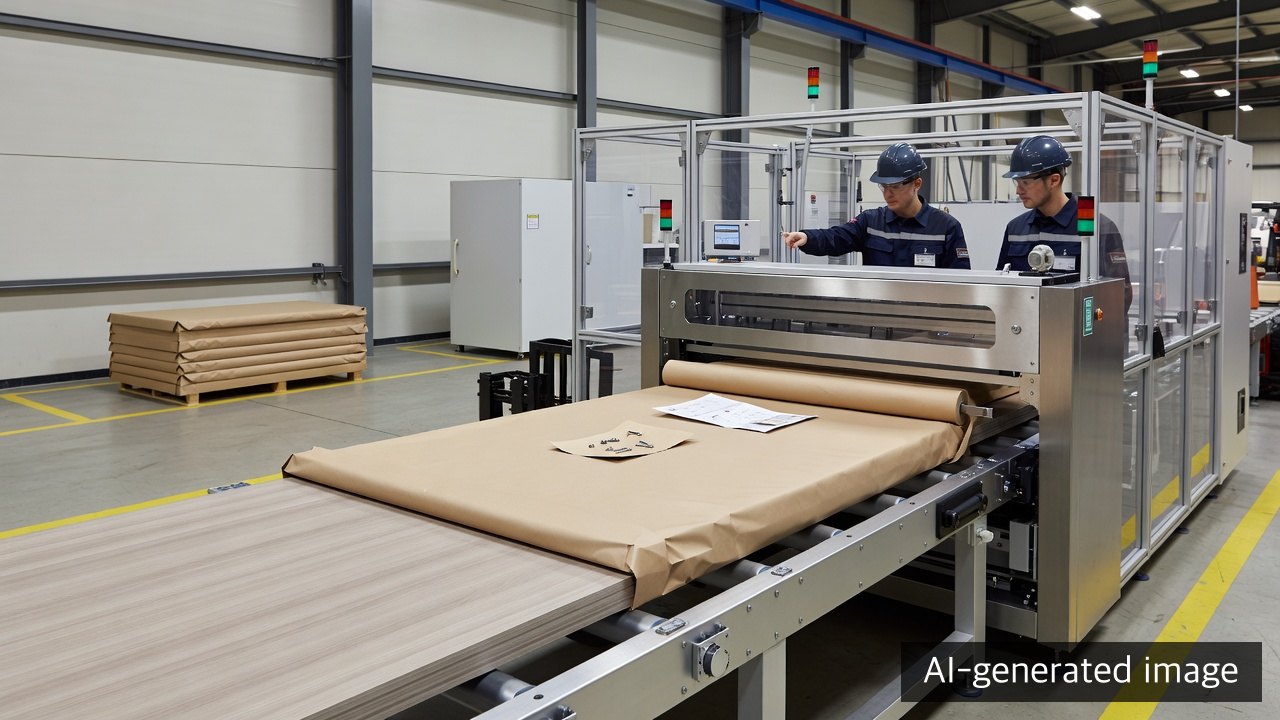
Using one outer-pack format for furniture panels of different widths and lengths creates voids and protrusions. Low wrap tension can leave corners open; high tension can mark or abrade a decorative surface. Replacing plastic film with paper alone does not solve those interfaces. A production solution must feed paper to the panel dimensions, form compact inward folds and integrate manuals and assembly hardware into one controlled flow.
Sitma introduced FlatPack in August 2026 as an automated paper-based wrapping system for that problem. The public announcement establishes the architecture, but not the site-specific performance. This article separates disclosed functions from missing specifications and defines validation work for exporters of furniture and other flat products.
What the published sources confirm
Sitma and Tecnau’s announcement and Packaging Europe coverage support these points:
- FlatPack is an automated paper-based primary-packaging system intended to replace plastic packaging in industrial environments.
- It was developed with a leading global furniture manufacturer that was not named.
- It uses
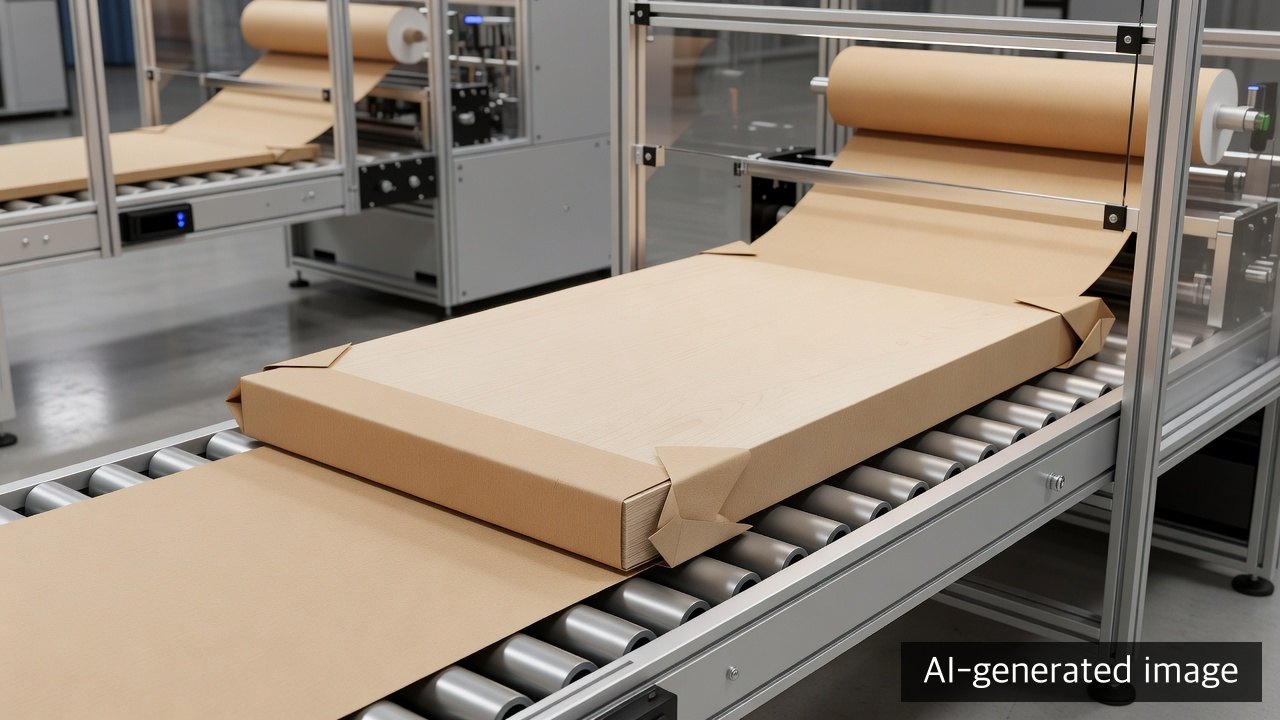
fit-to-size continuous motionwrapping tailored to product dimensions. - Inward-folded wrapping is intended to avoid unnecessary external dimensions and support stacking and logistics stability.
- Proposed modules include assisted loading with electronic position control, document and leaflet insertion, and dispensing of hardware toolboxes or assembly kits.
- An optional labeler and paper printer can add product, traceability, recycling and brand information.
- PackML connectivity is presented for monitoring, production-data collection and plant-level integration.
- Integration with existing packaging lines and upstream or downstream automation is claimed.
The public sources do not disclose nominal or guaranteed speed, minimum and maximum panel dimensions and weight, paper grade and basis weight, adhesive specification and use rate, utilities, measured damage rate, paper consumption, total cost or recyclability test results. Statements such as “industrially viable speeds,” “without increasing operational costs” and “reliable protection” are supplier positioning, not site guarantees.
Read FlatPack as a five-stage process
1. Panel loading and position control
A warped, damaged or doubled panel can move the paper and fold positions. Electronic position control still needs defined responses to bow, broken corners, protruding hardware and two-up feeding.
2. Manual and hardware insertion
Automated insertion of manuals, leaflets, screws and fittings removes manual steps but introduces omission, duplication, wrong-part and migration failure modes. Product code, packaging recipe, feeder and final inspection must remain synchronized.
3. Fit-to-size continuous wrapping
Paper is fed close to the product dimensions and formed around the panel. Recipe control must follow width and length changes. Paper tension and surface friction can create tearing, wrinkles, dust transfer or surface marks.
4. Inward folding and adhesive sealing
The compact inward-folded end is a key feature. Validate whether it protects corners and whether the adhesive remains closed after humidity, low temperature and storage exposure.
5. Printing, labelling and data
Direct printing and optional labels can carry product and recycling information. Recipe approval and verification should prevent a wrong label and a wrong assembly kit from leaving together.
Product and line validation table
A supplier demonstration is less useful than a trial that includes the worst conditions in the real product family.
| Validation axis | Input conditions | Observation | Disposition and next action |
|---|---|---|---|
| Panel range | Minimum and maximum width, length, thickness, weight and bow | Position error, double feed, stop | Route out-of-range SKUs to another pack or equipment option |
| Surface sensitivity | Paint, film, veneer and rough surface | Scratch, pressure mark, paper-dust transfer | Change paper friction, tension or contact design |
| Edge protection | Sharp edge and fragile corner | Tear, open fold, corner damage | Add insert, reinforcement or revised fold geometry |
| Paper compatibility | Grade, basis weight, moisture and machine direction | Wrinkle, break, feed loss | Approve paper grade and storage condition |
| Adhesive sealing | Position, temperature and open time | Lift, contamination, storage peel | Define adhesive window and inspection method |
| Component insertion | Manual and kit type and quantity | Missing, duplicate, movement or rattle | Add vision, weight or reject confirmation |
| Productivity | Mixed SKUs, changeover and roll change | Good units per hour, microstops, waste | Agree SAT good-output rate, not nameplate speed |
| Data | Recipe, label and PackML tags | Wrong product or communication loss | Define interlocks, offline mode and history |
Acceptance criteria should come from customer packaging specifications, the real panel surface, distribution route and internal quality rules. Do not publish a number that the source does not disclose.
Put distribution and storage behind a separate gate
A stable wrapping-machine run is not a shipping approval. Flat products have large surfaces, vulnerable edges and sensitivity to sliding and concentrated loads.
| Distribution scene | Test and observation | Hold condition |
|---|---|---|
| Plant conveyors | Transfer snag, tear and fold opening | Repeated snagging at guides or rollers |
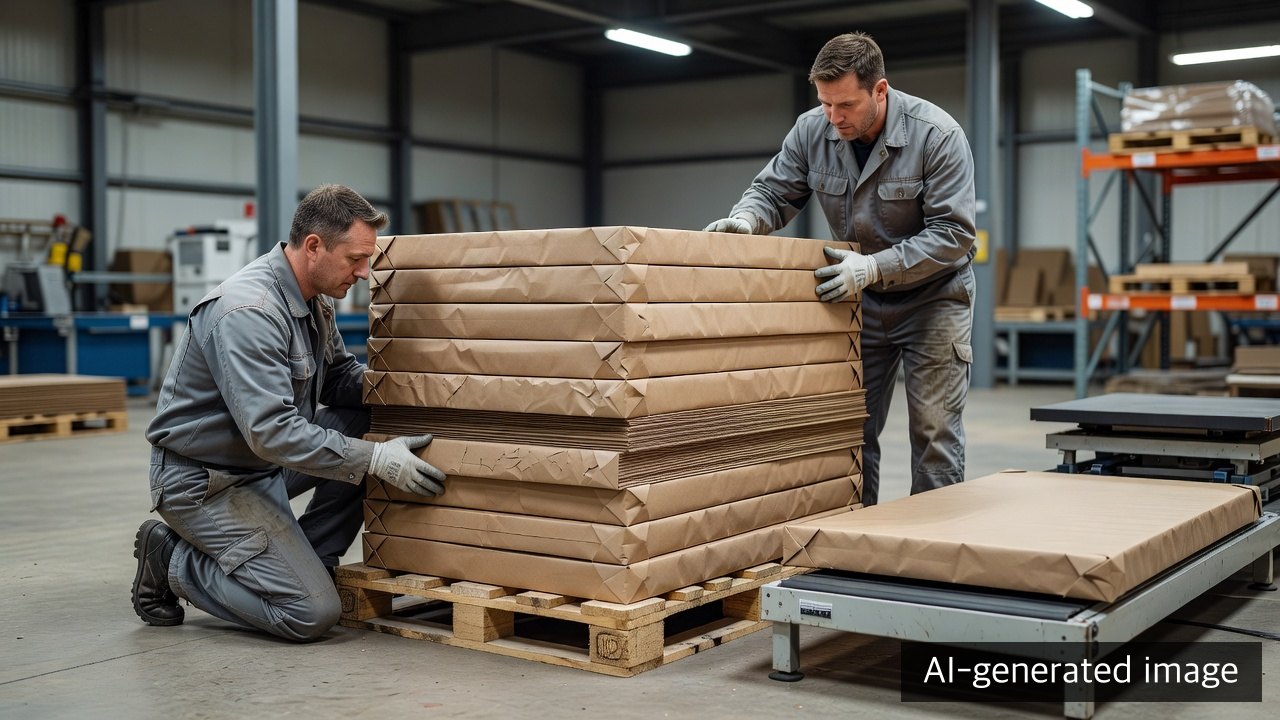
| Pallet load | Interlayer sliding, edge compression and strapping damage | Deformation or instability at target height |
| Warehouse | Humidity, duration, adhesive peel and bow | Seal opens before target storage duration |
| Truck or container | Vibration, shock, abrasion and condensation | Surface scratch, exposed edge or lost label |
| Retail and opening | Handling, opening and component retention | Unsafe opening or missing hardware |
| End of use | Separation of paper, adhesive, label and insert | Destination disposal guidance not established |
A paper substitution does not automatically prove recyclability or carbon reduction. Confirm the actual paper structure, adhesive, printing, label and component box against the collection and recycling route of the destination market.
Questions by role
Procurement and technical purchasing
- What panel dimension and weight range and good-output rate are guaranteed?
- Which paper grades, basis weights and roll widths are validated, and how is a substitute paper requalified?
- What adhesive, consumption, cleaning, change time and local supply are required?
- Can actual SKUs and acceptance criteria be included in FAT and SAT?
Production and automation
- Which sensors and interlocks prevent misposition, double feed and missing manuals or kits?
- How will PackML states, modes and tags map to MES or WMS recipes?
- Which safe stops are required for roll changes, adhesive refill, cleaning and recovery?
- Is a bypass route available for another packaging format?
Quality and logistics
- How will each panel surface be tested for friction, abrasion and edge protection?
- Do pallet, rack, container and retail handling conditions appear in the trial?
- How are missing kits and incorrect pack information blocked before shipment?
- Do the folds, adhesive, print and label survive humidity exposure?
Conditions that block adoption
- Written minimum and maximum panel dimensions and weights are unavailable.
- Paper and adhesive specifications and change-control rules are undefined.
- There is no detection and confirmed rejection for missing manuals or hardware kits.
- Only a maximum speed is available, without SKU-specific good output and stop losses.
- Surface, edge, humidity, vibration and stack tests are incomplete.
- PackML is claimed, but plant-system tags and interlocks are undefined.
- Plastic reduction, unchanged cost or recyclability claims lack product-specific data.
FlatPack is more than one layer of paper around a panel. It is an automation platform intended to connect panel dimensions, documents and hardware, fold and adhesive formation, printed information and production data. Adoption should wait until the undisclosed operating range, speed, paper, adhesive and distribution performance have been filled with evidence from the buyer’s own SKUs.
About the Author
PackingMaster: Editor of Paper Pack Log. We collect and organize market trends, product information, and technical insights for the paper packaging industry.
References
- Sitma and Tecnau, FlatPack: A Sustainable Paper-Based Wrapping Solution for Furniture Panels, 6 August 2026.
- Packaging Europe, Sitma launches paper-based automated wrapping solution for furniture panels, 7 August 2026.