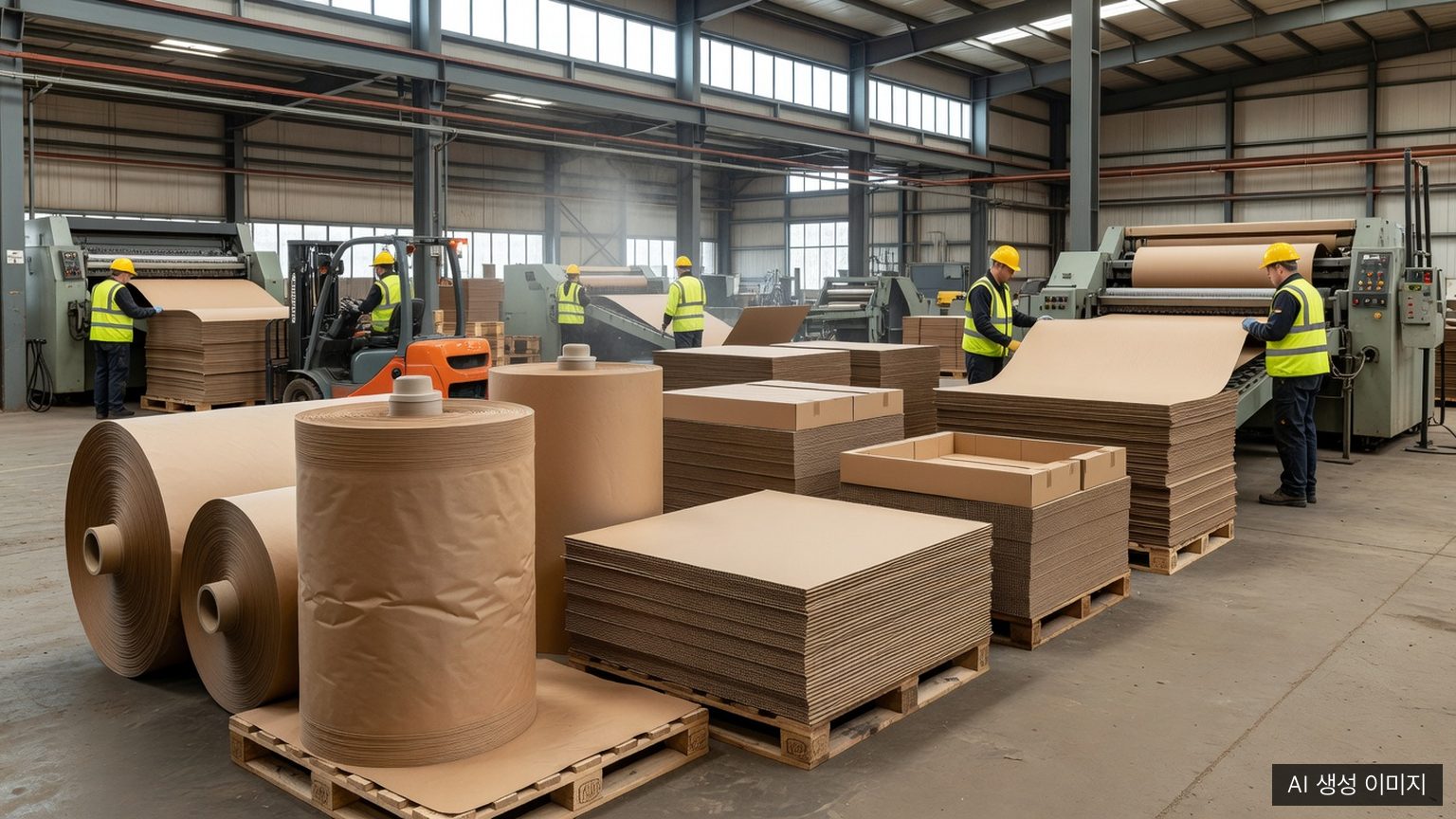
Two events at Smurfit Westrock between May and June 2026 look separate on the surface, but from a Korean export packager’s standpoint they can be read together. One is the LSE (London Stock Exchange) delisting; the other is the consultation on closing the Birmingham SSK paper mill in the UK. This post sets out what the two events signal for Korea-bound containerboard supply, pricing, and quoting policy.
For a general company introduction and global capacity profile, see the ‘Smurfit Westrock company guide’. This post focuses on interpreting the signals from the two events.
The Facts on Both Events
1. LSE Delisting
- Announcement: 2026-05-20
- Last day of LSE trading: 2026-06-19
- Delisting effective: 2026-06-22, 08:00 UK time
- Listing after delisting: NYSE only (primary listing retained)
- Stated reason: Low LSE trading volume, plus the regulatory and administrative cost of maintaining a dual listing
- Decision-timing signal: Q1 2026 results (late April) included disclosure that the LSE listing was under review
When a dual-listed company tidies up one side, three factors usually drive it: (a) liquidity and trading-volume efficiency, (b) regulatory and reporting cost, and (c) simplification of head-office governance. Smurfit Westrock has run NYSE as its primary listing since the 2024 Smurfit Kappa-WestRock merger, so this LSE clean-up is closer to a post-merger governance wrap-up than a strategic pivot.
2. Birmingham SSK Paper Mill Consultation
- Official announcement (consultation opening): 2026-04-30 / 2026-05-15 (start of six-week consultation)
- Target mill: Birmingham SSK paper mill, UK (around 200,000 tonnes/year of containerboard and linerboard capacity)
- Additional sites under review: Four converting (box-conversion) plants in the UK and the Netherlands
- Employment impact: Around 130 people at the SSK mill
- Reason: Classed as a relatively high-cost mill given age and fixed-cost burden
- Capacity-shift direction: The company explicitly noted the possibility of shifting capacity to other European mills
Because this is a six-week consultation rather than a finalized decision, there is still room for movement. That said, the fact that the company has named both capacity-ban and capacity-shift scenarios should be read as a signal that the European containerboard capacity portfolio is being reshaped, whichever way the consultation lands.
Three Signals for Korean Export Packagers
Signal 1: European Containerboard Capacity Has Entered a Restructuring Pace
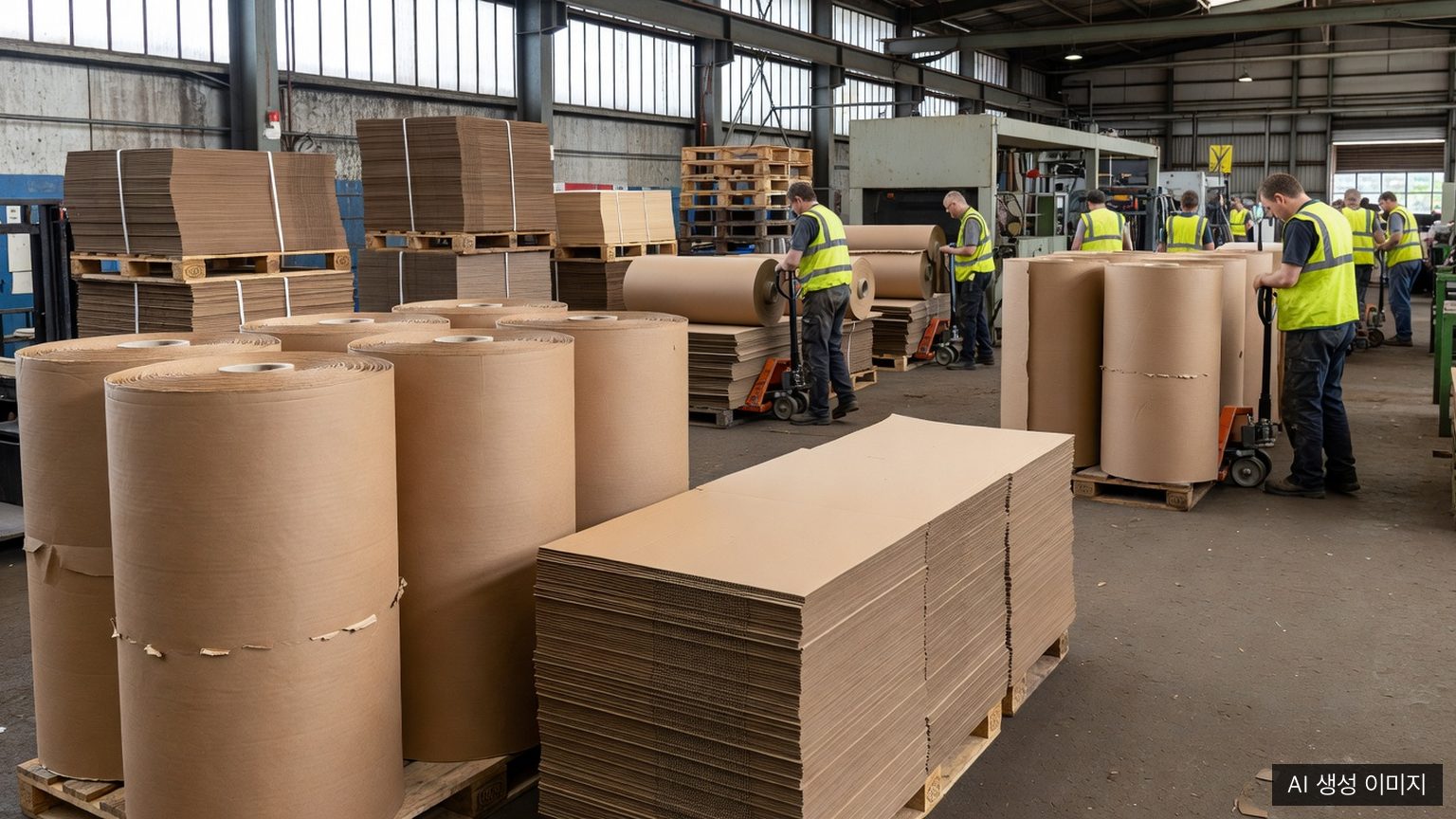
Losing a single mill of roughly 200kt is small relative to global capacity, but it is a noticeable number in the European kraftliner and fluting spot market in the near term. The additional review of four converting plants extends the signal from liner and fluting into box-conversion capacity as well.
For Korean export packagers, that signal can be read two ways:
- European kraftliner offers may not soften quickly — combined with the North American second-wave price increase (effective 6/1, see ‘related post’), Korea-bound import pricing gets pulled along.
- European converter procurement stability is worth re-checking — when a Korean parent company exports boxes into Europe, the capacity stability of its local converter is also on the watch list.
Signal 2: The LSE Delisting Is Not “EU Business Shrinkage”
It is easy to read the LSE delisting as “Smurfit Westrock pulling back from Europe,” but the actual driver is trading and administrative cost, separate from European sales and production plans. The company has disclosed that European operations continue unchanged under NYSE-only listing.
What Korean export packagers should keep in mind:
- The exchange change has no direct impact on supply contracts or credit lines — existing contracts remain in place.
- IR and disclosure channels move to NYSE-centric — update internal memos so Q2 and Q3 results and capacity-action disclosures are monitored through NYSE channels.
- Cite NYSE filings as the standard reference in long-term pricing discussions — align internal legal and procurement standards to NYSE-based citations.
Signal 3: The “Capacity-Reduction Announcement to Stronger Pricing Power” Pattern
In containerboard markets, a mill-closure announcement usually starts shifting spot-price leverage before the consultation even closes. The first-round increase (H2 2025) took roughly six to ten weeks to land in transactions; the second-round increase (2026-06-01) compressed that window to around four weeks, and capacity signals likely played a part.
For Korean export packagers, this pattern reads as a three-step “signal, price, quote” cycle:
- Signal stage (now): May announcement, June consultation, possible decision in early July.
- Price stage: 6/1 increase takes effect, then phases into July shipments.
- Quote stage: Treat August quotes and September deliveries as separate decisions.
What Korean Export Packagers Should Do in June and July
1. Update the Supplier-Monitoring Line
Switch from the previous “LSE/NYSE dual monitoring” to “NYSE only.” Lock the regular sources used by procurement, sales, and legal teams to:
- Smurfit Westrock Investor Relations (NYSE-based)
- Quarterly earnings call transcripts
- Quarterly capacity-action disclosures
2. Raise the Tracking Frequency on European Kraftliner Spot Offers
Move European kraftliner and fluting spot-offer checks from monthly to bi-weekly through June to August. Track in a time series how the final SSK Birmingham decision and any capacity shift land in offer prices.
3. Audit European Converter Partner Stability
If your Korean parent company exports boxes into Europe, check whether local converter partners sit inside the SSK exposure zone. Items to verify:
- The converter’s primary linerboard and fluting suppliers
- Share of business with SSK Birmingham or with the four converting plants under consultation
- Price and lead-time options for alternative supply
4. Add Two Lines to August Quote Memos
When sales issues August quotes, add two footnote lines:
- “Reflects Smurfit Westrock 6/1 price increase.”
- “Monitoring European kraftliner price movement pending the SSK Birmingham consultation outcome.”
That way, when a buyer asks whether the announcement has turned into a decision, the salesperson can cite the company’s IR page on the spot.
Conclusion
The Smurfit Westrock LSE delisting (effective 2026-06-22) and the Birmingham SSK paper mill consultation are separate events, but Korean export packagers can read them on the same line. (1) European containerboard capacity has entered a restructuring pace, (2) IR and disclosure channels are moving NYSE-centric, and (3) the “capacity reduction to stronger pricing power” pattern is running in parallel with the second-round 6/1 increase.
The immediate to-do list is to update internal monitoring to NYSE-based sources, raise the tracking frequency on European kraftliner offers, and add two lines to August quotes. Re-check once more when the final SSK Birmingham decision lands after the six-week consultation closes.
About the Author
PackingMaster: Editor of PaperPackLog. Curates and organizes market trends, product information, and technical insights for the paper-packaging industry.
References
- Smurfit Westrock, “Smurfit Westrock Announces Intention to Delist from the LSE” (2026-05-20) — https://www.smurfitwestrock.com/newsroom/press-releases/2026/smurfit-westrock-announces-intention-to-delist-from-the-lse
- Smurfit Westrock, “Launches Consultation Process about Future of UK Paper Mill” — https://www.smurfitwestrock.com/newsroom/press-releases/2026/smurfit-westrock-launches-consultation-process-about-future-of-uk-paper-mill
- Packaging Dive, “Smurfit Westrock Q1 2026 packaging earnings: capacity actions” — https://www.packagingdive.com/news/smurfit-westrock-q1-2026-packaging-earnings/818914/