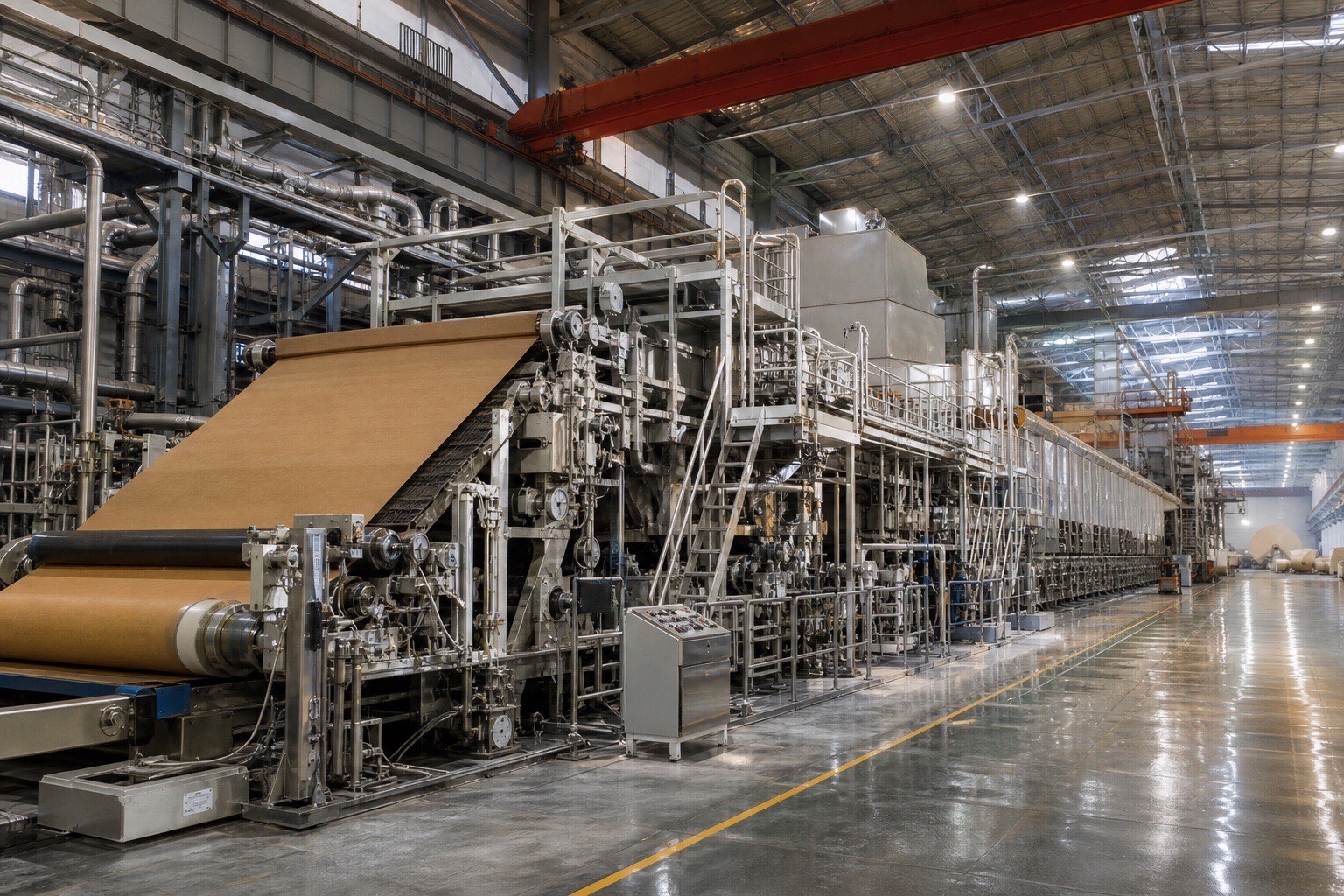
Calling Sun Paper’s planned Nanning containerboard machine simply an “energy-saving line” misses the operating questions. Valmet’s July 10 release confirms a full machine from headboxes to winders, Sleeve roll dewatering in the forming section, compact dryer geometry, two winders, automation and lifecycle support. It does not disclose capacity, trim, speed, actual energy savings, detailed basis weights or ramp-up yield. The full-line process and verification table below separates announced configuration from results that must be measured after start-up.
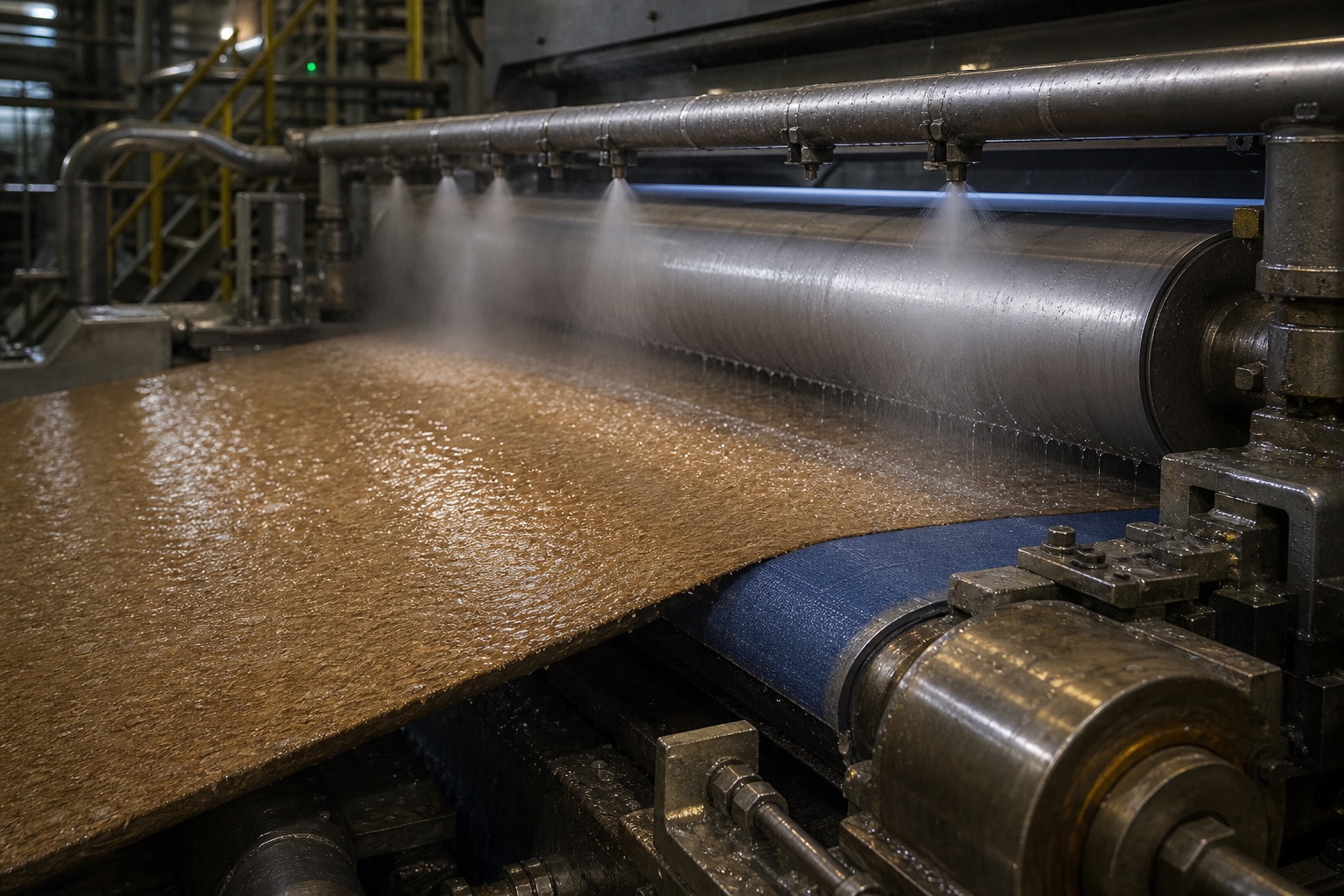
Directly Confirmed Project Scope
Valmet said Nanning Sun Paper, a wholly owned subsidiary of Shandong Sun Paper, selected the line for its mill in Nanning, China. The investment targets higher containerboard capacity and reliable, energy- and resource-efficient operation, with start-up scheduled for fall 2027.
| Disclosed item | Confirmed scope | Current status |
|---|---|---|
| Products | Kraft and testliner | Product families confirmed; grades and basis weights undisclosed |
| Delivery | Full board machine from headboxes to winders | Full-line scope confirmed |
| Forming/dewatering | Sleeve roll using forming-fabric compression | Technology confirmed; dewatering and steam savings undisclosed |
| Drying | Compact-geometry dryer section with runnability systems | Design direction confirmed; cylinder, hood and steam details undisclosed |
| Winding | Two winders | Quantity confirmed; speed, trim and roll specification undisclosed |
| Automation | Package supporting efficiency, safety and higher autonomy | Direction confirmed; detailed DCS/QCS/APC scope undisclosed |
| Lifecycle | Spares, digital services, paper-machine clothing and upgrades to existing machinery | Included; service KPIs and term undisclosed |
| Order value | Not disclosed | ROI cannot be calculated from the release |
Why Dewatering and Dryer Layout Must Be Read Together
Paper-machine energy cannot be evaluated from the dryer section alone. More stable water removal before drying changes the evaporation load. But aggressive dewatering that harms formation, strength, surface, caliper uniformity or runnability can erase the energy benefit through lower quality and production loss.
Valmet says the Sleeve roll uses forming-fabric compression to support efficient dewatering and quality parameters. The downstream compact-geometry dryer targets efficient drying and runnability. These are the configuration and design intent, not measured guarantees of a particular kWh/t, GJ/t or output.
Connections to Verify from Headbox to Winder
1. Headbox and Forming
Lock furnish consistency, flow, jet-to-wire ratio, cross-direction basis-weight profile and formation. Track vacuum and dewatering load, fabric condition, white-water solids and web solids around the Sleeve roll. Evaluate dewatering only while final-product quality remains within the agreed boundary.
2. Pressing and Drying
Press-exit solids and moisture profile set the dryer’s load. Judge compact geometry using steam as well as draw, flutter, bagging, wrinkles, breaks, pocket ventilation and condensate removal.
3. Reel and Winding
Kraft and testliner surface, caliper, strength and roll quality must suit customer converting. Two winders can support capacity and reliability, but bottleneck relief is not proven without parent-roll speed, slitting pattern, roll hardness, wrinkle, core failure and changeover data.
4. Automation and Lifecycle Support
Verify DCS/QCS/drives, condition monitoring, quality-control tags, sensor reliability, interlocks, alarms, data retention and manual fallback. Connect spares, clothing and digital-service response time to acceptance requirements because they influence availability.
Copy-Ready Full-Line Process and Verification Table
| Process | Key inputs | Observations | Quality/operating risk | Evidence before acceptance | Owner and trigger |
|---|---|---|---|---|---|
| Headbox/forming | Furnish, consistency, flow, jet/wire, fabric | Basis-weight/moisture profile, formation, white-water and web solids | Streaking, poor formation, over-dewatering, fabric contamination | Grade recipes and trend data | Process owner resets baseline after grade change |
| Sleeve roll | Compression/vacuum, fabric tension/condition | Solids before/after, vacuum, power, quality | Strength/surface loss, rewetting, fabric life | Guarantee-test mass balance with quality results | Stop energy optimization on quality excursion |
| Press/dryer | Press-exit solids, steam/condensate, hood/ventilation | Steam/t, moisture variation, breaks, draws | Overdrying, bagging, wrinkles, unstable running | Grade/speed heat balance and runnability record | Isolate source zone after break or moisture excursion |
| Reel/winders | Speed, tension, slit, core, roll diameter | Hardness, wrinkles, edge, change time, broke | Telescoping, core failure, slit defects | Two-winder bottleneck and quality test | Hold speed increase after roll defect |
| Automation/support | Sensors, loops, alarms, spares, service | Loop performance, sensor failures, MTBF/MTTR, response | False optimization, failed fallback, delayed parts | FAT/SAT, interlock test, backup/restore and SLA | Hold acceptance if safety or quality interlocks are unverified |
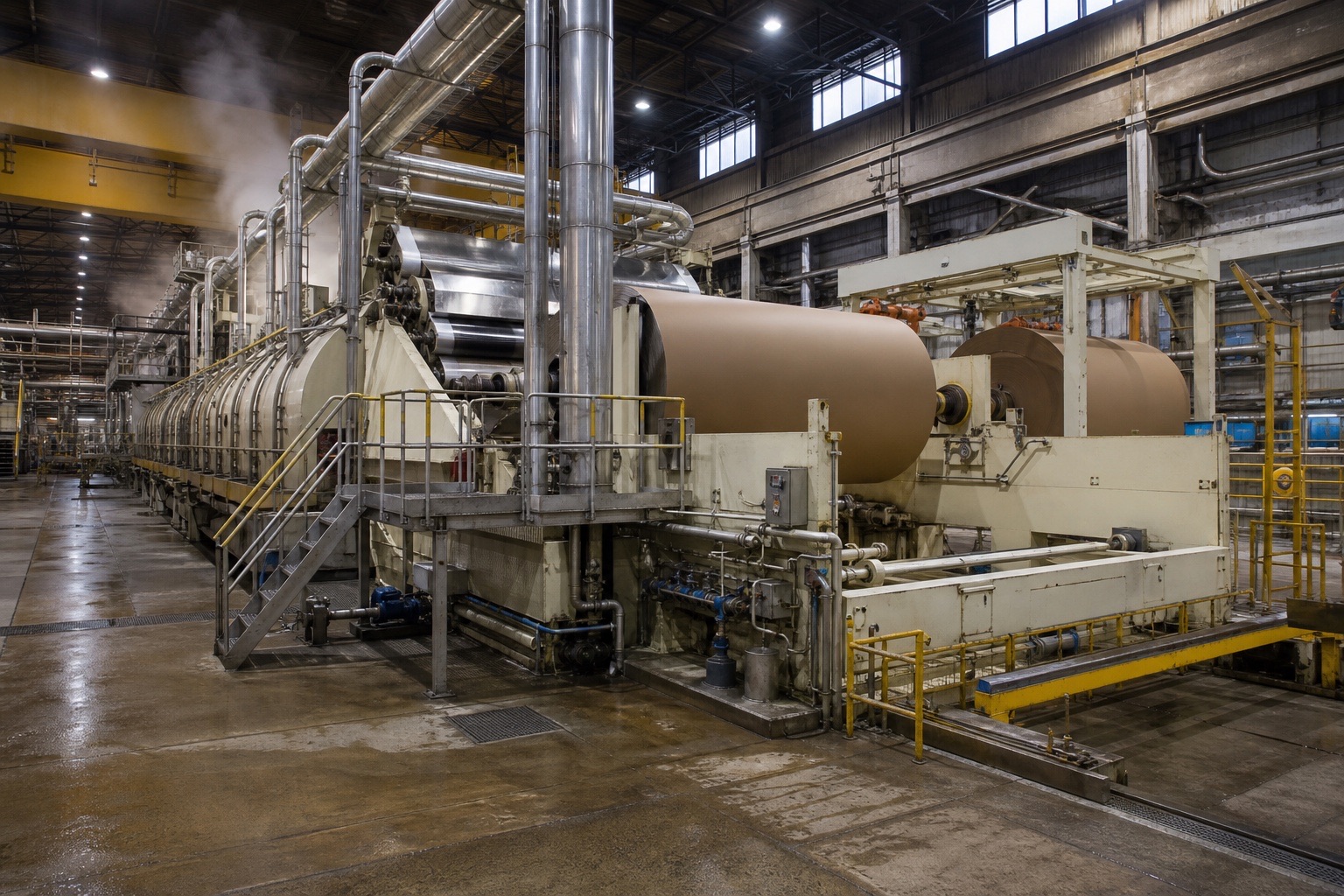
Performance to Confirm After 2027 Start-Up
Do not infer the following from the press releases:
- Design and stable production capacity
- Trim, design speed and sustained commercial speed
- Grade-level basis weight, strength, surface range and customer approval
- Electricity, steam, water and fiber-yield baselines and actual improvements
- Grade-change time, break rate, broke, winder bottleneck and OEE
- Ramp-up duration, guarantee-test boundary and final acceptance date
- Quantified effect on ASEAN exports or market prices
Signals for Procurement and Market Teams
The order is a capacity-expansion signal for kraft and testliner in Nanning. Fall 2027 is a planned start-up, not the same as customer-approved commercial supply for every grade. Korean corrugated and export-box buyers should monitor commissioning, grade qualification, actual shipment, ASEAN allocation and delivered terms rather than pre-judging Chinese containerboard prices.
Conditions That Require a Hold
- Presenting fall 2027 as completed stable commercial production
- Converting an energy-efficiency design statement into an actual savings percentage
- Estimating undisclosed capacity, trim, speed or basis-weight range
- Assuming every kraft/testliner grade receives immediate customer approval
- Evaluating dewatering without drying, quality, breaks and winder bottlenecks
- Expanding the automation description into unmanned or fully autonomous operation
The key feature is not one component but the connected headbox → dewatering → drying → winding → automation and lifecycle chain. Public sources confirm the configuration and fall 2027 plan. Energy, capacity and quality must be measured after start-up under the same grade, speed and acceptance boundary.
About the Author
PackingMaster: Editor of Paper Pack Log. We collect and organize market trends, product information, and technical insights for the paper packaging industry.