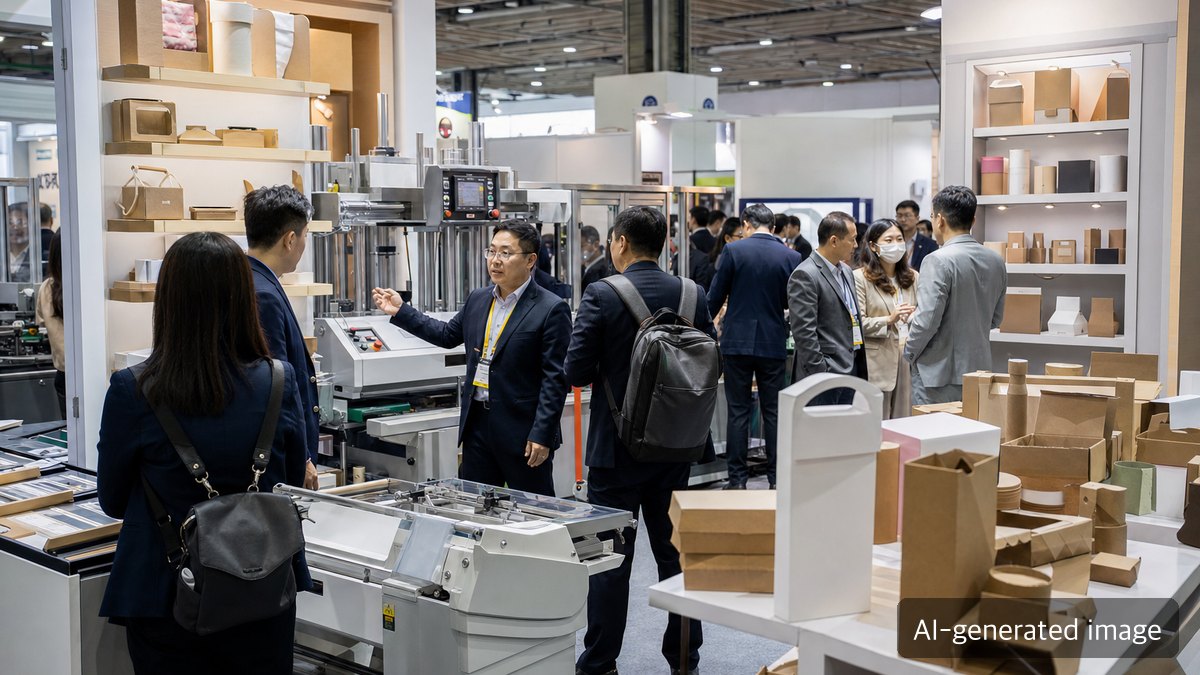
Packaging exhibitions such as TAIPEI PACK 2026 are not just places to see new products. They are useful indicators of how food, consumer goods, and e-commerce packaging are evolving across Asia.
For Korean packaging suppliers and buyers, the event should not be viewed as a local Taiwan story only. Export packaging, short-run production, automation, paper-based substitution, and labeling systems can all influence specifications and quotations in nearby markets.
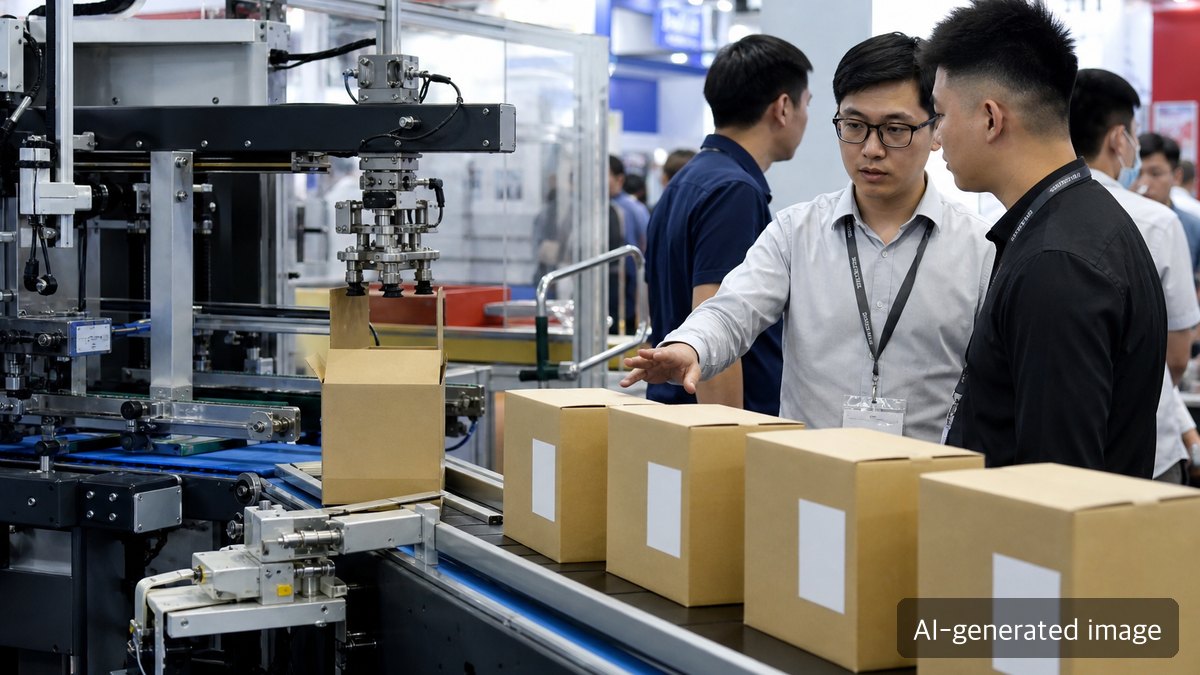
Why Asian packaging exhibition signals matter
European regulation and North American paper prices receive a lot of attention. But Asian packaging trends are also important for practical packaging operations. Taiwan, Japan, China, and Southeast Asia are closely connected in food, electronics, and consumer-goods supply chains.
TAIPEI PACK is held in connection with food-industry exhibitions, so it shows packaging requirements in a more realistic context: production, filling, packing, logistics, and retail are all connected.
1. Smart packaging starts with operating data
The word “smart” appears often at exhibitions. For a packaging buyer, the first thing to check is not a flashy sensor or dashboard. It is the basic unit of operating data.
- Can the line record speed and defect rate?
- Does it reduce changeover time for boxes, trays, and labels?
- Can settings be saved for short-run production?
- Are barcode, label inspection, and shipment data connected?
- Can the root cause of a line issue be traced?
Smart packaging is not simply a packaging machine with AI attached. It is a system that repeats quality and helps teams find problems quickly.
2. Sustainable packaging changes line conditions
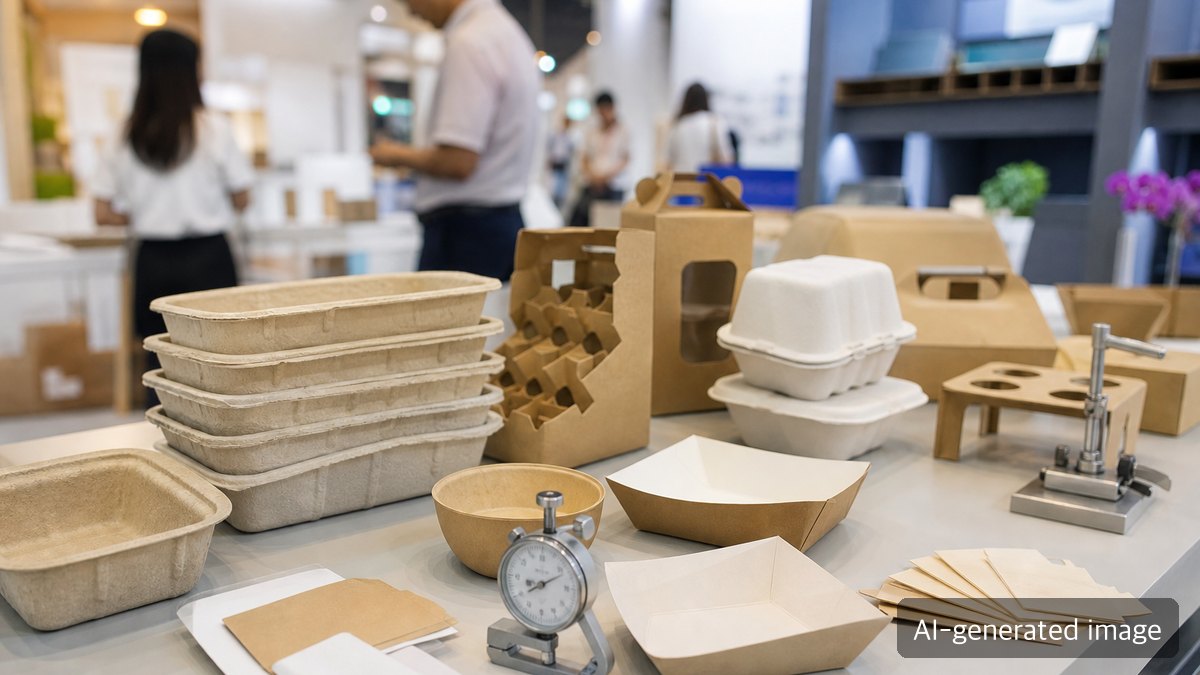
When paper trays, molded fiber, mono-material films, and recyclable packaging increase, the packaging line also changes. Material shifts can affect friction, feeding, folding, sealing, gluing, and stacking stability.
For example, replacing a plastic tray with a paper tray is not only a material-price comparison. Teams must check whether the tray feeds smoothly, warps under humidity, holds labels reliably, and protects products through drop and compression conditions.
At an exhibition booth, the practical questions are:
- Can the material run on the existing packaging line?
- If modification is needed, what are the cost and lead time?
- Does packaging speed decrease?
- Are there storage deformation or moisture issues?
- Is buyer-facing recyclability and raw-material documentation available?
3. Short-run production changes quotation structure
Asian consumer-goods markets are seeing more SKUs, promotions, limited editions, and online-only packaging. This affects packaging quotations.
In the past, large-volume pricing was the main focus. Now, quick lead times, small lots, fast design changes, and multiple box or label sizes are also important.
At exhibitions, it is worth looking not only at machine speed but also at changeover time and setup simplicity. Packaging suppliers should make plate costs, die-line changes, minimum order quantities, repeat-order terms, and urgent lead-time costs clear in quotations.
4. Export packaging requires specification, labeling, and evidence together
Sustainable packaging and smart labels often appear together because regulation and logistics are increasingly connected. In export packaging, material, weight, label, origin, and buyer documentation move together.
A practical internal checklist should include:
| Area | Data to prepare |
|---|---|
| Material | Paper, plastic, composite material, coating information |
| Weight | Component-level packaging weight and calculation basis |
| Line | Automated line compatibility and test results |
| Label | Country-specific labeling, barcode, and traceability data |
| Evidence | Recyclability, certification, test reports, supplier confirmation |
Bottom line
TAIPEI PACK 2026 should be read as a signal that Asian packaging is moving toward automation, short-run flexibility, sustainable materials, and export documentation at the same time.
Packaging teams should translate exhibition keywords into practical quote and specification checklists. When material, machinery, labels, and evidence are prepared together, export packaging becomes much easier to manage.
About the Author
PackingMaster: Editor of Paper Pack Log. We collect and organize market trends, product information, and technical insights for the paper packaging industry.
References
- TAIPEI PACK 2026 official information — https://www.taipeipack.com.tw/en/menu/699C24212FC33760D0636733C6861689/info.html