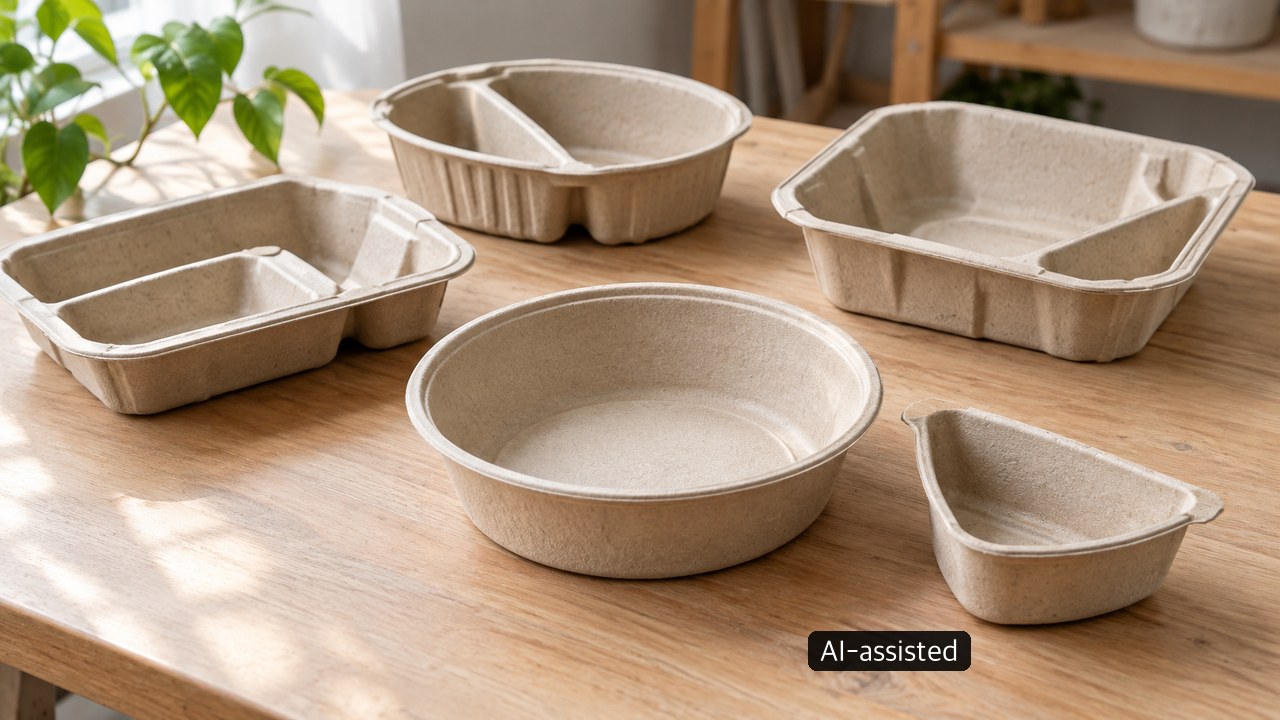
On October 21, 2026, Sheffield Hallam University announced the winners of a delivery-packaging competition run with Deliveroo and Enviropak. George Fowles and Jessica Walklett won with Terapot, a molded-pulp container concept for separating curry from rice in meals from restaurant group Pho. The announcement documents an award and a proposed design. It does not present a transport test report or confirm commercial sales.
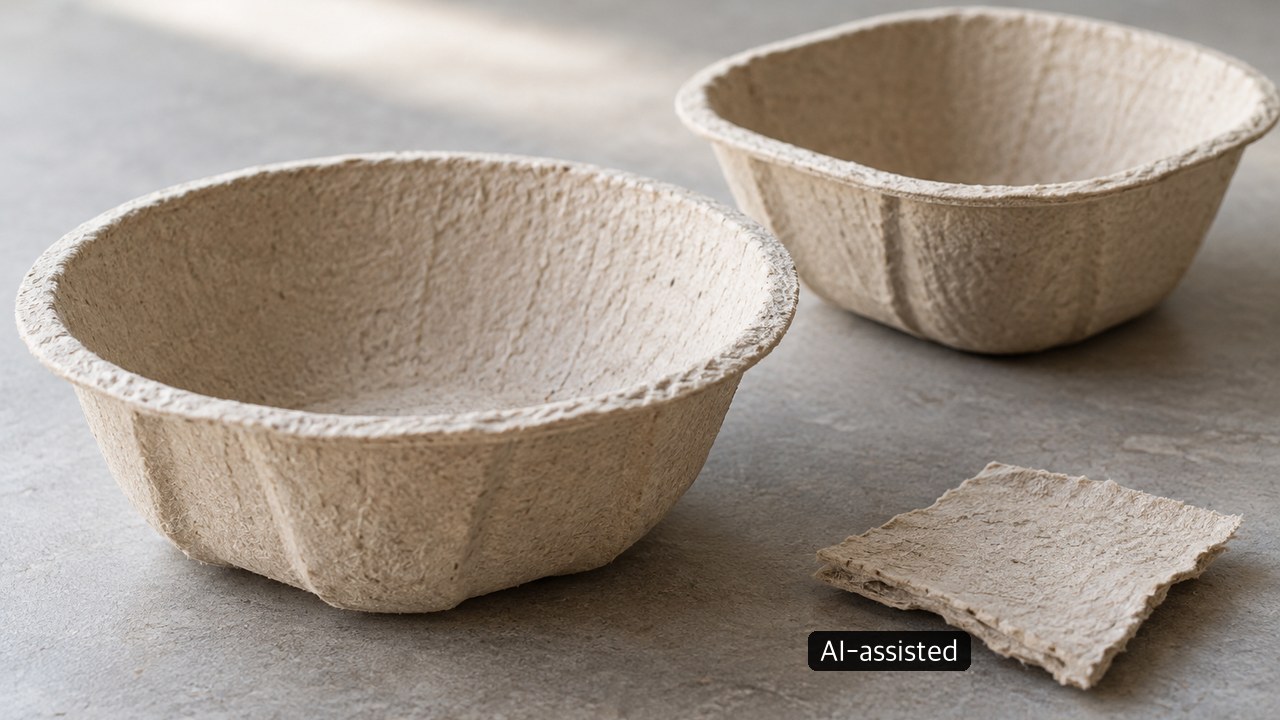
What the announcement says—and what it does not establish
According to the university, a small semicircular pulp tub for curry sits inside a larger bowl holding the rice. Its outer lip and height are intended to press against the larger bowl’s lid. The design goal was to limit sauce transfer during delivery and keep the meal warm. The announcement calls the pulp fully recyclable; that is the issuer’s description, not independent evidence of collection, sorting or recycling rates after food contamination in every market.
| Described in the university announcement | Evidence needed before purchase or rollout |
|---|---|
| Two students won the design competition | Production order, continuous supply and actual unit cost |
| A small curry tub fits in a larger rice bowl | Fit tolerances across actual bowl and lid batches |
| The design aims to prevent spills and retain heat | Measured leakage and temperature after tilt, drops, vibration and delivery time |
| The pulp is described as recyclable | Barrier/coating composition and local collection and sorting compatibility |
Design versus validation: a claimed design objective is not a certified seal, food-contact approval or demonstrated recovery rate. The announcement does not provide test methods, sample sizes, route profiles, leakage measurements or food-contact certificates.
A practical verification sequence
- Contents: check curry viscosity, temperature and fill level against the route by which liquid might cross into the rice compartment.
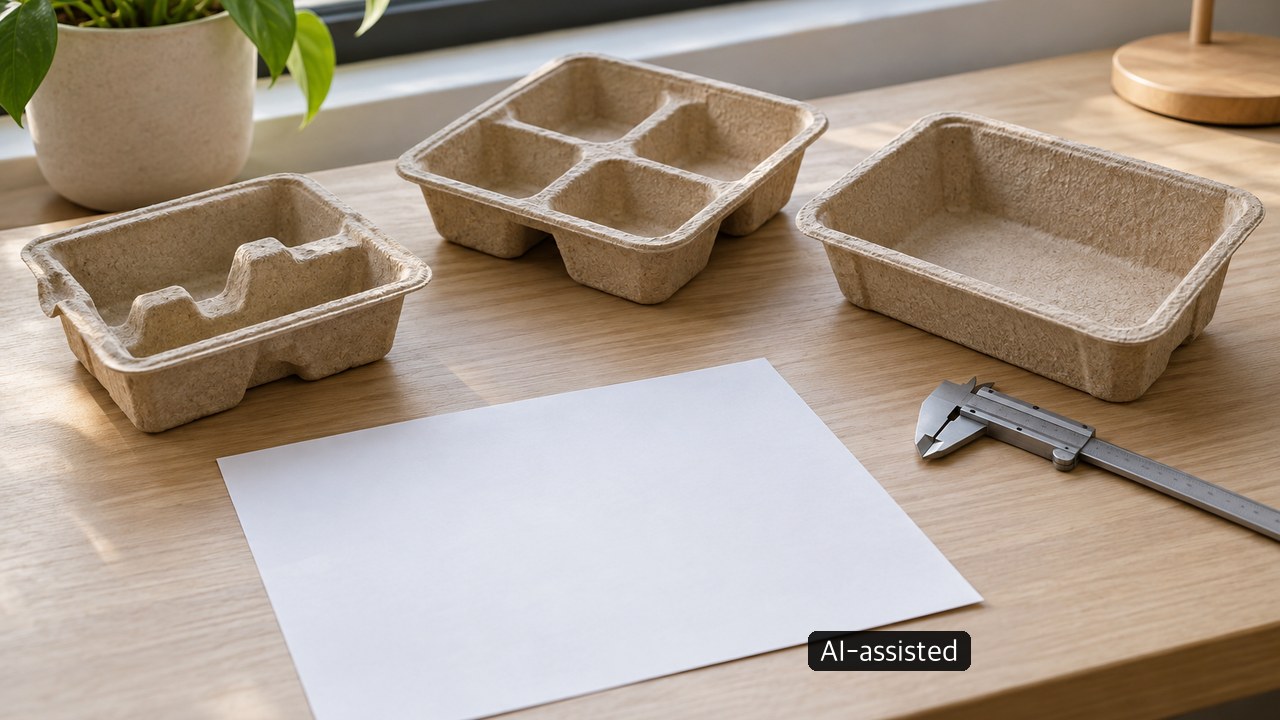
- Fit: measure tolerances of the larger bowl and lid against the insert’s height and lip compression. A visual fit is not proof of a seal.
- Delivery trials: define bag orientation, tilt, repeated shocks and elapsed time; record leakage, temperature and mixing. No pass/fail result is asserted here.
- Contact and collection: verify applicable food-contact requirements, moisture/grease barrier composition, and the actual local route for collecting food-soiled molded fiber.
- Rollout: obtain supplier samples, trial records, commercial terms and an actual purchase/availability confirmation before calling this an adopted restaurant package.
Molded pulp and a design award create a useful development case, not a substitute for measured suitability or recycling outcomes. Actual commercial availability and test results remain to be verified.
About the Author
PackingMaster separates paper-packaging design announcements from the performance evidence needed in real delivery operations.
References
- Sheffield Hallam University, “Sheffield Hallam students create sustainable packaging for Pho in Deliveroo competition” (October 21, 2026; describes award and design, not a test certificate or sales launch)