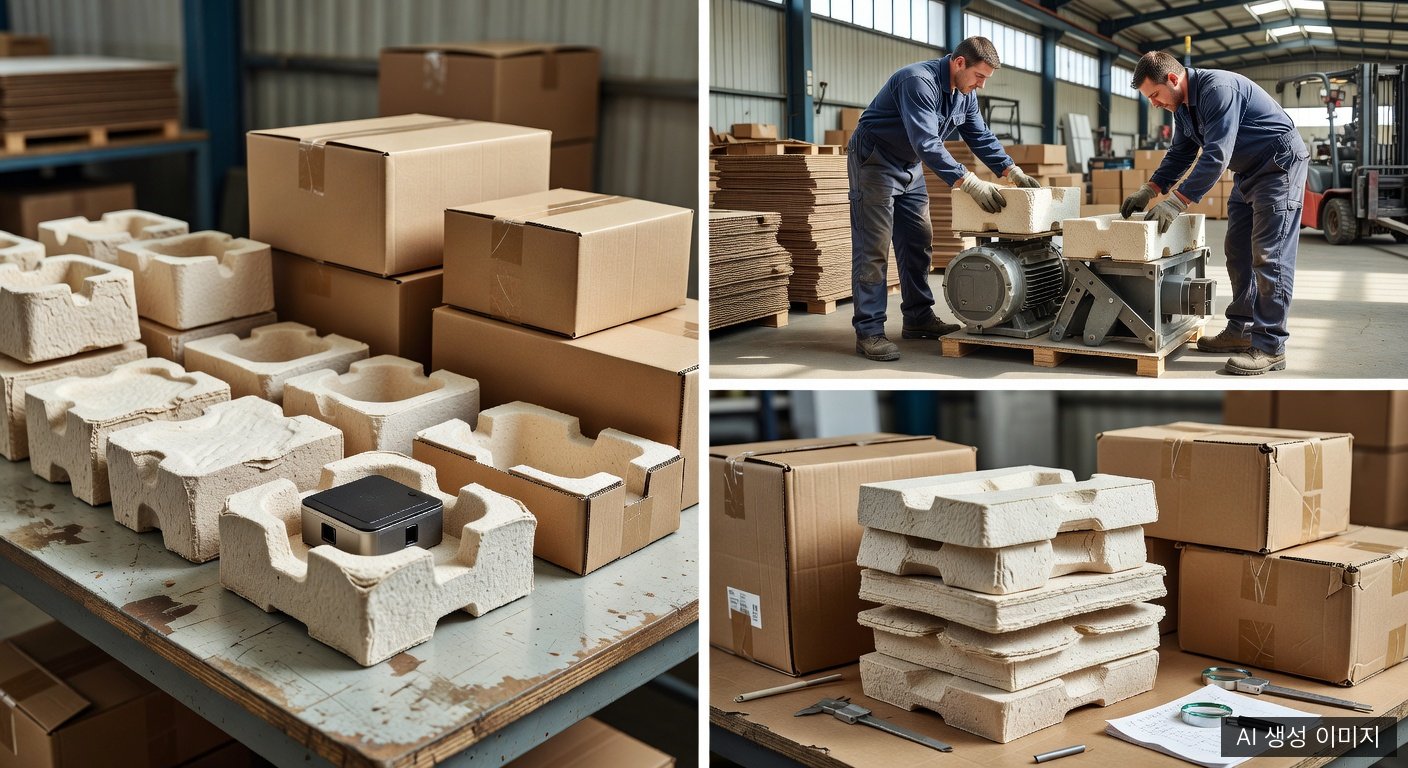
Molded pulp cushioning is one of the most intuitive paper-based alternatives to foam. It can use recycled raw materials, may fit into paper recycling flows after use, and can protect electronics, consumer goods, and industrial parts. In practice, however, tooling cost, development lead time, and minimum order quantity have often been barriers.
SPG Packaging recently highlighted a case of replacing foam packaging with a structure based on 100% recycled and recyclable materials. Market forecasts for molded fiber pulp packaging also continue to point to growth through 2036. The practical question is clear: can tooling-free small-batch molded pulp cushioning make foam replacement easier in real operations?

Why Conventional Molded Pulp Was Difficult
Traditional molded pulp cushioning usually requires tooling matched to the product shape. That is reasonable for high-volume products, but it is burdensome for small-lot industrial goods or project-based packaging. When product shapes change frequently or lead times are tight, tooling development alone can miss the customer schedule.
Common barriers include:
- Tooling cost raises the initial quotation
- Prototype review and revision take time
- Small orders have higher unit costs
- Existing tools may not fit changed products
- Storage volume and assembly work differ from foam
Foam replacement is therefore not just a material choice. It is an application-design issue. This is why modular cushioning and general-purpose fiber blocks are getting attention.
What Tooling-Free Structures Change
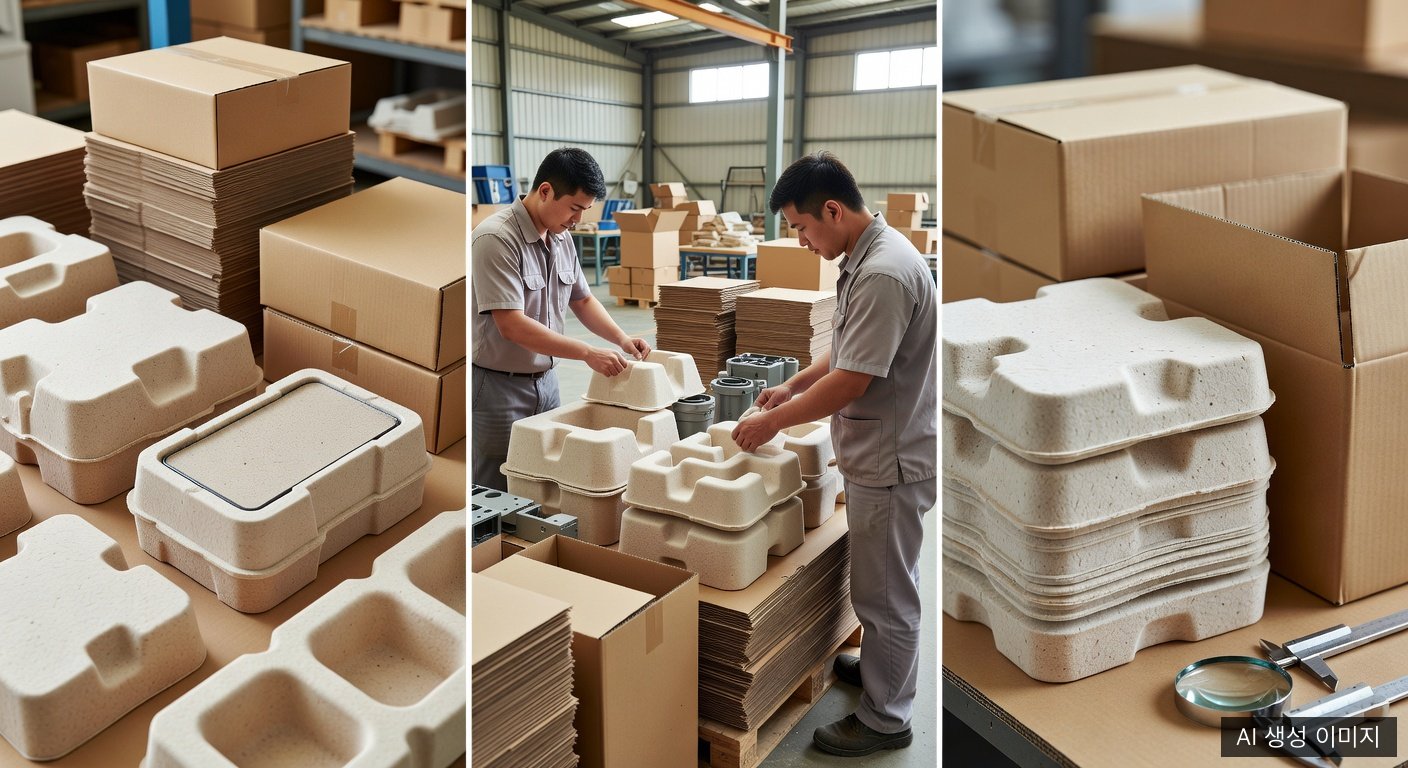
If molded pulp cushioning can be used without dedicated tooling, the customer approach changes. Instead of developing a dedicated insert for every product, modular blocks can be combined to create protection zones. Used with paper flat board, corrugated dividers, or paper support blocks, they can reduce foam use even in small-batch packaging.
But they are not suitable for everything. Fragile products, high-value electronics, and parts sensitive to edge impact still need drop and compression testing. Molded pulp has a strong sustainability image, but without measured protective performance it can increase claim risk.
Conditions to Check Before Use
For small-batch custom packaging, review these conditions first.
| Item | What to Check |
|---|---|
| Product weight | Static load and drop impact on the cushion |
| Vulnerable zones | Corners, protrusions, surface scratch sensitivity |
| Distribution path | Parcel, pallet, container, long-term storage |
| Humidity | Strength reduction from moisture absorption |
| Assembly time | Whether workers can assemble faster than foam |
| Recovery and recycling | Paper-stream sorting or business-site recovery |
Foam is light and easy to process. Molded pulp must be compared not only on environmental value but also on workability and protection. In industrial packaging, damage rate can cost more than unit price.
How Korean Packaging Suppliers Can Propose It
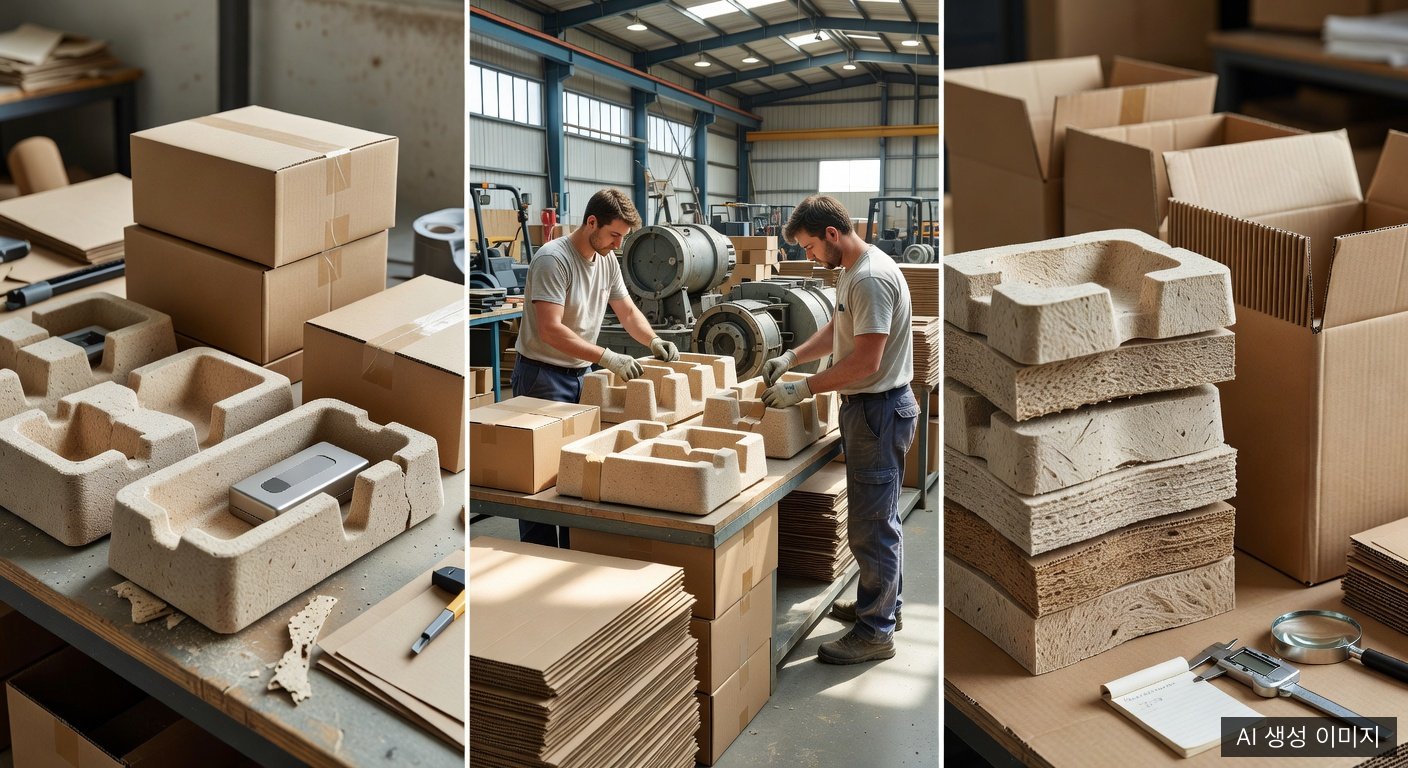
Korean suppliers should narrow the application scenario instead of leading only with “paper instead of foam.” Practical packages include:
- Corner cushioning modules for small electronics
- Paper flat board plus molded pulp for industrial parts
- Small-lot custom cushioning sets for sample shipments
- Paper-based internal fixing structures for export boxes
- Hybrid packaging that reduces, rather than fully removes, foam
The proposal should include test conditions more than material description. Drop height, product weight, box size, stacking direction, compression condition, and humidity condition help customers judge whether foam replacement is realistic.
Conclusion
Tooling-free molded pulp cushioning can lower the entry barrier for foam replacement in small-batch custom packaging. But “no tooling cost” should not become “no verification.” The less dedicated the structure is, the more carefully product-specific protection conditions have to be checked.
The opportunity for molded pulp cushioning is real. Recycled raw materials, paper-stream recovery, and pressure to reduce plastic are all pushing demand. Competitive strength will come from turning product weight, vulnerable zones, logistics conditions, and test results into a deliverable packaging specification.
Frequently Asked Questions
Q: Is tooling-free molded pulp always better than dedicated cushioning for mass production?
No. It is useful for small lots, many SKUs, and quick lead times. For repeated high-volume products, dedicated tooling can still be better in cost and performance.
Q: Can it fully replace foam?
It depends on product weight, impact sensitivity, and humidity conditions. A hybrid structure that reduces foam use is often the first practical step.
Q: What should be prepared before quotation?
Prepare product drawings, weight, vulnerable zones, box dimensions, distribution route, and required drop-test conditions.
About the Author
PackingMaster: Editor of PaperPackLog. Curates and organizes market trends, product information, and technical insights for the paper-packaging industry.