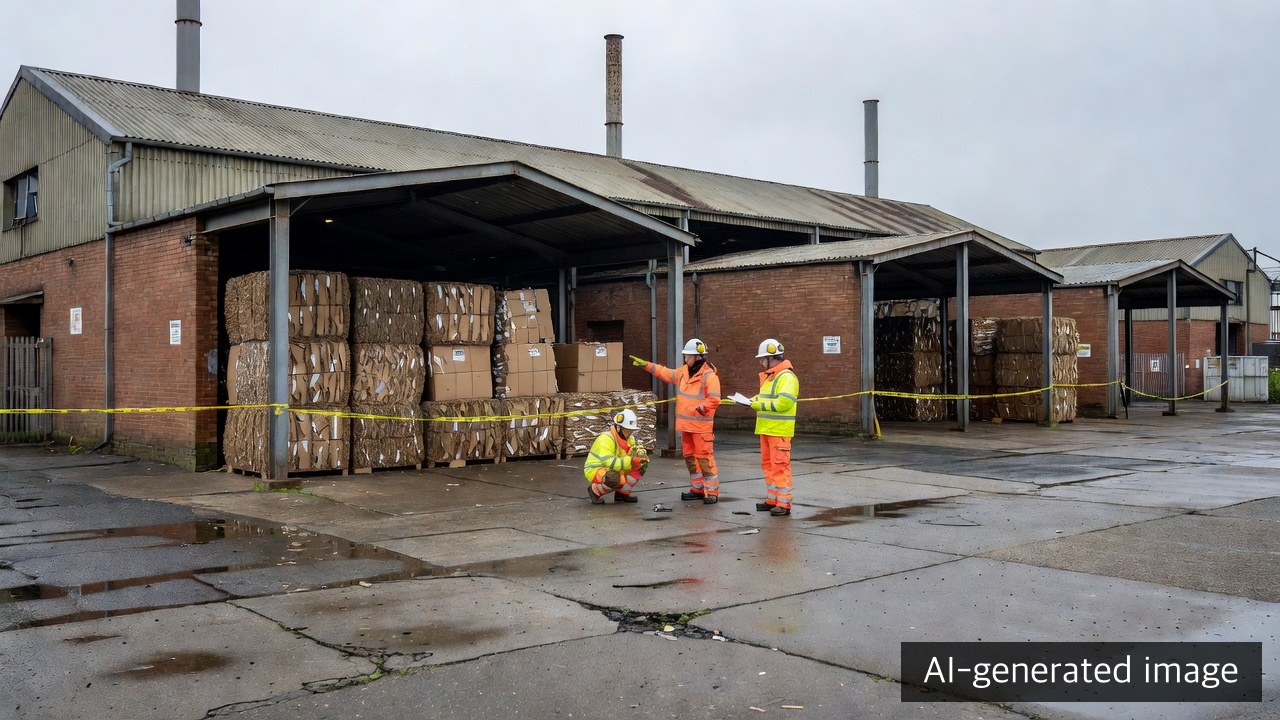
A paper purchase order that names only the mill is not precise enough to determine exposure when the recovered-fibre depot, paper machine, customer allocation and shipment status are not linked. The fire at the Townsend Hook site in Kent, England, on August 10, 2026, is confirmed to have started in the recovered-fibre depot, but the public record reviewed does not confirm the impact on recovered-paper stocks, depot operations or paper production. This article gives procurement, quality and logistics teams a ready-to-use recovered fibre → production → allocation → PO delivery verification tool.
It does not use the incident as spectacle. The focus is safety, official confirmation and supply continuity.
Separate the Confirmed Safety Response from the Undisclosed Operating Impact
Kent Fire and Rescue Service recorded a 7:28 a.m. response on August 10 to a fire at industrial premises in Mill Street, with six fire engines attending. Its 2:20 p.m. update said a large quantity of paper was alight, no injuries had been reported, and nearby residents were still advised to keep windows and doors closed because of smoke. At 9:40 p.m., the service withdrew that advice and said two engines would remain overnight to monitor and damp down residual hotspots.
According to the company’s statement quoted by KentOnline, the fire was at the Recovered Fibre depot at the Townsend Hook paper mill. The company said there were no injuries and that the situation was under control. That confirms the incident area and safety response; it does not establish a production-restoration timetable.
EUWID reported on August 10 that the company did not provide further answers on three operating questions: whether recovered-paper stocks had been destroyed, whether depot operations had resumed, and whether paper production was affected. The article described the mill’s paper machine as having design capacity of 250,000 tonnes per year of recycled containerboard. That number is design capacity; it is not evidence that this incident removed a specific tonnage or delayed deliveries by a specific number of days.
A review on August 11 of the company’s public newsroom, its 2026 press-release list and sitemap found no additional public notice setting a depot restart date or disclosing a paper-machine impact. The absence of a public notice means neither “no impact” nor “production stopped.” Until a written supplier response is available, record the status as follows.
| Area | Publicly Confirmed Status | Safe Interpretation | Still to Be Verified |
|---|---|---|---|
| People and site safety | No injuries reported, situation under control, community advice withdrawn | Emergency response moved into monitoring | Completion of hotspot monitoring and site handover |
| Incident area | Recovered Fibre depot | A recovered-fibre handling area was affected | Bay, stock quantity and grade, contamination or loss |
| Depot operations | Not publicly confirmed | Do not state that the depot has restarted | Intake, sorting and issue restart time and limitations |
| Paper production | Not publicly confirmed | Do not assert a paper-machine impact | Fibre feed, curtailment or stoppage, revised production plan |
| Customer delivery | Not publicly confirmed | Do not generalize into a Europe-wide shortage | Grade allocation, PO shipment date and alternate mill |
Five Links Between a Recovered-Fibre Depot Fire and Delivery
Recovered fibre is the furnish for recycled containerboard, but a depot fire does not automatically mean that all mill output is lost. Other on-site fibre stocks, external recovered-fibre supply, unaffected bays, production sequencing and customer allocation may lead to different outcomes. Conversely, a paper machine may not be directly damaged while restrictions on intake, sorting or issue still create an indirect scheduling effect.
- Site handover: Can teams safely access and assess the affected area after the emergency response?
- Recovered-fibre availability: Which grades and bays are damaged or isolated, and can external fibre still enter the site?
- Paper-machine plan: Does fibre availability require curtailment, a grade change or a stoppage?
- Grade and customer allocation: Which grades and customer orders receive the available production?
- PO and logistics schedule: Have mill release, off-site storage, shipment and Korean arrival changed?

Recovered Fibre → Production → Allocation → Delivery Check
The following operating tool prevents an undisclosed production effect from being copied into internal systems as a confirmed disruption. Record the verification stage rather than writing no impact, and keep the next official update time next to the status.
1) Impact-Chain Status Card
| Stage | Required Evidence | Example Current Assessment | Next Action and Release Condition |
|---|---|---|---|
| S0 Safety and site handover | Final fire-service update, mill safety notice | Site status being checked after hotspot monitoring | Safety owner confirms when depot access and assessment are permitted |
| S1 Fibre stock and depot | Stock by bay, damaged/isolated quantity, intake and issue status | Recovered-fibre impact being confirmed | Supplier identifies affected grades, usable stock and depot restart conditions |
| S2 Paper-machine production | Fibre coverage, production plan, curtailment/stoppage/grade change | Paper-production impact being confirmed | Mill provides PM plan and next update time |
| S3 Grade and customer allocation | Output by grade, available quantity, customer allocation | Our grade allocation being confirmed | Supplier confirms order allocation or proposes an alternate mill |
| S4 PO and logistics | PO, roll/lot, mill release, warehouse/port/shipment evidence | PO shipment date being confirmed | Internal schedule updates after firm release, vessel and ETA are received |
2) Track Company PO Exposure
| Grade and Specification | PO and Roll/Lot | Manufacturing Mill | Production/Allocation Status | Current Logistics Location | Confirmed/Unconfirmed Date | Owner and Next Check |
|---|---|---|---|---|---|---|
| [Testliner, basis weight, width, etc.] | [PO, roll, lot] | Townsend Hook confirmed/unconfirmed | [Complete, allocated, impact under review] | [Mill, external warehouse, port, shipped] | [Firm shipment date—not a media estimate] | Procurement requests a PO-level written reply at [time] |
| [Recycled fluting, etc.] | [PO, roll, lot] | [Alternate mill candidate] | [Availability/allocation under review] | [Expected origin] | [Sample/shipment availability] | Quality defines TDS, CoA and converting-trial conditions at [time] |
| [Customer-specific grade] | [PO, roll, lot] | [Incumbent/alternate] | Customer change approval pending | [Current location] | Shipment on hold | Sales confirms whether customer approval is required at [time] |
3) Alternate-Mill Switch and Customer Communication
| Trigger | Technical Check | Commercial/Logistics Check | Current Assessment | Owner and Specific Action |
|---|---|---|---|---|
| Incumbent PO shipment date changes | Compare basis weight, moisture, Cobb, strength, shade and convertibility | Alternate quantity, price, ship date and route | Alternate review opened | Procurement requests alternate-mill data and firm available quantity |
| Alternate sample arrives | TDS, CoA, printing, bonding and corrugator trial | First-lot segregation and traceability | Technical approval pending | Quality and production test to internal criteria and record results |
| Customer specification change required | Compare approved specification with changed attributes | Customer notice, approval and release time | Shipment on hold | Sales distinguishes a possible effect from a confirmed delay in the approval request |
Before written supplier confirmation, do not write normal, not affected or alternate complete in the Current Assessment field. Record the stage: depot restart being confirmed, production plan being confirmed, our grade allocation being confirmed, or PO shipment date being confirmed.
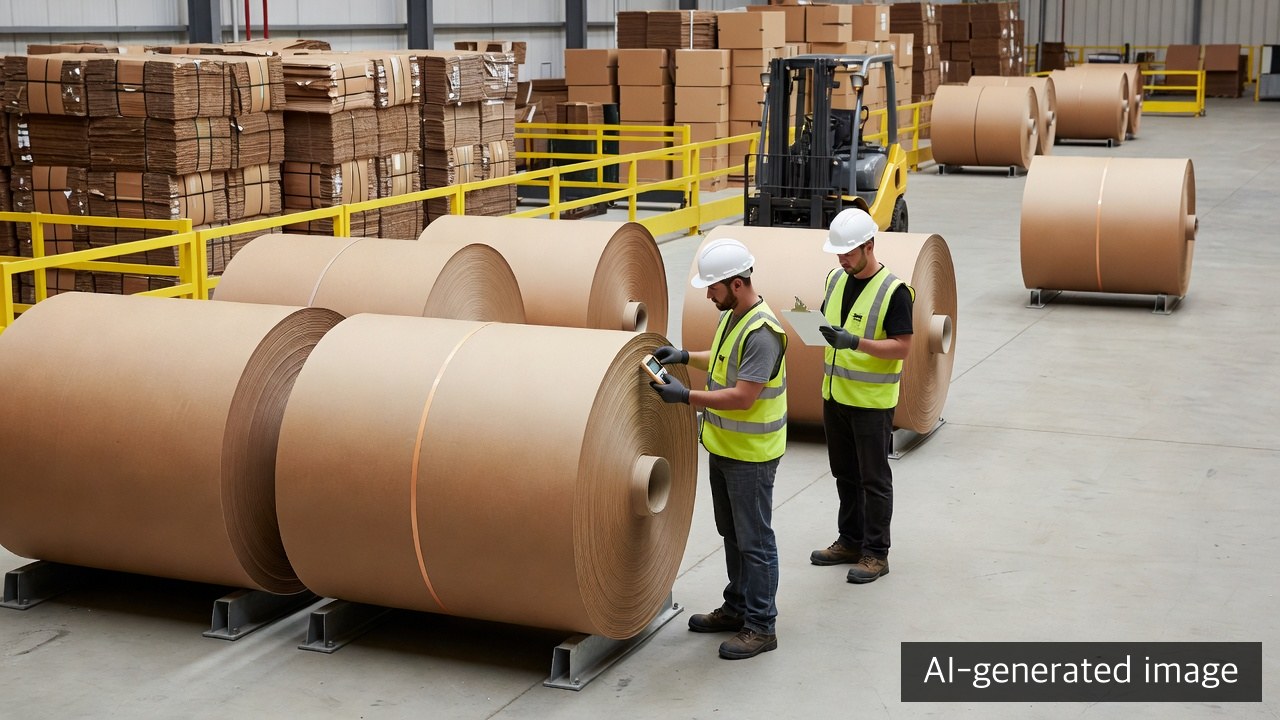
Ten Questions to Send to the Supplier
- Please confirm whether each of our open POs is made at Townsend Hook or another mill.
- For each PO, separate production completion, customer allocation, mill release, external storage and shipment status.
- Have the grade, bay, usable quantity and isolation scope of affected recovered fibre been established?
- Are recovered-fibre intake, sorting and paper-machine feed normal, restricted or stopped?
- When will depot operations and paper production status each be officially confirmed?
- Separate from the 250,000-tpy design capacity, has this week’s production plan or grade mix changed?
- Is there a confirmed change to production, allocation or shipment date for our grade?
- What quantity can an alternate mill or grade provide, and what is the earliest ship date?
- Can you provide the alternate TDS and CoA, with differences in basis weight, moisture, Cobb, strength, shade and converting conditions?
- When is the next official operating update, and who owns the PO-level response?
Immediate Actions by Role
Procurement
- Obtain impact confirmation by
mill, grade and PO, not only by company. - Do not convert 250,000-tpy design capacity into actual lost output or delivery delay.
- Include documentation, sample and customer-approval needs with alternate price and lead-time requests.
Quality and Production
- Compare alternate basis weight, moisture, Cobb, strength, shade, printing, bonding and corrugator conditions with the approved grade.
- Do not invent acceptance numbers from media coverage; use supplier TDS/CoA, customer specifications and internal test standards.
- Segregate the first alternate lot from incumbent rolls to preserve receiving, production and complaint traceability.
Logistics and Sales
- Separate unreleased mill stock, external-warehouse stock, port cargo and shipped material when updating ETA.
- Distinguish
impact under reviewfromconfirmed delayin customer communication. - Record the timestamp, owner and supporting document whenever the supplier’s formal reply changes.
Conditions That Require a Hold
- Depot restart and paper-machine production status have not been separated
- Design capacity is being treated as actual production loss from this incident
- The mill, grade, allocation and current location for the company’s PO are unconfirmed
- Alternate TDS, CoA, converting trial or customer approval is incomplete
- Only media coverage is available without a written PO-level supplier reply
- A possible impact is being described to customers as a confirmed supply stoppage
Documents to Check Today
- Open POs for UK/European recycled containerboard and the actual manufacturing mill
- Production completion, customer allocation and mill-release evidence by PO and roll/lot
- Inventory-depletion projection using current stock and confirmed arrivals
- Alternate-mill or grade TDS, CoA and sample-trial records
- Customer approval conditions for a paper or mill change
- Timestamp of the supplier’s reply and its next planned official update
What is confirmed in this incident is the recovered-fibre depot fire and the safety response. The practical task is not to declare a “European recycled-containerboard shortage,” but to verify recovered-fibre availability, paper-machine production, allocation of the company’s grade, PO location and alternate approval as one connected chain.
About the Author
PackingMaster: Editor of Paper Pack Log. We collect and organize market trends, product information, and technical insights for the paper packaging industry.
References
- Kent Fire and Rescue Service, “Fire at industrial premises in Snodland,” August 10, 2026, https://www.kent.fire-uk.org/incident/tonbridge-and-malling/fire-industrial-premises-snodland
- KentOnline, “Fire crews called to industrial estate blaze in Mill Street, Snodland,” August 10, 2026, updated August 11, 2026, https://www.kentonline.co.uk/malling/news/six-engines-called-to-industrial-estate-blaze-343731/
- EUWID Pulp and Paper, “Fire at Smurfit Westrock’s Townsend Hook mill,” August 10, 2026, https://www.euwid-paper.com/news/companies/fire-at-smurfit-westrocks-townsend-hook-mill/
- Smurfit Westrock, “2026 Press Releases,” https://www.smurfitwestrock.com/newsroom/press-releases/2026