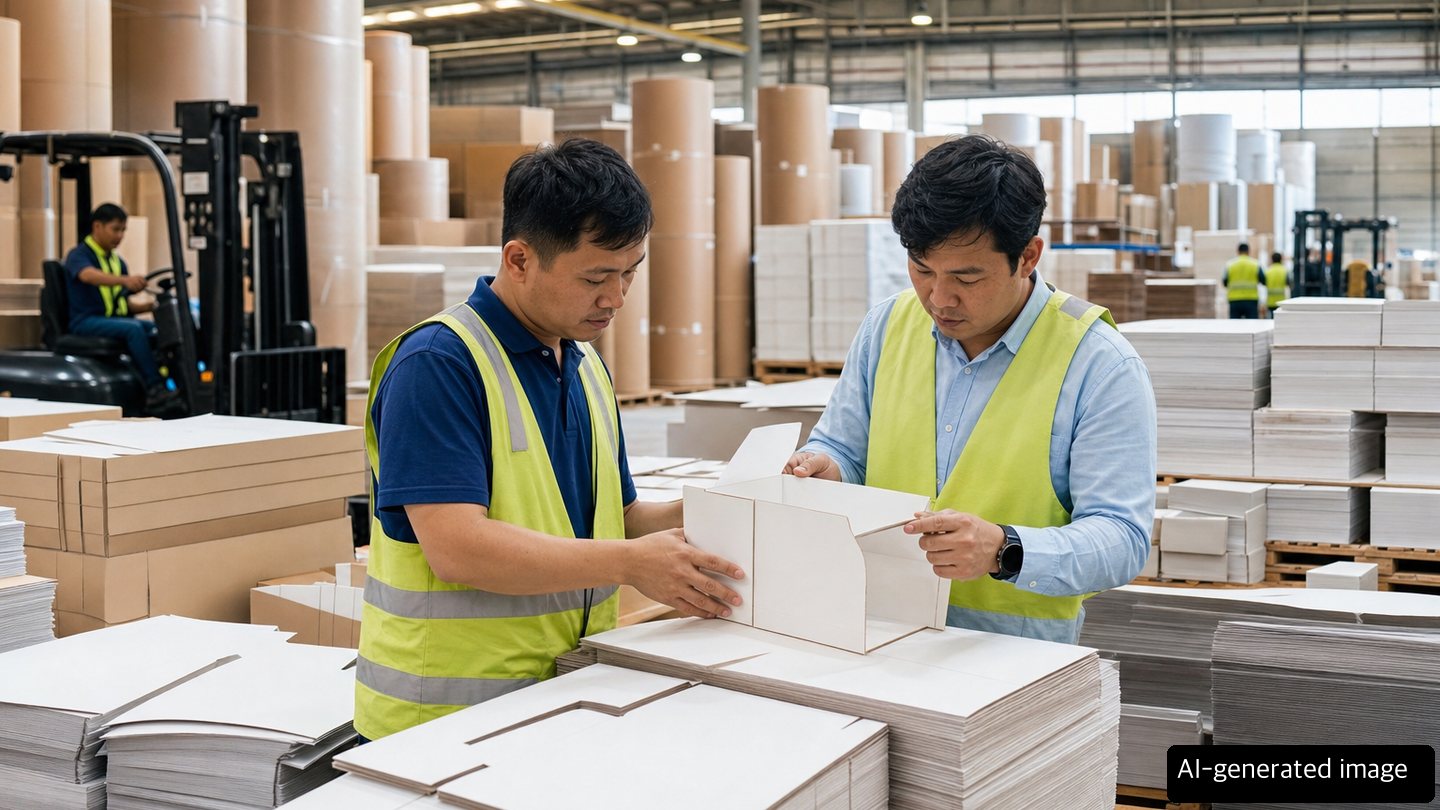
Vietnam should no longer be viewed only as a fast-growing Southeast Asian market. Recent Korean news has connected two signals: Vietnam’s transition toward more sustainable packaging, and growth in Korean white paperboard exports to the country. The important point is not the export number itself. The more useful question is what kind of paper packaging specifications Vietnamese buyers are beginning to request.
White paperboard is used across food, cosmetics, daily goods, healthcare-adjacent products, electronics accessories, and premium printed folding cartons. In a market where consumer-goods production and export manufacturing grow together, printability, hygiene, lead-time reliability, and sustainability explanations all become purchasing criteria. For Korean packaging suppliers, Vietnam is becoming a market where documentation and technical support matter as much as price.
Why White Paperboard Matters in Vietnam
Vietnam is both a manufacturing base for global brands and a growing domestic consumer market. Packaging demand therefore comes from two directions: shelf-ready brand packaging for local consumers, and specification-driven packaging for export products.
White paperboard sits between these two needs. It must print cleanly, fold and convert reliably, and support product categories where odor, hygiene, and surface quality matter. When brand owners reduce plastic usage or highlight recyclability, paperboard and other paper-based packaging materials are often reviewed first.
But the statement “it is paper, so it is sustainable” is no longer enough. Buyers increasingly ask practical questions:
- Is print quality stable at the requested basis weight?
- Are folding, die-cutting, lamination, and gluing processes reliable?
- Can hygiene and odor-related requirements be explained for food or daily-goods packaging?
- Can FSC, PEFC, recycled-content, or fiber-origin documentation be provided when required?
- Is there an English technical data sheet that the local converter and brand team can use?
First Requirement: An English Technical Data Sheet
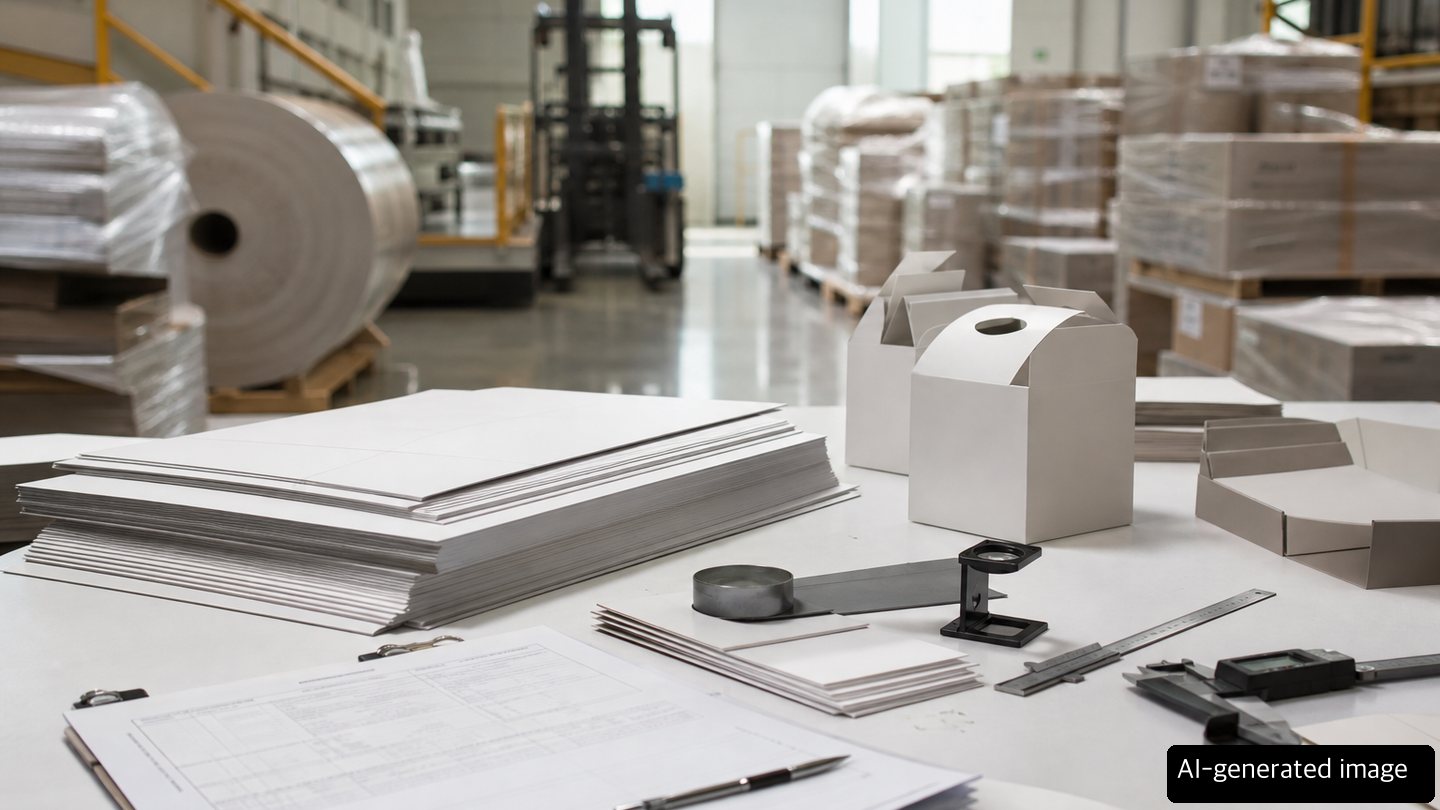
For Vietnam-bound white paperboard or paper packaging proposals, the first document to prepare is an English technical data sheet. A quotation that lists only the grade name and basis weight is usually not enough. The buyer needs to share the information internally with quality, production, and converting teams.
A practical data sheet should include at least the following items.
| Item | What to Confirm |
|---|---|
| Grade / Product type | SBS, FBB, WLB, or another accurate grade expression |
| Basis weight | g/m² and tolerance range |
| Caliper | Thickness and measurement basis |
| Whiteness / Brightness | Surface property linked to print quality |
| Coating / Surface | Coated side, print side, lamination suitability |
| Converting suitability | Folding, die-cutting, gluing, and printing method compatibility |
| Certification | FSC, PEFC, recycled content, or food-contact documentation status |
The distinction between “available” and “available upon request” is important. If certification is not confirmed, it should not be written as a marketing claim. If documentation is available but not organized in English, the buyer may treat it as if it does not exist.
Second Requirement: Explain Recyclability, Not Just Sustainability
The phrase sustainable packaging is now common in Vietnam as well. The problem is that it is too broad. Paper-based material, recyclability, recycled fiber, plastic reduction, and certified fiber are all different claims.
A safer proposal separates the claim into five parts:
- Material shift: whether part of a plastic or composite package is replaced with paper-based material
- Recyclability: whether the final package can be separated and recovered in the relevant recycling stream
- Certified fiber: whether FSC, PEFC, or similar fiber documentation can be supplied
- Reduced packaging: whether the design reduces unnecessary packaging or weight
- Evidence: which documents support the claim
This structure also helps in price negotiations. Instead of saying “this is more expensive because it is eco-friendly,” the supplier can explain that the grade includes printability, recyclability communication, and documentation support.
Third Requirement: Consider Local Converting Conditions
Exporting white paperboard to Vietnam does not mean every process follows Korean conditions. Printing, die-cutting, gluing, lamination, and final carton assembly may be done locally. Under hot and humid conditions, moisture, curl, surface smoothness, and folding defects can become practical issues.
Before a volume shipment, suppliers should ask:
- Will the local converter use offset, flexo, or digital printing?
- Is a coated surface necessary, or is an uncoated or lightly coated grade enough?
- Is the final product sensitive to odor, such as food or cosmetics packaging?
- How will humidity and compression be managed during container transport?
- If a converting defect occurs, how will the team distinguish paperboard issues from process issues?
These questions may slow the first quotation. But export claims are expensive once they occur. A supplier that asks about local converting conditions early is more likely to be trusted later.
Five Sentences to Use in a Vietnam-Bound Proposal
Sales documents should not be overloaded with technical language. The buyer needs clear sentences that can be forwarded internally. The following structure is useful:
- “This paperboard is suitable for high-quality printed folding cartons for consumer goods.”
- “FSC or other fiber certification can be reviewed depending on the requested grade and supply condition.”
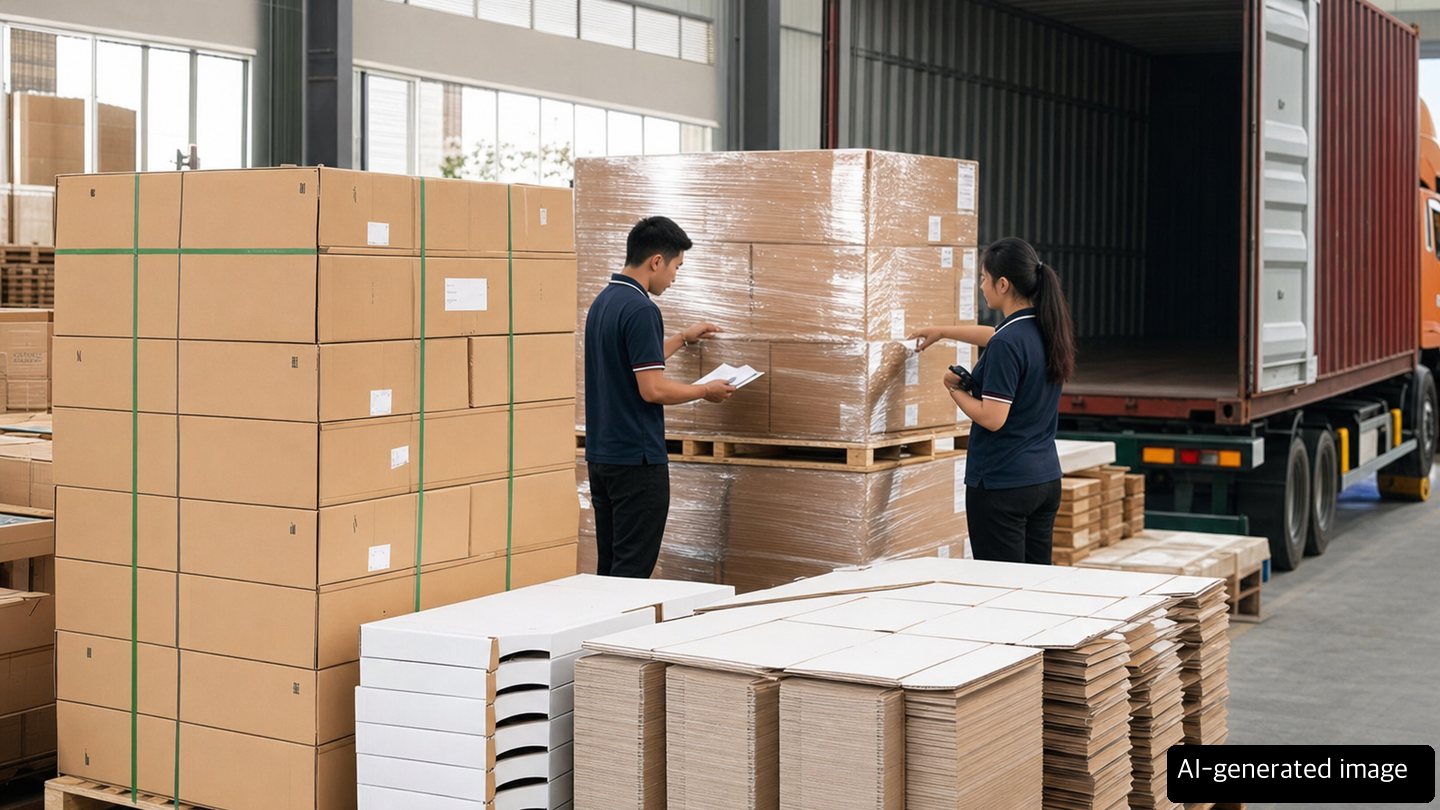
- “For export packaging, moisture control and palletizing conditions should be confirmed before mass shipment.”
- “Recyclability claims should be checked according to the final package structure, including coating, label, and adhesive.”
- “A technical data sheet and sample evaluation can be provided before volume order.”
The key is not to overstate unconfirmed performance or certifications. Clear separation between confirmed items, review items, and documents available upon request makes the buyer’s internal review easier.
The Real Opportunity Is the Documentation Package
Vietnam’s sustainable packaging transition is unlikely to be a short-lived news item. As local consumer brands, global OEMs, e-commerce, food, cosmetics, and export manufacturing continue to grow, packaging requirements will rise with them.
For Korean white paperboard and paper packaging suppliers, the opportunity is not just the product itself. It is the ability to propose technical data sheets, samples, certification possibilities, recyclability explanations, and local converting-condition checks as one package.
Buyers are not looking for a perfect environmental declaration. They want to know whether the packaging can be used in production, whether quality claims can be reduced, and whether their internal reporting can be supported with documents. For Vietnam-bound packaging proposals, a well-organized document folder should now come before the quotation.
References
About the Author
PackingMaster writes about paper packaging, export packaging, sustainable packaging regulation, and purchasing practice for B2B readers. The focus is on packaging as an industrial material where quotations, lead times, quality, and evidence documents move together.