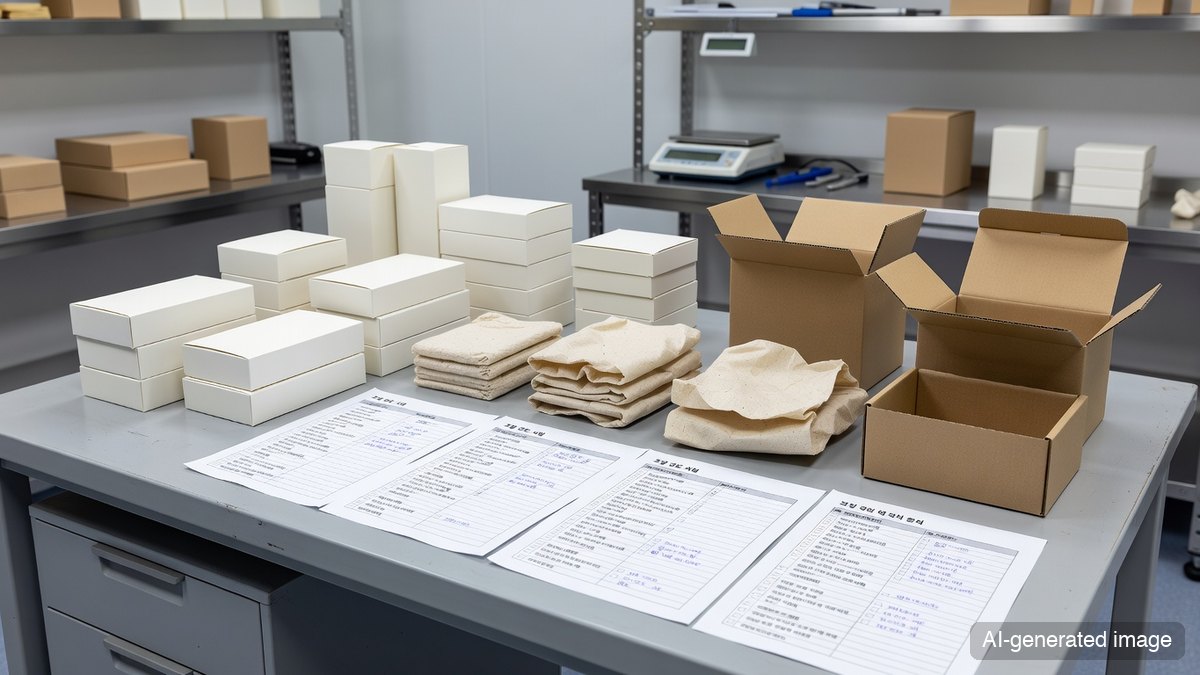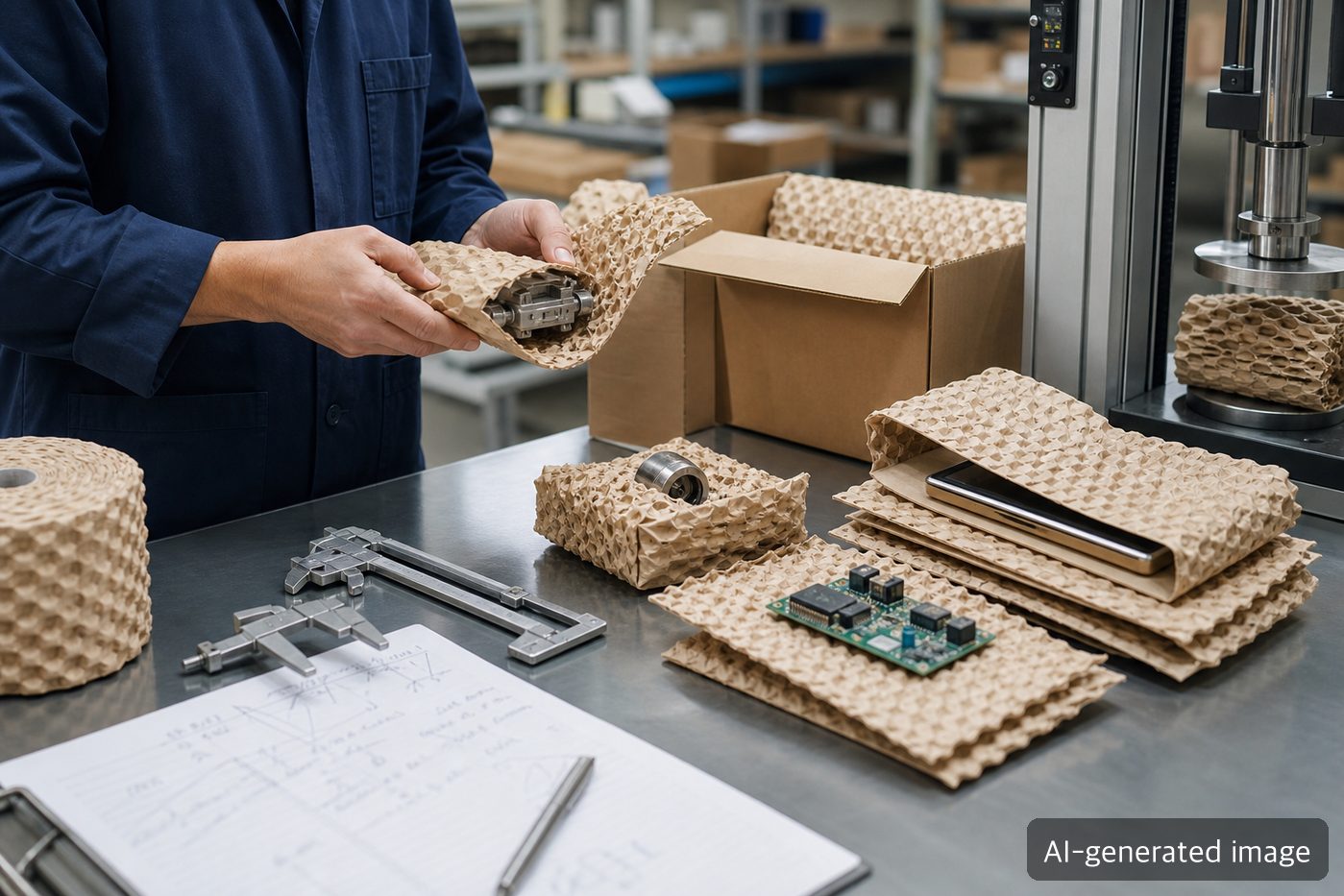
Packaging workbench reviewing paper-based bubble wrap cushioning for compression strength and packing performance

Paper-Based Bubble Wrap BIOWRAP: Procurement Checks Before Replacing Plastic Cushioning

Paper-based bubble wrap such as BIOWRAP should be evaluated as a procurement specification, not only as a sustainability story. Compression strength, moisture behavior, automation fit, disposal labeling, and cost structure all need evidence.
June 22, 2026 · PackingMaster
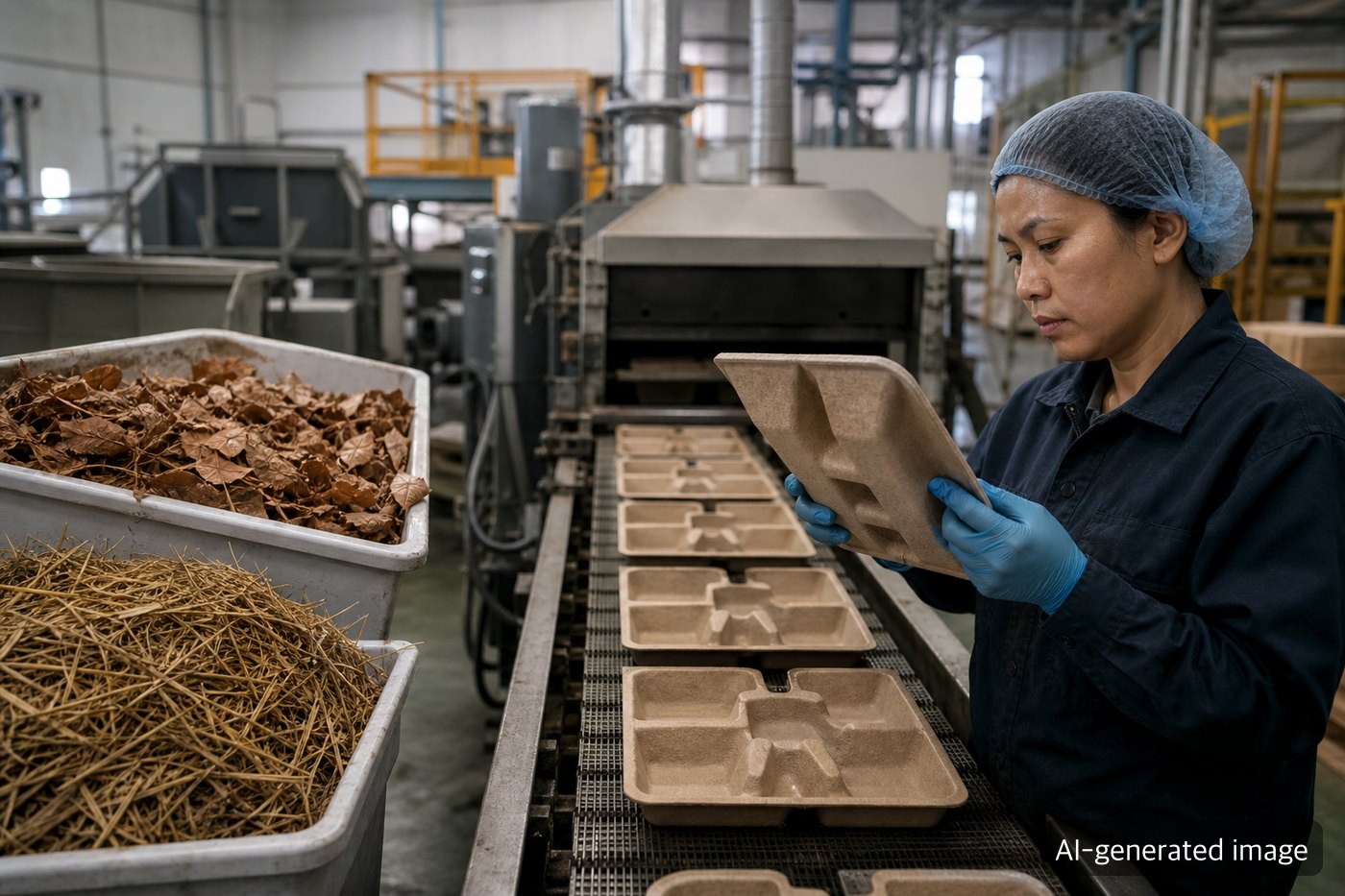
Packaging materials lab reviewing non-wood biomass fibers and molded fiber tray prototypes

Fallen Leaves and Non-Wood Biomass in Molded Fiber Packaging: Can They Reduce Virgin Pulp Dependence?

A practical look at when fallen leaves and other non-wood biomass can become molded fiber cushioning or food tray materials, focusing on processability, residue supply, quality control, and food-contact testing.

June 19, 2026 · PackingMaster
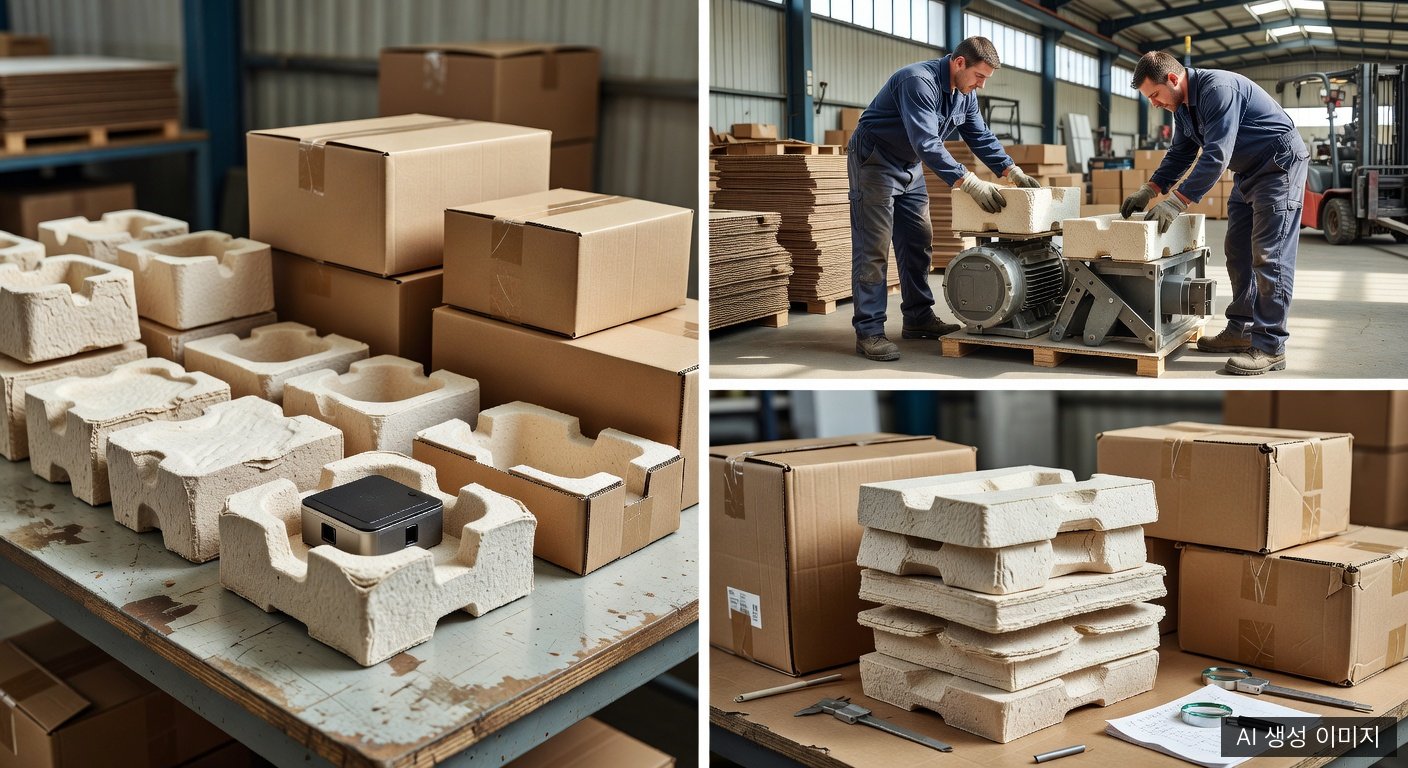
Industrial packaging bench reviewing molded pulp cushioning modules

Tooling-Free Molded Pulp Cushioning: Can Small-Batch Custom Packaging Replace Foam More Easily?

Tooling cost and lead time have been major barriers to molded pulp cushioning. Recent modular and custom fiber-cushioning examples show where small-batch packaging can realistically reduce foam use.

June 6, 2026 · PackingMaster
Cosmetics export packaging data review with containers, folding cartons, and cushioning materials

Cosmetics Export Packaging: Why EU PPWR and UK pEPR Need to Be Managed Together

For K-beauty ODM/OEM manufacturers and brands, EU PPWR and UK pEPR should be managed as one packaging data workflow covering containers, folding cartons, cushioning, transport packaging, buyer evidence, and fee exposure.

May 25, 2026 · PackingMaster